Harvest Date on Olive Oil: Why It Matters More Than Best-Before (2026)
Harvest date tells you how fresh an olive oil really is, and freshness drives how many polyphenols survive in the bottle you actually pour from.
Most shoppers reach for the best-before date to judge whether an olive oil is fresh. For high-polyphenol extra virgin olive oil, that instinct points you at the wrong number. The best-before date tells you when a producer estimates the oil will drop below acceptable quality. The harvest date tells you something more useful: how long the clock has actually been running on the compounds you are paying for.
This guide walks through why the harvest date is the more honest signal, how harvest timing shapes polyphenol content, why those compounds fade with time, and how to read the dates on a label, including the seasonal flip between the Northern and Southern hemispheres.
For online purchases, look for the date before checkout rather than treating it as a detail to verify after delivery. A seller that cannot identify the harvest is asking you to buy without the clearest freshness signal.
If phenolic compounds in olive oil are new to you, our overview of what polyphenols are in olive oil covers the basics first.
Harvest date versus best-before: two different promises
A harvest date, sometimes labelled "crush date" or "milling date," records when the olives were picked and pressed. It is the true starting point for everything that follows, because olive oil does not improve with age. Unlike wine, it is at its best soon after milling and declines from there.
A best-before date works differently. Producers commonly set it by adding a fixed window, often 18 to 24 months, to the bottling date. Bottling can happen weeks or many months after the harvest, and the same oil can be bottled in batches across a year. So two bottles printed with an identical best-before date can hold oil of quite different real age. The best-before tells you when the producer stops vouching for the oil. It does not tell you how much of the original character, or the polyphenols, remains.
For everyday oils this gap matters less. For high-polyphenol oils, where the phenolic content is the whole point, it matters a lot. The table below sets the two side by side.
| Aspect | Harvest date | Best-before date |
|---|---|---|
| What it marks | When olives were picked and crushed | Estimated end of acceptable quality |
| How it is set | Recorded at the mill | Often bottling date plus a fixed window |
| What it reveals | True age of the oil | Producer's quality estimate |
| Relevance to polyphenols | High, the decline clock starts here | Indirect at best |
| Reliability as freshness signal | Strong | Weak |
When a label shows both, read the harvest date first. When it shows only a best-before, regard the oil's real age as unknown. Our guide on how to choose high-polyphenol olive oil folds this into a wider buying checklist.
How harvest timing shapes polyphenol content
The biggest lever a producer pulls on phenolic content is when to pick. Olives change as they ripen, moving from green and hard through veraison, the colour turn, to fully black and soft. Young, green fruit is vulnerable, so it holds the most phenolic compounds; as the olive ripens and softens, those levels fall.
Early and green harvest
Picking early, while the fruit is still green or turning, tends to produce oil with higher polyphenol content. This is the oil that tastes assertively bitter, with the throat-catching peppery sting linked to compounds like oleocanthal. The trade-off is yield. Green olives hold less oil, so the producer draws fewer litres per tonne of fruit. That lower yield, plus the labour of an earlier pick, is part of why robust high-phenolic oils often cost more. Studies of ripeness and phenolic content point the same way: earlier maturity stages are associated with higher total phenols.
Two of the most pungency-linked compounds, oleocanthal and oleacein, get their own explainer in our piece on oleocanthal and oleacein, and the well-studied phenol hydroxytyrosol has its explainer at hydroxytyrosol in olive oil.
Late harvest
Picking later, once olives are fully ripe, raises yield and produces a milder, rounder, less bitter oil, generally with lower phenolic content. Many supermarket oils lean toward later harvest because higher yield lowers cost and milder flavour suits a broad audience. There is nothing defective about a mild late-harvest oil. It is simply a different product, and one less likely to clear the thresholds that high-polyphenol buyers care about.
Cultivar matters alongside timing. Some varieties stay phenol-rich even at moderate ripeness, while others read mild whenever they are picked. Our guide to olive cultivars high in polyphenols covers which varieties tend toward the upper end.
Early harvest as a category
"Early harvest" has become a marketing term as well as a horticultural fact. The phrase usually signals an oil picked deliberately green for high phenols, intense flavour, and a short, dated production window. We unpack what the label does and does not promise in early harvest olive oil.
Why polyphenols decline after pressing
Harvest timing sets the starting level. From the moment of pressing, that level only falls. Phenolic compounds are reactive antioxidants, and the same chemistry that makes them interesting also makes them perishable. Four forces drive the decline.
- Time. Even under ideal storage, phenols slowly oxidise and break down. Age alone reduces them.
- Heat. Warmth speeds up oxidation. A bottle stored near a stove or in a hot pantry loses phenols faster than one kept cool.
- Light. Ultraviolet and visible light degrade phenolic and chlorophyll compounds, which is why dark glass and tins outperform clear bottles.
- Air. Oxygen reacts with phenols and fatty acids. Every time a bottle is opened, headspace air meets the oil, so a half-empty bottle oxidises faster than a full one.
Studies that simulate real kitchen use, drawing oil from the same bottle day after day, suggest a high-phenolic oil holds on to more of its polyphenols than a low-phenolic one over the same weeks. Two lessons follow. Buy oil that started high, and slow the decline with good storage and sensible bottle sizes. Our detailed guidance lives in how to store high-polyphenol olive oil, and the related question of whether olive oil expires covers what "going off" actually means.
This decline also bears on the health effect the EU authorises for olive oil polyphenols. Under Commission Regulation (EU) No 432/2012, the claim that "olive oil polyphenols contribute to the protection of blood lipids from oxidative stress" may be used only for oil providing at least 5 mg of hydroxytyrosol and its derivatives per 20 g, roughly 250 mg/kg, and the label must tell consumers the effect requires a daily intake of 20 g of olive oil. An oil that meets that threshold at pressing can drift below it after months of poor storage. Harvest date and storage are not only flavour concerns, then; they affect whether that claim still holds for the oil in your kitchen. For how the wider evidence on olive oil polyphenols is graded outcome by outcome, see our health evidence overview.
The misleading high number on an old bottle
High-polyphenol oils often carry a laboratory figure, say a total polyphenol count in milligrams per kilogram. That number is genuinely useful, but only with context. A lab result reflects the oil at the moment it was tested, usually shortly after pressing. It is a snapshot, not a promise for the life of the bottle.
Picture two bottles both labelled 600 mg/kg. One was harvested four months ago and kept in dark glass in a cool room. The other was harvested eighteen months ago and sat under shop lighting. The printed figures match; the oil you would actually pour does not. Without a harvest date, you cannot tell them apart. That is why a lab number and a harvest date belong together: the number tells you how high the oil started, and the date tells you how long it has had to fall.
A few habits protect you here.
- Read any polyphenol figure as a starting value, then ask how old the oil is.
- Prefer producers who pair a lab result with a clear harvest or crush date and, ideally, the testing date.
- Be sceptical of a very high number on a bottle with no harvest date at all.
- Where two oils show similar figures, let the more recent harvest and the better packaging decide between them, since both protect the phenols the number describes.
To understand what the figures mean and how they are produced, see lab testing methods for polyphenol measurement. For separating sound information from marketing, olive oil polyphenol myths debunked is a useful companion.
Reading harvest dates across both hemispheres
A harvest date only means something once you know where the oil came from, because the olive harvest happens at opposite times of year in the two hemispheres. A bottle stamped "harvested May 2025" looks off-season to a European eye, yet it is perfectly fresh if the oil is Australian or Chilean.
| Region | Typical harvest window |
|---|---|
| Northern Hemisphere (Spain, Italy, Greece, Tunisia, California) | October to January |
| Southern Hemisphere (Australia, Chile, Argentina, South Africa) | April to July |
In practice, the freshest Northern Hemisphere oils reach shelves from late autumn through the following spring, while Southern Hemisphere oils peak in the second half of the calendar year. Buyers in the Northern Hemisphere can use this to keep good oil on hand year-round, since a Southern Hemisphere harvest can be the more recent option during the northern off-season.
When you read a label, work through three questions in order. What is the country or region of origin? Which hemisphere is that, and so what is the expected harvest window? How long ago was the stated harvest relative to today? An oil harvested within the last twelve months, from either hemisphere, is a reasonable freshness target for a phenol-focused purchase, and the more recent, the better.
Vague labelling is itself a signal. Missing harvest dates, blends that obscure origin, or "best-before" used as a stand-in for freshness can all make older stock harder to spot. Our guides to spotting fake olive oil and the broader olive oil fraud guide cover how labelling gaps connect to authenticity.
Putting harvest date to work when you buy
Harvest date sits at the centre of a small cluster of freshness signals that, read together, tell you whether a high-polyphenol oil is worth its price. The harvest or crush date establishes real age. The lab polyphenol figure establishes the starting level. The packaging, dark glass or tin, and a sensible bottle size protect what is left. And the storage in your own kitchen, cool, dark, and sealed, governs how the oil ages once it is yours.
No single number on a label does the job alone. A high polyphenol count without a harvest date is incomplete, and a recent harvest of a naturally mild, low-phenol oil will not deliver high phenolic content however fresh it is. The dependable approach is to combine a recent harvest, a credible lab figure, a phenol-rich cultivar, and protective packaging, then store the oil well and use it within a reasonable window.
You can see how we apply these criteria across products on our oils listing, and the standards behind them are set out in our methodology. For the science on why these compounds draw attention in the first place, our summary of the health benefits of high-polyphenol extra virgin olive oil gathers what is studied and what is not, with the appropriate caveats.
The short version: best-before tells you when a producer stops vouching for an oil. Harvest date tells you how fresh it truly is, and freshness decides how many of the polyphenols you paid for are still in the bottle when you pour.
Put this check into practice
Compare the reported harvest fields for Green Machine and Pamako in the live olive oil dataset, then use the buyer framework to weigh freshness against price and method. If you need an oil available in your market, the UK ranking and Germany ranking keep the same harvest context beside the buying route.
Which date should guide a buying decision?
Harvest or crush date
- Shows the oil's true age from production
- Lets you judge freshness against its hemisphere
- Makes a lab result easier to interpret
Best-before date alone
- Often reflects a fixed window set after bottling
- Can hide large differences in the oil's real age
- Does not tell you when the phenolic result was measured
Featured oils
Frequently asked questions
Is the harvest date the same as the best-before date?
No. The harvest date marks when the olives were picked and crushed. The best-before date is typically calculated by adding a fixed window, often 18 to 24 months, to the bottling date, so two bottles with the same best-before can differ greatly in real age.
Does an earlier harvest always mean more polyphenols?
Earlier, greener fruit generally carries higher phenolic content, but cultivar, region, irrigation, and milling also matter. Harvest timing is one strong factor among several, not a guarantee on its own.
How fast do polyphenols drop after pressing?
They decline gradually from pressing onward, faster when the oil meets heat, light, or air. Studies that track household use over weeks report measurable losses, so buying recent harvest and storing well both help.
If a bottle lists a high polyphenol number, is that what I am getting?
Not necessarily. A lab figure reflects the oil at the time of testing. If the harvest was long ago or storage was poor, the oil you pour may hold less than the printed number suggests.
What harvest months should I look for?
Northern Hemisphere oils are typically harvested October to January; Southern Hemisphere oils April to July. Match the date to the hemisphere of origin to judge how fresh the oil really is.
Why do some producers not print a harvest date?
It is not always legally required, and a vague or missing harvest date can make older or blended stock harder to assess. A clear harvest or crush date is a useful transparency signal.
How we reviewed this article
Written and edited by our editorial team and checked against primary research and EU regulation. We cite peer-reviewed studies and official sources, and prefer human trials and reviews over in-vitro work.
Searching for olive oil for your health and longevity
Our top-ranked high-polyphenol olive oils, sorted by lab-verified content.
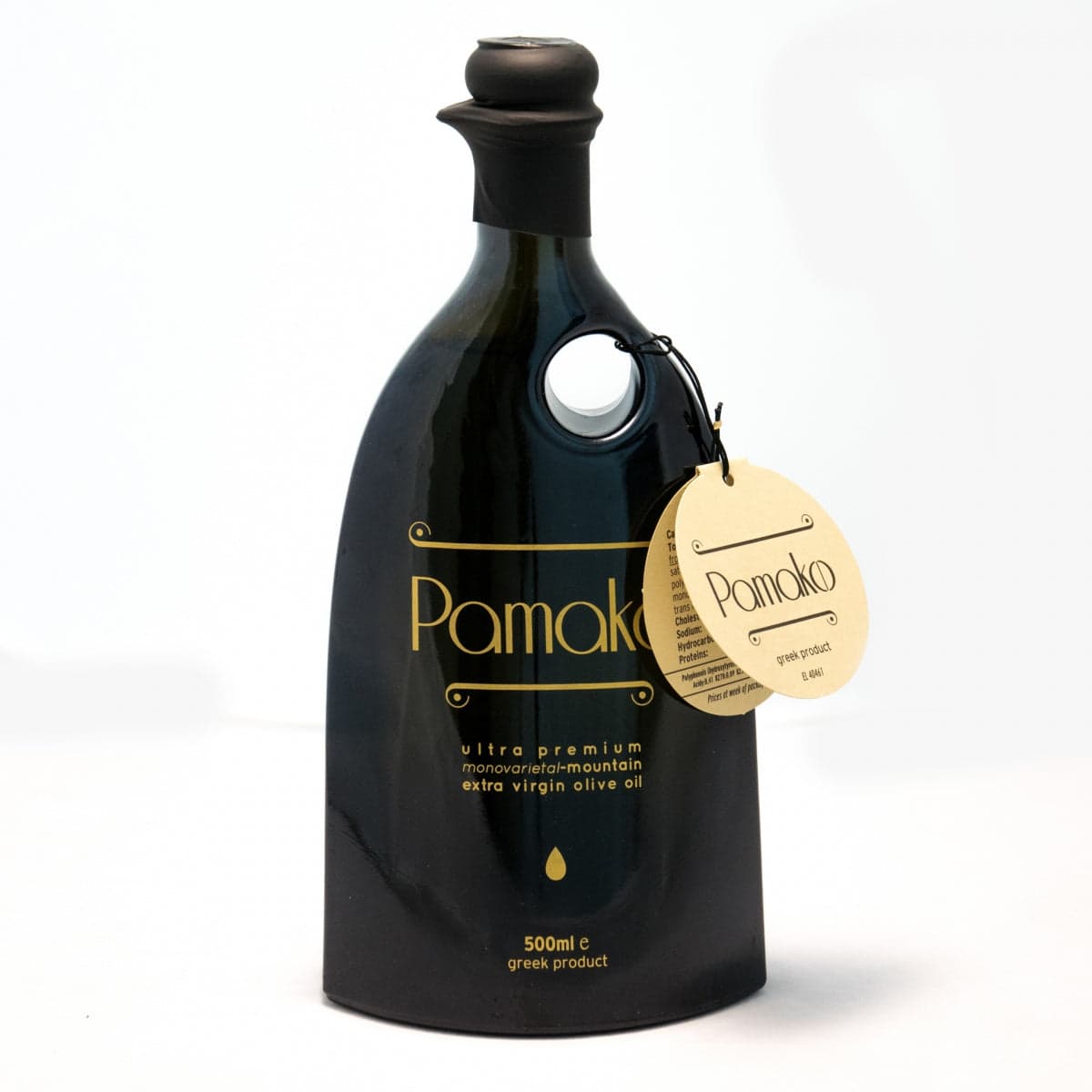
Pamako
€54.95· 500ml
€1.65 per 15ml serving
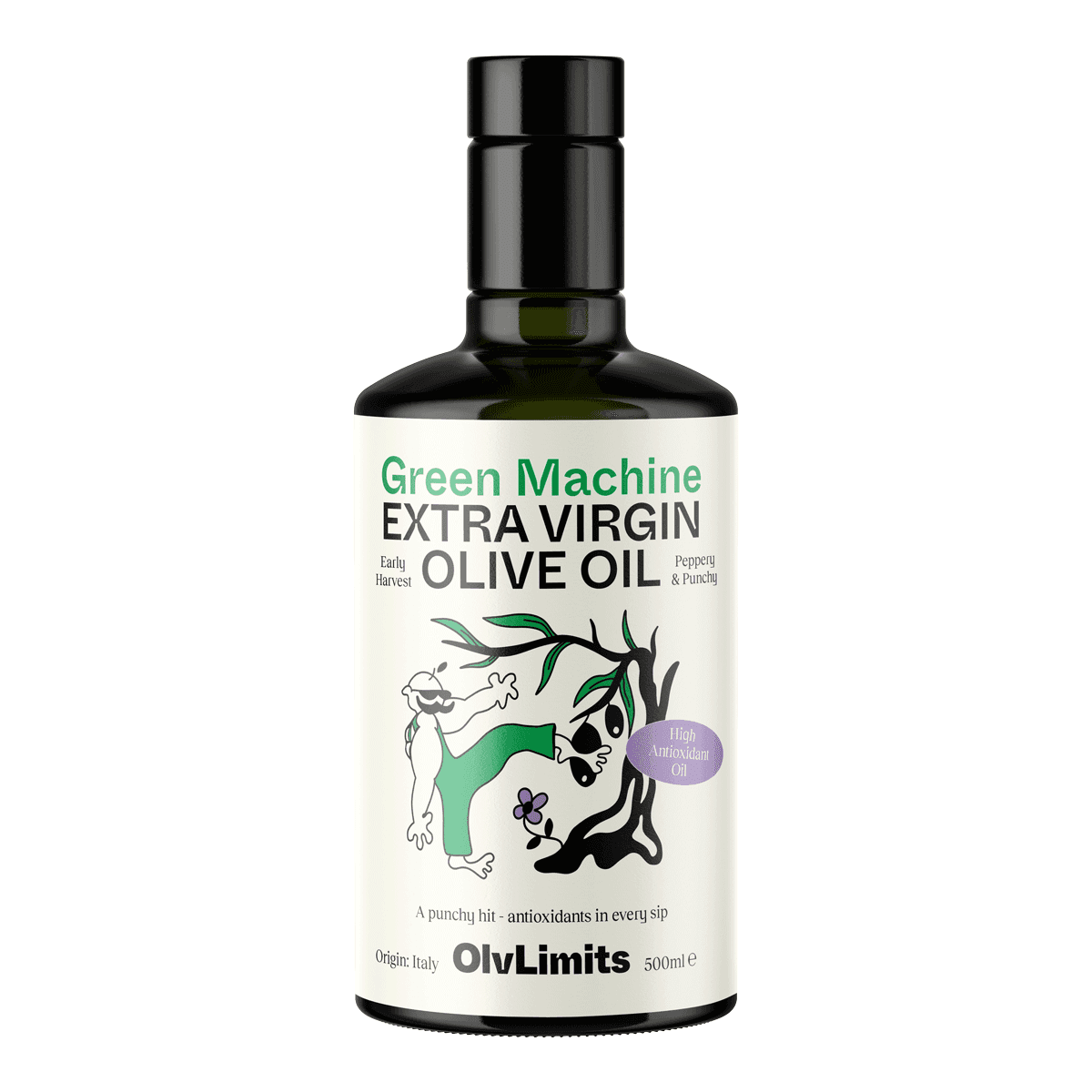
Green Machine
OlvLimits
€23.00· 500ml
€0.69 per 15ml serving
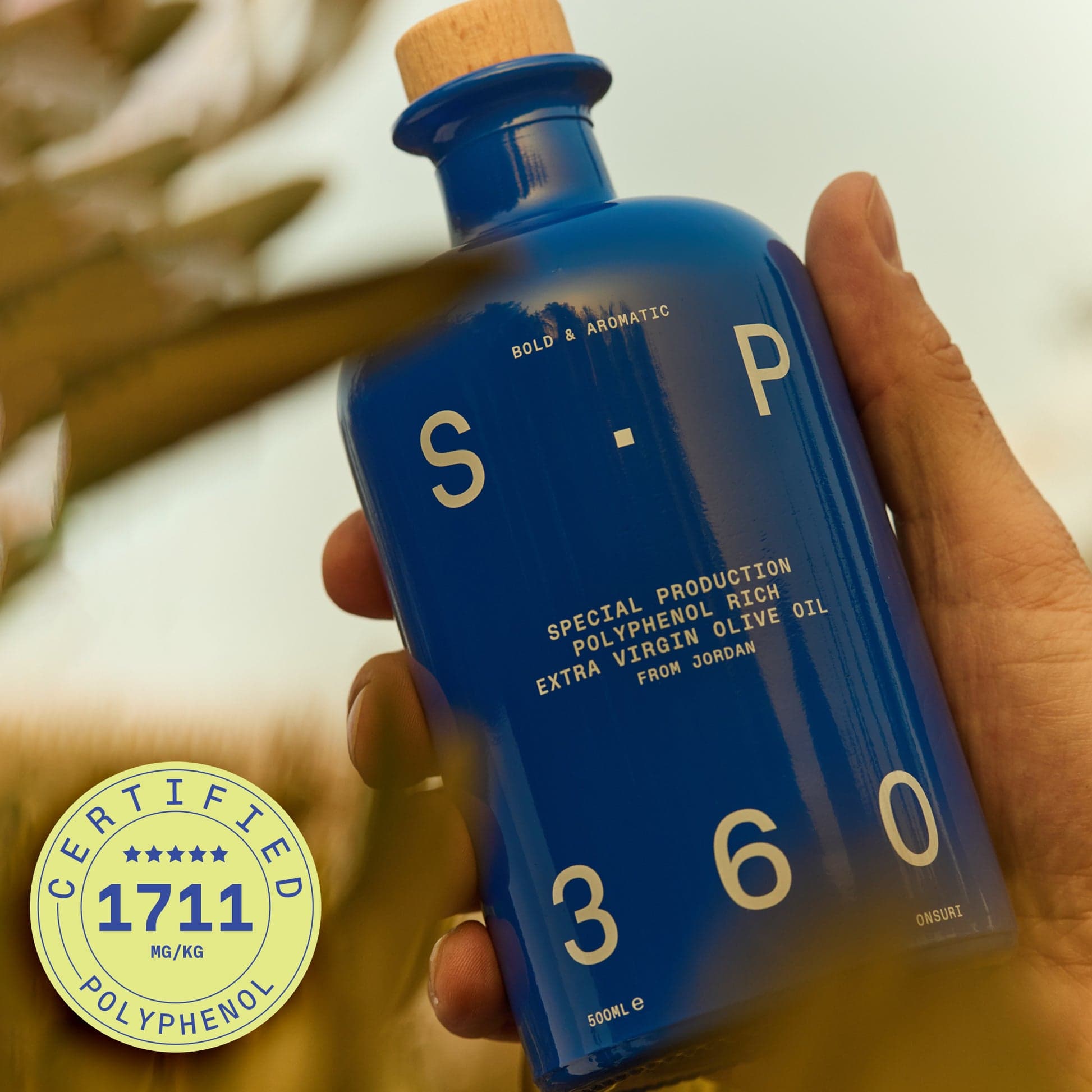
SP360
£42.00· 500ml
£1.26 per 15ml serving
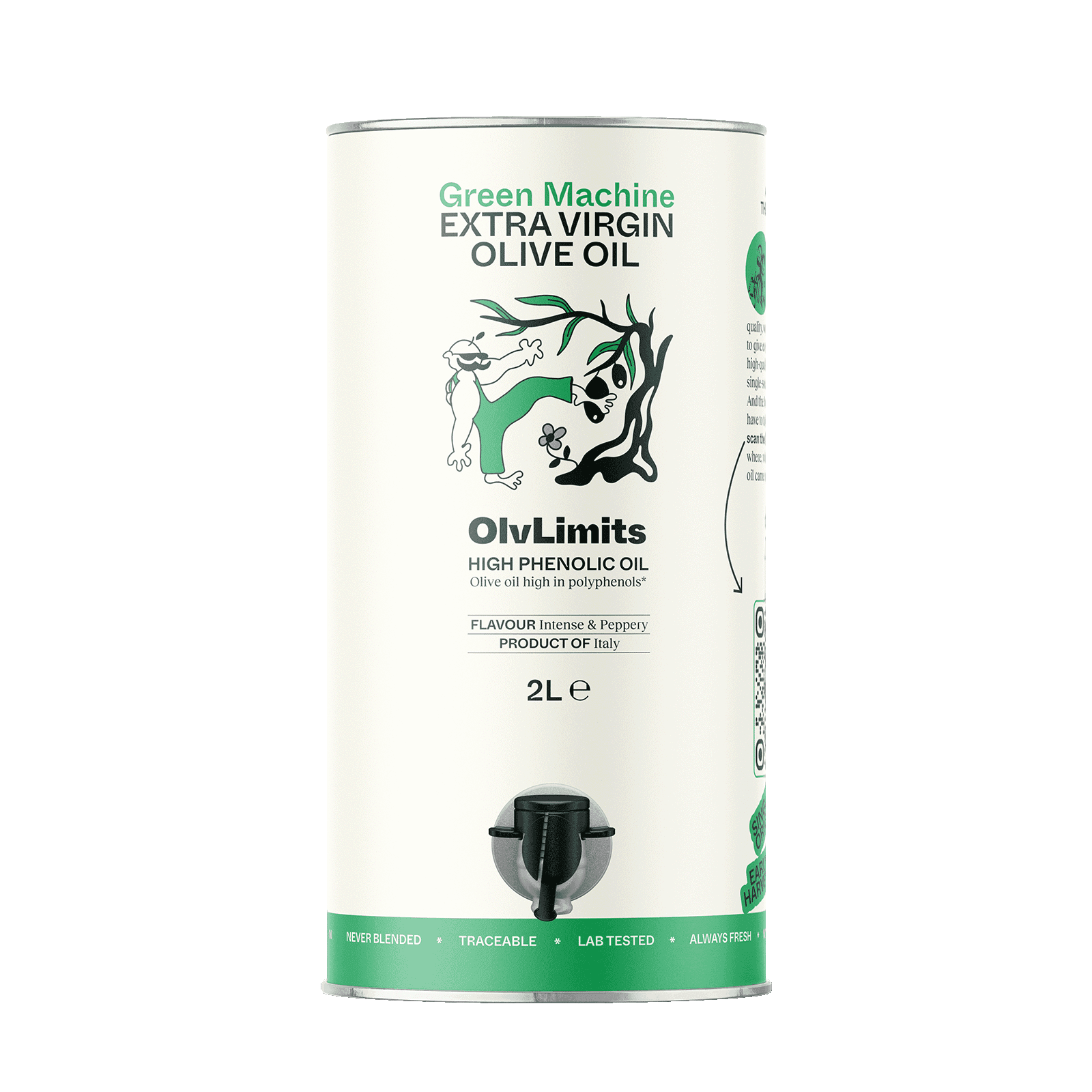
Green Machine 2L bag-in-tube
OlvLimits
€80.00· 2L(≈€20.00/500 ml)
€0.60 per 15ml serving