Cold Pressed vs Extra Virgin Olive Oil: What the Labels Actually Mean (2026)
"Cold pressed," "cold extracted," and "extra virgin" describe different things. Two are about process, one is a quality grade. Here is how they relate.
Walk down any oil aisle and the same bottle will often carry four labels at once: "cold pressed," "cold extracted," "first cold pressing," and "extra virgin." It is easy to read them as competing tiers, as if one beats the next. They are not tiers at all.
Two of these terms tell you how the oil left the olive. One tells you the grade of the finished oil. Once you can sort them, the label reads far more clearly, and you can see which words actually connect to polyphenols.
The short answer: grade versus process
"Extra virgin" is a quality grade. An oil earns it through laboratory chemistry, mainly free acidity and peroxide values, plus a sensory panel that confirms the oil is free of defects and tastes fruity. The grade says nothing directly about temperature or machinery.
"Cold pressed" and "cold extracted" describe the extraction process. They tell you the oil was separated from the paste without added heat. On their own they say nothing about whether the oil passed the chemistry and taste tests a grade requires.
Because the two labels sit on different axes, one oil can be both extra virgin and cold extracted at the same time. It could also, in theory, fall to a lower grade despite gentle handling if the fruit was poor. The terms sit alongside each other rather than one ranking above the other.
What "cold extraction" and "first cold pressing" legally mean
In the EU these are not free-floating marketing words. Commission Implementing Regulation (EU) 2022/2104 sets out which optional statements may appear on an olive oil label.
- "First cold pressing" may be used only for virgin or extra virgin oil obtained below 27C using a traditional hydraulic press, in a single pressing.
- "Cold extraction" may be used only for virgin or extra virgin oil obtained below 27C by percolation or centrifugation of the paste.
Two things follow. Both terms are reserved for the top grades, so you should not see "cold extracted" on a refined or lampante oil. And "first cold pressing" is largely a legacy phrase from the days of stacked-mat hydraulic presses.
Most modern mills use centrifugal decanters, which run continuously rather than in separate "pressings." For a contemporary oil, "cold extraction" is usually the technically accurate term. "First cold pressing" survives on labels because it sounds artisanal, even where no press was involved.
What "extra virgin" legally means
Extra virgin sits at the top of the grade ladder set by the International Olive Council trade standard and mirrored in EU law. To qualify, an oil has to come solely from mechanical means, show free acidity of no more than 0.8 grams per 100 grams, stay within the set limits for peroxides and other markers, and score as defect-free with positive fruitiness on a sensory panel. Fail on chemistry or taste and it drops to "virgin" or lower, however gently it was handled.
So extra virgin is a guarantee about the finished product, and cold extraction is a description of process. A good oil usually carries both. Seeing one on the label does not hand you the other.
Which one matters for polyphenols
This is where the two axes meet. Polyphenols are sensitive to heat and oxidation, so keeping extraction temperatures low, which is the whole point of cold extraction, helps protect the polyphenols the fruit already holds. The process does matter here.
Low temperature cannot create polyphenols that were never in the fruit, though. The amount in the bottle comes mostly from the olive variety, how early the fruit was picked, and how fresh it is. Early-harvest oils from polyphenol-rich cultivars can carry several times the content of a late-picked, gently handled oil. That is why neither "cold pressed" nor "extra virgin" is a reliable stand-in for polyphenol strength.
The dependable signal is a measured figure on a lab report, given in mg/kg of total biophenols. Our methodology explains how to read those numbers, and every oil in our directory lists its tested level.
What you are actually allowed to claim
The EU has authorised one health claim for olive oil polyphenols, under Commission Regulation (EU) No 432/2012: "Olive oil polyphenols contribute to the protection of blood lipids from oxidative stress." That claim may be used only for oils providing at least 5 mg of hydroxytyrosol and its derivatives per 20 g, and the label has to tell the consumer the effect is obtained with a daily intake of 20 g of olive oil.
Notice what the regulation keys on: a polyphenol concentration, not the words "cold pressed" or "extra virgin." And a higher-concentration oil delivers that dose in a smaller serving, which is why our guide on how much polyphenol olive oil to take daily matters more than any label adjective.
Claims you may see elsewhere that tie olive oil to specific diseases go beyond what regulators have authorised, and are worth reading with caution. For a grounded overview of what the research actually supports, see our note on the studied benefits of high-polyphenol oil and the health evidence overview.
Common misconceptions
- "Cold pressed is a higher grade than extra virgin." No. They are different categories, grade versus process. An oil is both graded and extracted, and one does not outrank the other.
- "First cold pressing means it was pressed twice and this is the first batch." In practice almost no commercial oil is pressed at all today; it is centrifuged. The phrase is mostly traditional.
- "Cold pressed guarantees lots of polyphenols." It helps preserve them, but it does not guarantee a high number. Variety, harvest date and freshness do most of the work.
- "Any cheap oil labelled cold pressed is a bargain." The term is regulated, but enforcement varies and mislabelling exists. Our guide on spotting fake olive oil covers the warning signs.
Practical recommendation
Read the label words as a first filter, not a verdict. "Extra virgin" tells you the oil cleared a quality bar. "Cold extracted" tells you it was handled gently. Both are good signs, and neither tells you the polyphenol strength.
If polyphenols are your reason for buying, look past the adjectives. Check for a recent harvest date, a clear varietal, and above all a tested polyphenol figure. Storing the oil well afterwards protects what you paid for, which we cover in keeping high-polyphenol oil fresh.
Put this check into practice
Use Erbology Organic as a live label-and-lab example, then compare its published fields with the rest of the catalog in the olive oil dataset. The buyer framework shows what to check after the label wording. When availability is the next question, continue to the UK ranking or Germany ranking.
Process label versus quality grade
Cold extraction or first cold pressing
- Describes how the oil was extracted
- Reserved in EU rules for virgin and extra virgin oils below 27°C
- Does not state the final phenolic concentration
Extra virgin
- Describes the finished oil's legal category
- Requires chemistry and sensory criteria
- Does not, by itself, state the extraction temperature or phenolic concentration
Featured oils
Frequently asked questions
Is cold pressed the same as extra virgin?
No. Extra virgin is a quality grade defined by chemistry and taste, while cold pressed describes how the oil was extracted. A genuine cold-pressed oil should also be virgin or extra virgin under EU rules, but the two terms are not interchangeable.
What temperature counts as cold pressed?
Under EU Regulation 2022/2104, the optional terms cold extraction and first cold pressing may only be used for virgin or extra virgin oil produced at a temperature below 27C.
Does cold pressing guarantee high polyphenols?
No. Keeping temperatures low helps preserve polyphenols, but the final amount depends mainly on olive variety, harvest timing and freshness. The only way to know is a measured polyphenol figure on a lab report.
Is cold pressed or extra virgin better for health?
The question mixes two ideas. The EU-authorised health claim is tied to a measured polyphenol level, not to the words cold pressed or extra virgin. Look for the actual hydroxytyrosol content.
How we reviewed this article
Written and edited by our editorial team and checked against primary research and EU regulation. We cite peer-reviewed studies and official sources, and prefer human trials and reviews over in-vitro work.
Searching for olive oil for your health and longevity
Our top-ranked high-polyphenol olive oils, sorted by lab-verified content.
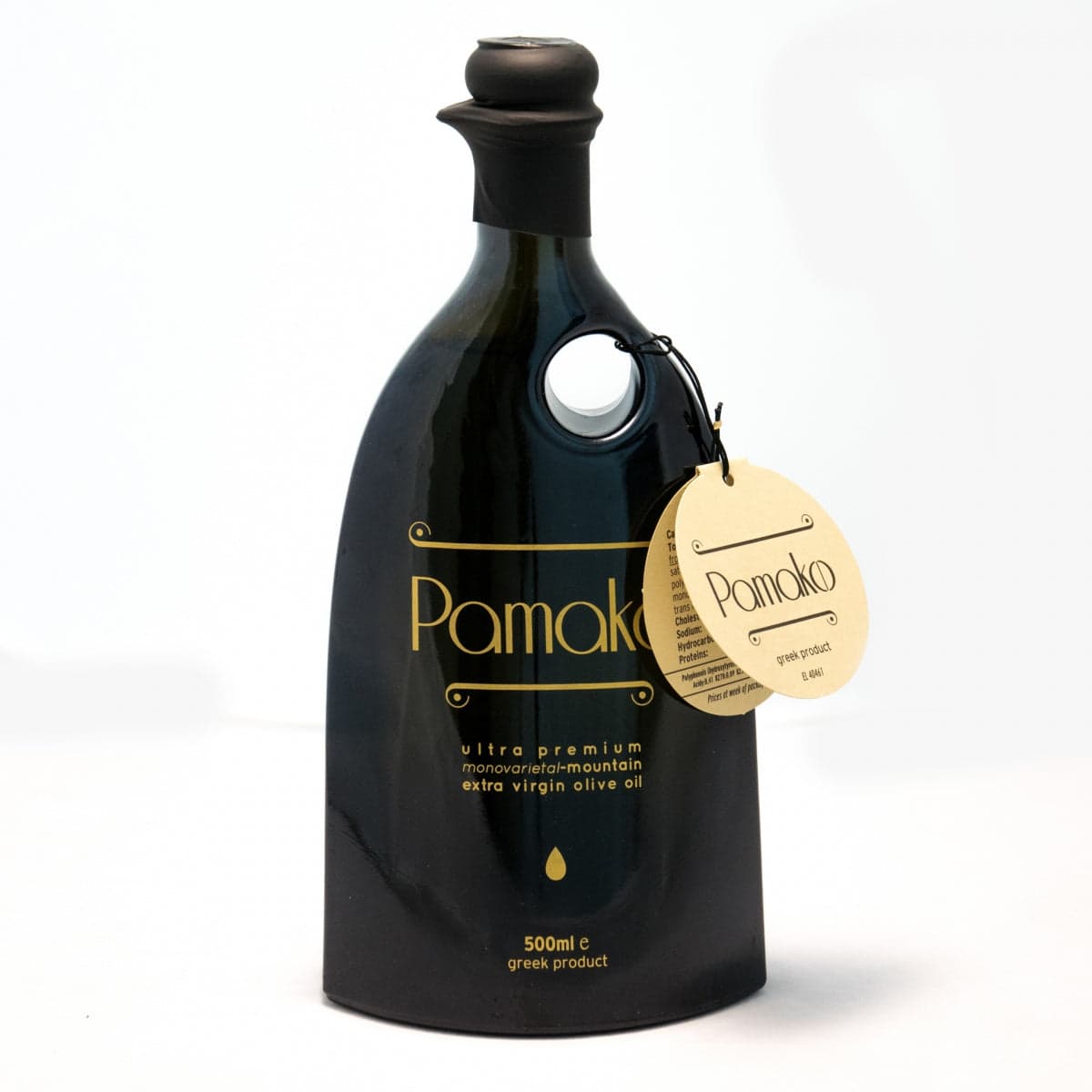
Pamako
€54.95· 500ml
€1.65 per 15ml serving
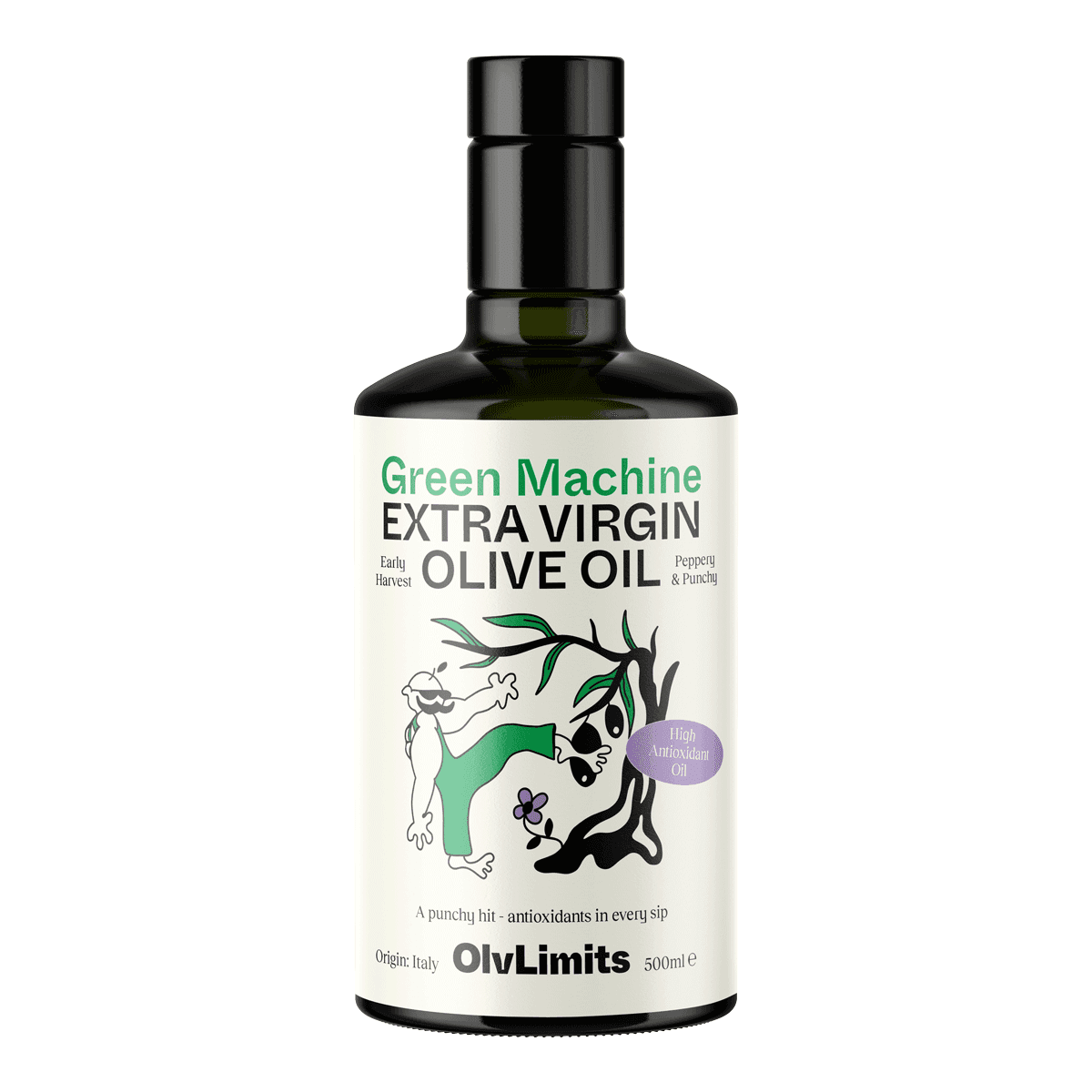
Green Machine
OlvLimits
€23.00· 500ml
€0.69 per 15ml serving
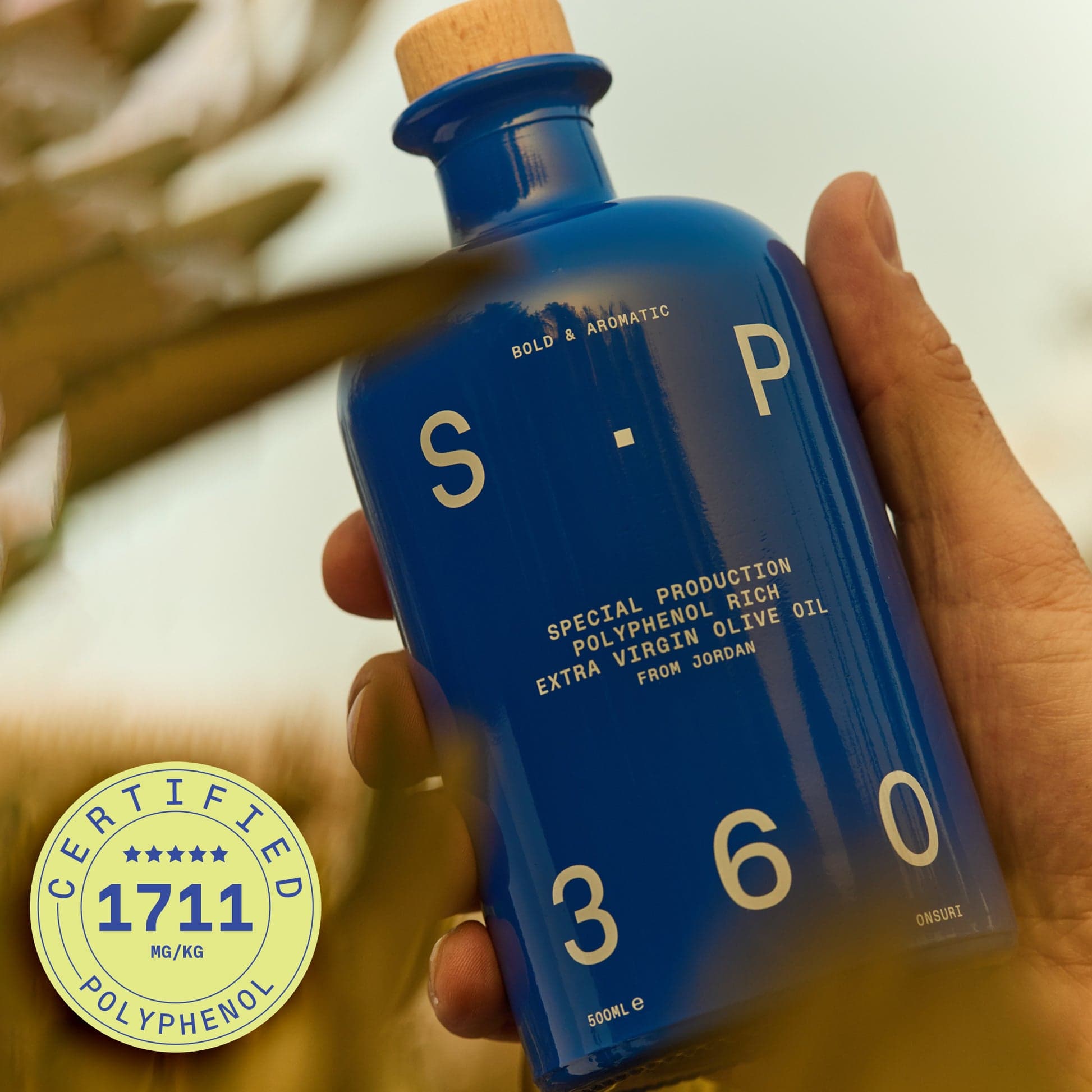
SP360
£42.00· 500ml
£1.26 per 15ml serving
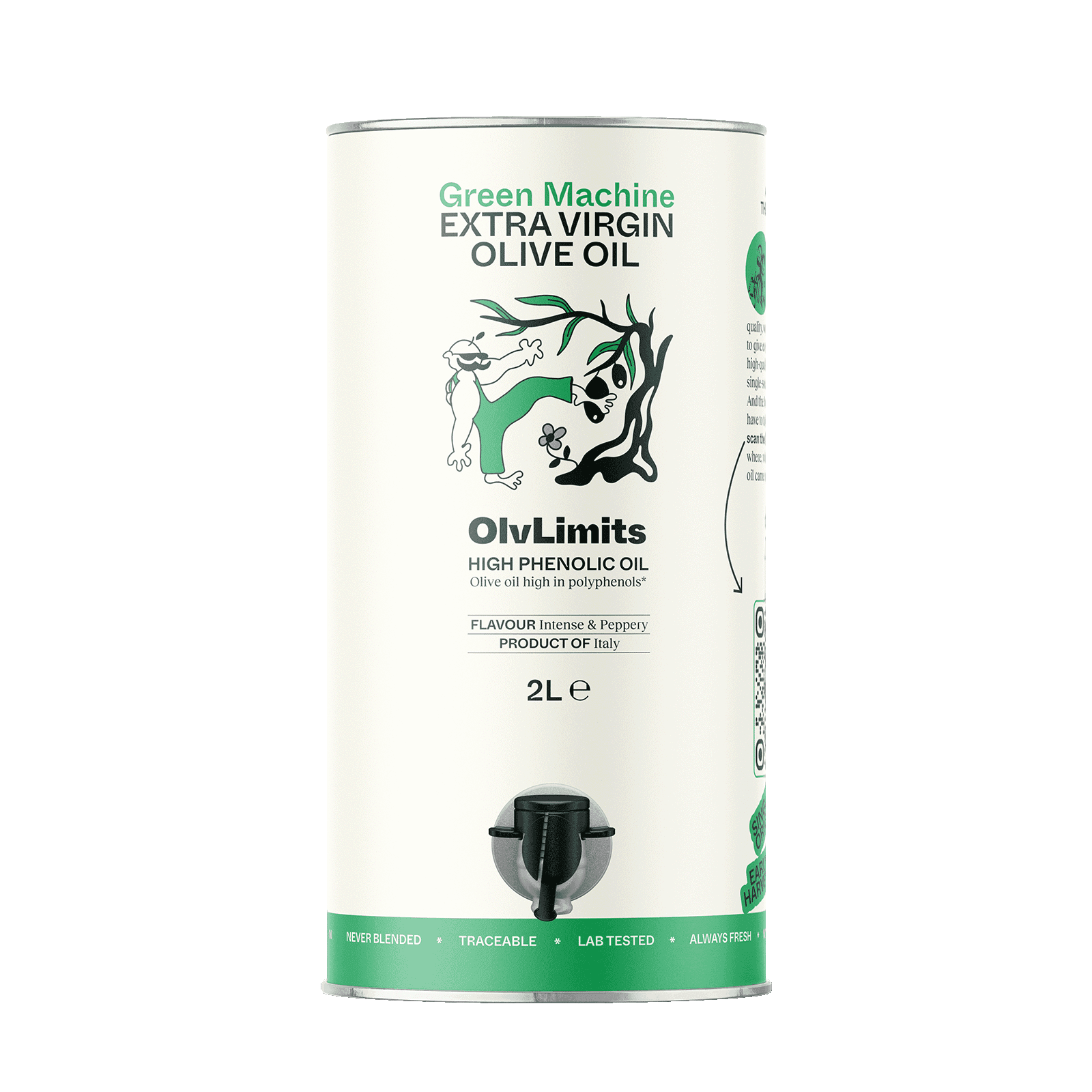
Green Machine 2L bag-in-tube
OlvLimits
€80.00· 2L(≈€20.00/500 ml)
€0.60 per 15ml serving