Health Benefits of High-Polyphenol Olive Oil: What the Evidence Actually Says (2026)
One olive-oil polyphenol health claim is authorised in the EU. Here is what the research does and does not show for the heart, blood sugar, memory and inflammation — with the primary sources beside each claim.

High-polyphenol olive oil is one of the most-studied foods in the Mediterranean diet, and one of the most over-sold. EU law authorises exactly one health claim for its polyphenols: they help protect blood lipids from oxidative stress, for an oil eaten at 20 g a day that carries enough hydroxytyrosol. Every other benefit you will read about — for the heart, blood sugar, memory, or inflammation — is research at some stage, not a proven effect of the oil on its own.
This guide separates the two, with the primary source beside each claim. For the compounds behind the science, see what polyphenols in olive oil are. To compare measured oils, see the high-polyphenol olive oil ranking.
The one health claim EU law authorises
One health claim about olive oil polyphenols is authorised in the European Union. Under Commission Regulation (EU) No 432/2012, the wording is fixed:
"Olive oil polyphenols contribute to the protection of blood lipids from oxidative stress."
It carries two conditions, and both are mandatory. The oil must contain at least 5 mg of hydroxytyrosol and its derivatives (such as the oleuropein complex and tyrosol) per 20 g. And the label must tell the reader the effect comes with a daily intake of 20 g of olive oil, about one and a half to two tablespoons.
The claim is narrow on purpose. It rests on a 2011 EFSA opinion that found a cause-and-effect relationship, from human trials, between olive oil polyphenols and the protection of LDL particles from oxidative damage. That is a specific chemical effect — the fats in your blood resisting oxidation — not a claim about cholesterol levels, blood pressure, or any disease. The 250 mg/kg it works out to is the health-claim floor for hydroxytyrosol and its derivatives, separate from the higher level we prioritise when we rank oils.
Why does that narrow effect matter? LDL particles carry fat through the blood, and once they oxidise they are more likely to lodge in artery walls. Olive oil polyphenols are antioxidants that slow that oxidation. EFSA judged the human evidence strong enough for this one mechanistic step, and no further.
One point clears up a common muddle. Two other authorised claims can appear on olive oil, but neither is a polyphenol claim. One is for vitamin E ("contributes to the protection of cells from oxidative stress"); the other is for oleic acid, where replacing saturated fat with unsaturated fat "contributes to the maintenance of normal blood cholesterol levels." Each needs its own nutrient condition met. So when a bottle credits its polyphenols with lowering cholesterol, it is borrowing a claim that belongs to a different nutrient — or to none at all.
Why most "benefits" are studied for, not proven
Beyond that one claim, olive oil has a large and genuinely interesting research literature. Reading it well takes two distinctions.
Association is not causation. Much of the evidence is observational: researchers track what large groups eat and what happens to their health over years. These studies can show that people who use more olive oil tend to have better outcomes. They cannot show the oil caused them — heavy olive-oil users differ in many other ways.
The diet is not the ingredient. The most-cited olive-oil trials test a whole Mediterranean pattern, not polyphenols in isolation. When a benefit shows up, the pattern is what was tested. Crediting one compound with the whole result claims more than the study can support. That is why "studied for" and "associated with" recur below: they mark the gap between a research signal and a proven effect.
Heart health: the strongest evidence, and its asterisks
Cardiovascular health has the most evidence, and the best of it. The landmark trial is PREDIMED, which randomised 7,447 people at high cardiovascular risk to one of three diets: a Mediterranean diet with extra virgin olive oil, the same diet with nuts, or a low-fat control. Over about five years, both Mediterranean groups had fewer major cardiovascular events than the control group — roughly 30% fewer in the olive-oil group (hazard ratio 0.69; 95% CI 0.53 to 0.91).
Two asterisks matter. The intervention was a whole diet, with the oil alongside vegetables, legumes and fish. And the original 2013 paper was retracted and re-published in 2018, after the investigators found some sites had not randomised participants individually; the re-analysis reached the same conclusions. A separate look at olive-oil intake within the same cohort, in BMC Medicine, associated the highest intake with lower cardiovascular risk — but that analysis is observational, not randomised.
Closer to the authorised claim, a 2023 dose-response meta-analysis of randomised trials found that phenol-rich olive oil lowered oxidised LDL, with more phenols producing a larger effect. That is the one cardiovascular signal that maps directly onto what EU law already allows.
→ Human evidence, mixed — one large dietary-pattern trial plus observational data, and pooled trials on the oxidised-LDL marker; the whole diet, not polyphenols alone, was usually what was tested.
Cholesterol and blood pressure: what EFSA keeps deciding
If one effect gets over-claimed for olive oil, it is cholesterol. Here the regulator has been consistent. When EFSA assessed the polyphenol claims in 2011, it authorised only the blood-lipid-oxidation one and rejected the rest, including a claim for maintaining normal HDL cholesterol.
In 2025 it looked again at two new applications and declined both. One asked to say olive oil polyphenols help maintain normal HDL cholesterol; the panel found the evidence insufficient to establish cause and effect. The other asked to say the phenols lower LDL cholesterol and blood pressure and so reduce coronary heart disease risk; the panel agreed those changes would be beneficial, but concluded the effect was not established. A rejected claim is not a disproven benefit — it means the evidence has not cleared the bar. Our brief on the 2025 rejections works through both opinions.
→ Reviewed and not authorised — twice.
Blood sugar and memory: weaker, and mostly observational
Two areas draw a lot of hopeful copy and have little behind them.
For blood sugar, the human trials are, so far, null. A 2025 meta-analysis of 51 randomised trials found olive oil did not significantly change fasting glucose, HbA1c, insulin, or insulin resistance overall. An earlier meta-analysis of 13 trials reached the same null result. Olive oil does not control blood sugar, and the research does not present it as something that does.
For memory, the signal is observational. A cross-sectional analysis within PREDIMED linked a diet rich in polyphenol foods to better cognitive scores in older adults. A 2023 systematic review of mostly observational studies pointed the same way. Both describe a whole dietary pattern, not olive oil on its own.
→ Mostly observational, or null — no authorised claim, and the glucose trials show no effect.
The peppery sting and inflammation
The peppery catch at the back of your throat comes from oleocanthal, a phenolic compound in fresh oil. Its fame traces to a 2005 paper in Nature showing that, in the laboratory, oleocanthal inhibits the same cyclo-oxygenase enzymes as ibuprofen. That is a mechanism in a test tube, not a drug effect in the body — the amount in a normal serving is far below a therapeutic ibuprofen dose.
The human evidence is real but modest. In a small randomised trial of 28 coronary patients, a high-phenol oil lowered the inflammatory markers interleukin-6 and CRP against a low-phenol oil. The more recent APRIL trial in adults with obesity and prediabetes saw a narrower effect, on interferon-γ alone. Pooling 23 trials, a 2026 meta-analysis found daily extra virgin olive oil lowered CRP compared with low-polyphenol oils. Encouraging — but not a reason to rely on olive oil in place of anti-inflammatory care.
→ Human evidence, mixed, on a lab-first mechanism — small trials plus pooled CRP data, with modest effect sizes.
How to read any olive-oil health claim
Once you see how the evidence is layered, you can judge other sources quickly. Four questions do most of the work.
- Is it the authorised wording, with the 20 g/day condition? That exact sentence is the only sanctioned one; anything more is the writer's framing.
- Does it name a disease as a benefit? EU rules are built to stop food being positioned against an illness, so that is a red flag.
- Is a study offered as proof, or as a signal? One observational study, or a finding in cells, is a starting point, not a settled fact about people.
- Diet, or ingredient? When a benefit is reported, check whether a whole dietary pattern was tested or the oil alone. Almost always, it is the pattern.
What the evidence adds up to
A single table captures where each claim stands.
| Claim you might see | Evidence status | Can a bottle say it? |
|---|---|---|
| Polyphenols help protect blood lipids from oxidative stress | Authorised EU claim (Reg. 432/2012), with conditions | Yes — with the 20 g/day statement and the 5 mg/20 g threshold |
| Lowers oxidised LDL | Pooled randomised trials, dose-related | Supports the authorised claim's mechanism |
| Maintains or raises HDL cholesterol | EFSA reviewed and declined (2011 and 2025) | No |
| Lowers LDL cholesterol or blood pressure | EFSA reviewed and declined (2025) | No |
| Controls blood sugar | Meta-analyses show no significant effect | No |
| Improves memory or cognition | Observational, whole-diet | As an association only |
| Lowers inflammation | Small trials and pooled CRP data, mixed | Studied for, not authorised |
The only sentence a bottle can carry is the blood-lipid one, and only when both conditions are met. Everything else belongs in the language of research. Our evidence overview grades each outcome in more depth.
Limitations
The evidence has specific limits worth naming. The cardiovascular and cognitive findings mostly test a whole Mediterranean diet, so they cannot isolate the oil or its polyphenols. PREDIMED, the strongest trial, had randomisation problems that forced a retraction and re-analysis. The glucose trials are null. The inflammation trials are small, short, and often run in people who are already ill. And the oleocanthal-ibuprofen result is a laboratory mechanism, not a demonstrated effect in people who eat olive oil.
The bottom line
High-polyphenol olive oil is a genuinely good food with one authorised health claim: it helps protect blood lipids from oxidative stress, at 20 g a day, from an oil rich enough to qualify. Read everything past that as research worth following, not a reason to buy — and as a food, not a medicine. To choose an oil that actually clears the threshold, see how to choose a high-polyphenol olive oil. For the daily amount, see how much to use daily.
Frequently asked questions
Is there an approved health claim for high-polyphenol olive oil?
Yes, one. EU law authorises the claim that olive oil polyphenols help protect blood lipids from oxidative stress, for an oil containing at least 5 mg of hydroxytyrosol and its derivatives per 20 g, and only if the label states the effect comes with a daily intake of 20 g of olive oil.
Does high-polyphenol olive oil lower cholesterol or blood pressure?
No such claim is authorised. EFSA reviewed proposed HDL-cholesterol, LDL-cholesterol and blood-pressure claims in 2025 and, for HDL, back in 2011, and each time found the human evidence did not establish cause and effect. Olive oil is associated with cardiovascular outcomes within a Mediterranean diet, which is not the same as a proven effect of the oil.
Is high-polyphenol olive oil good for the heart?
Olive oil eaten as part of a Mediterranean diet was linked to fewer cardiovascular events in the PREDIMED trial, and pooled trials show phenol-rich oil lowers oxidised LDL — the effect the authorised claim covers. Most of the evidence tests the whole diet, so a broader heart claim is not supported.
Does olive oil help blood sugar or diabetes?
The human trials are null. Meta-analyses of randomised trials, including a 2025 review of 51 trials, found olive oil did not significantly change fasting glucose, HbA1c, insulin, or insulin resistance. It is not a blood-sugar aid.
Is oleocanthal really like ibuprofen?
In the laboratory, oleocanthal inhibits the same cyclo-oxygenase enzymes as ibuprofen. That is a mechanism in a test tube, not a drug effect in the body, and the amount in a normal serving is far below a medicinal ibuprofen dose.
Can olive oil polyphenols replace medication or manage a condition?
No. Olive oil is a food, not a medicine, and nothing here is medical advice. The only authorised claim is the narrow blood-lipid one. If you have a health condition or take medication, speak to a qualified healthcare professional before changing your diet.
How we reviewed this article
Written and edited by our editorial team and checked against primary research and EU regulation. We cite peer-reviewed studies and official sources, and prefer human trials and reviews over in-vitro work.
Sources
- Commission Regulation (EU) No 432/2012 establishing a list of permitted health claims (consolidated Annex) — EUR-Lex
- Scientific Opinion on the substantiation of health claims related to polyphenols in olive and protection of LDL particles from oxidative damage (EFSA Journal 2011;9(4):2033) — EFSA Journal
- Olive oil polyphenols and the maintenance of normal HDL-cholesterol concentrations: scientific opinion (EFSA Journal 2025;23(5):e9372) — EFSA Journal
- Phenolic compounds in olive oil, LDL cholesterol, systolic blood pressure and coronary heart disease risk: scientific opinion (EFSA Journal 2025;23(5):e9470) — EFSA Journal
- Primary prevention of cardiovascular disease with a Mediterranean diet supplemented with extra-virgin olive oil or nuts (PREDIMED, 2018 republication) — New England Journal of Medicine
- Olive oil intake and risk of cardiovascular disease and mortality in the PREDIMED study — BMC Medicine
- Effect of olive oil phenols on oxidative stress biomarkers: a systematic review and dose-response meta-analysis of randomised clinical trials (2023) — Food Science & Nutrition
- The effect of different types of olive oil on glucose control and insulin sensitivity: a GRADE-assessed dose-response meta-analysis of 51 RCTs (2025) — Nutrition Reviews
- Polyphenol-rich foods in the Mediterranean diet are associated with better cognitive function in elderly subjects at high cardiovascular risk — Journal of Alzheimer's Disease
- The effects of olive oil consumption on cognitive performance: a systematic review (2023) — Frontiers in Nutrition
- Phytochemistry: ibuprofen-like activity in extra-virgin olive oil (oleocanthal) — Nature (PubMed)
- Anti-inflammatory effect of virgin olive oil in stable coronary disease patients: a randomised, crossover, controlled trial — European Journal of Clinical Nutrition
- Rich oleocanthal and oleacein extra virgin olive oil and inflammatory and antioxidant status in people with obesity and prediabetes (APRIL study, 2023) — Clinical Nutrition
- Effects of daily extra virgin olive oil consumption on biomarkers of inflammation and oxidative stress: a systematic review and meta-analysis (2026) — Critical Reviews in Food Science and Nutrition
Searching for olive oil for your health and longevity
Our top-ranked high-polyphenol olive oils, sorted by lab-verified content.
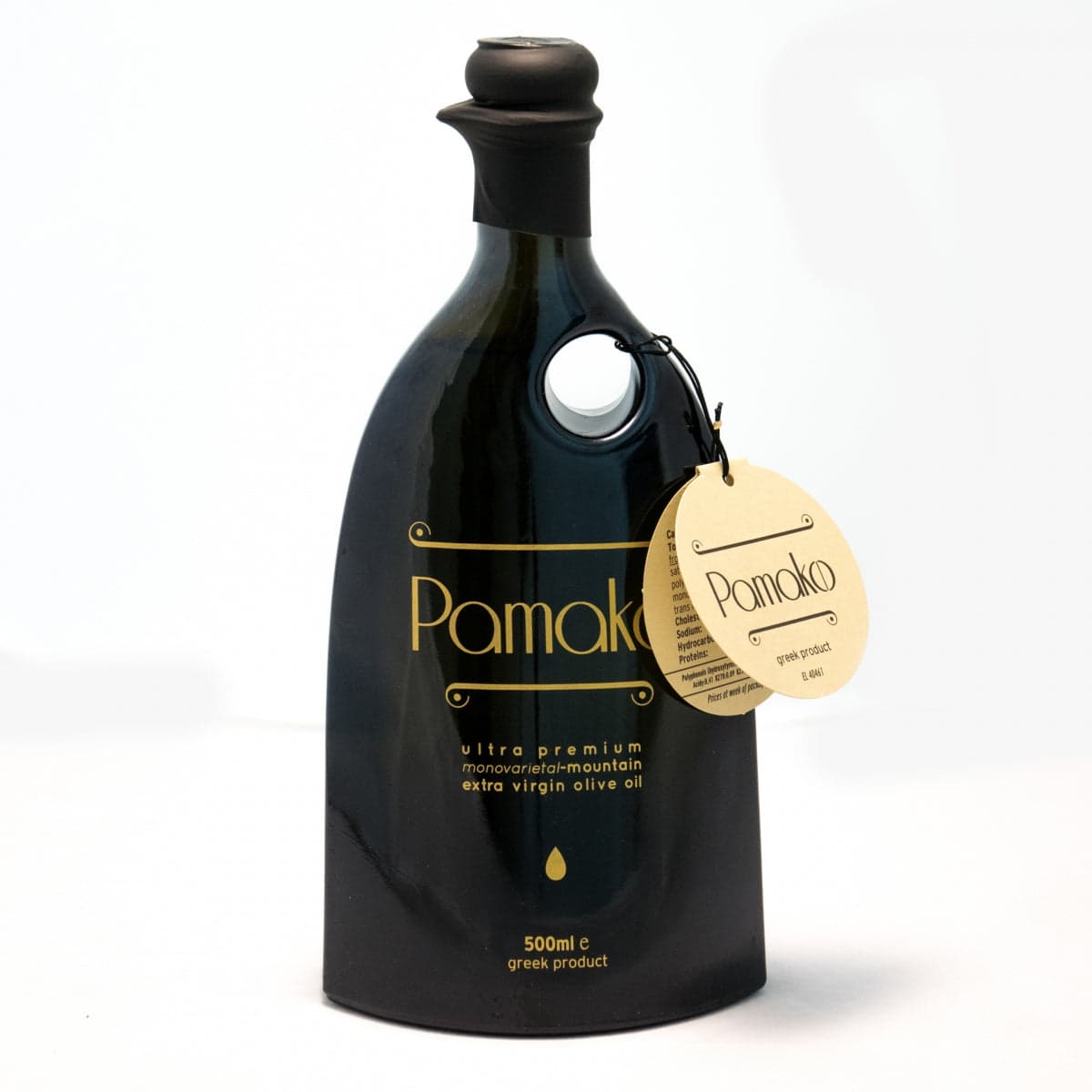
Pamako
€54.95· 500ml
€1.65 per 15ml serving
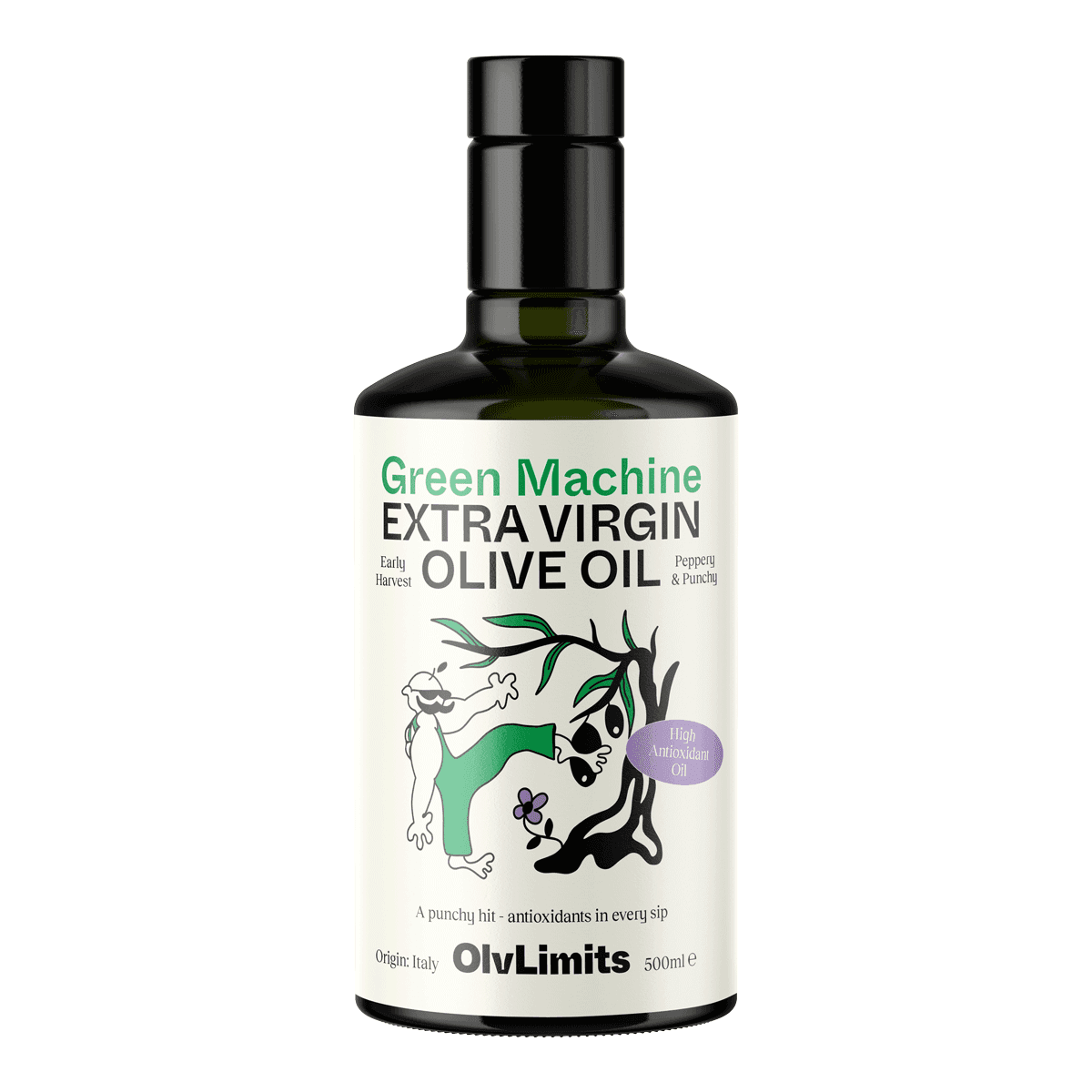
Green Machine
OlvLimits
€23.00· 500ml
€0.69 per 15ml serving
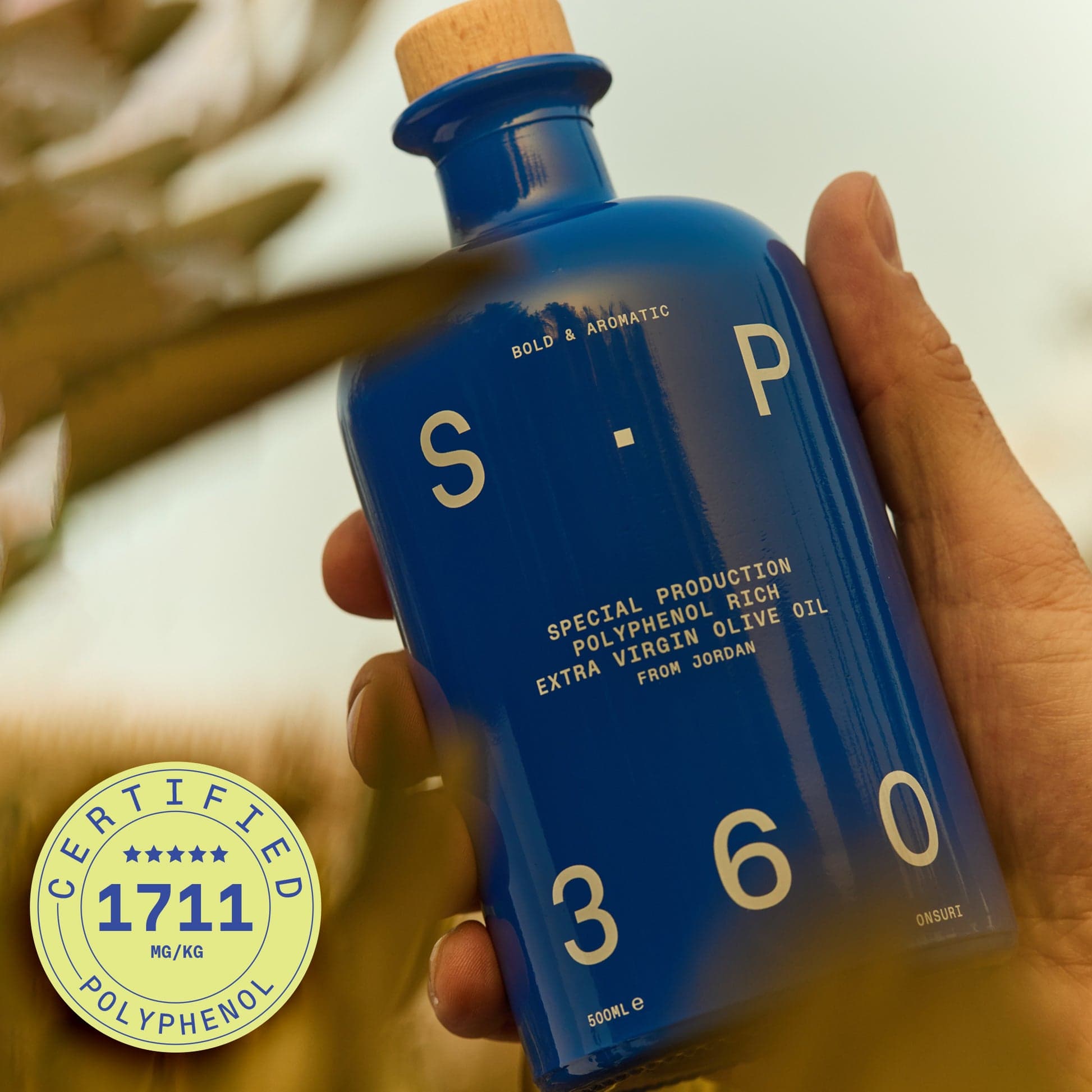
SP360
£42.00· 500ml
£1.26 per 15ml serving
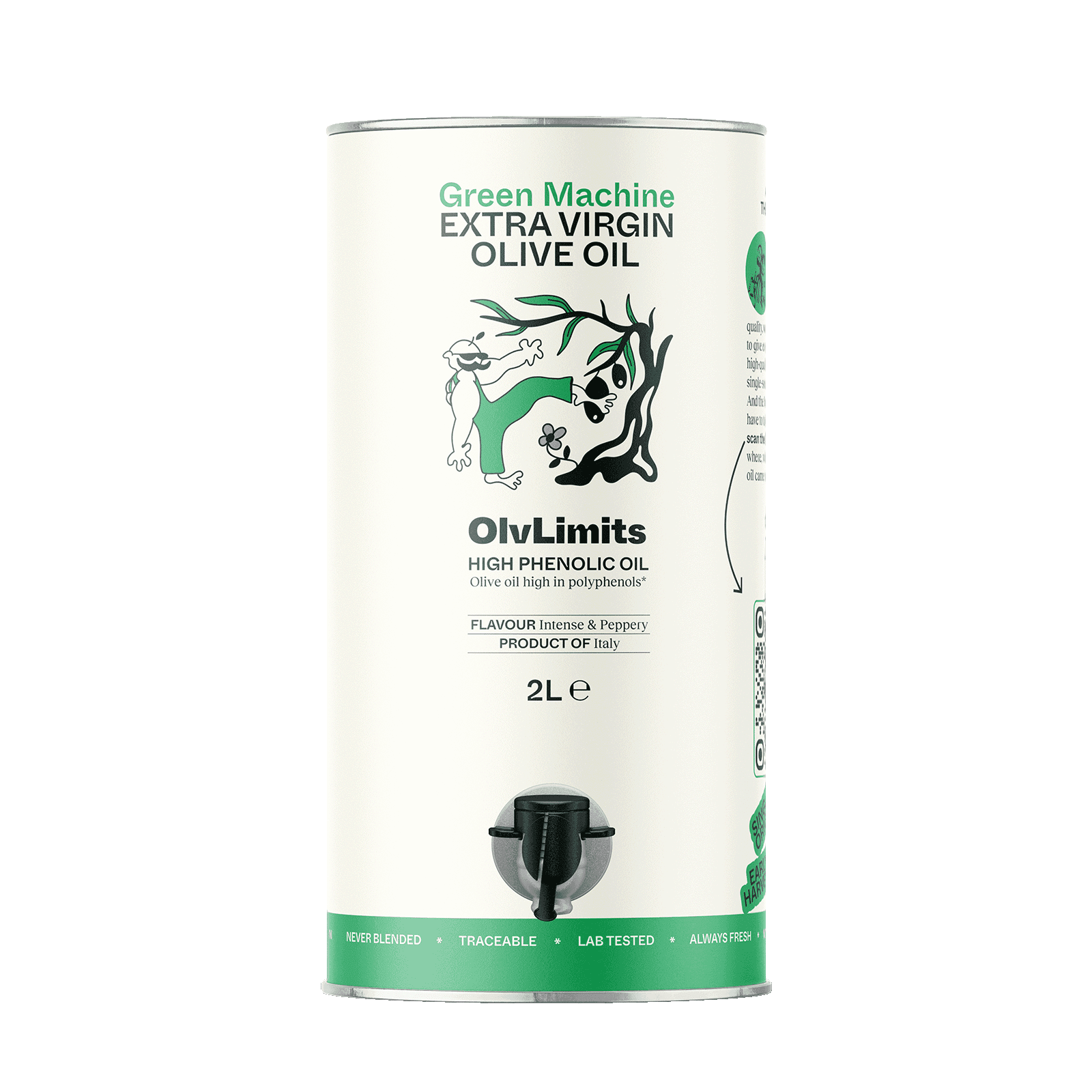
Green Machine 2L bag-in-tube
OlvLimits
€80.00· 2L(≈€20.00/500 ml)
€0.60 per 15ml serving