How to Spot Fake Olive Oil: A Verification Checklist (2026)
A data-led guide to olive oil fraud, why the 'extra virgin' label is often unreliable, and the label and lab signals that separate genuine oil from filler.

"Extra virgin" sounds like a guarantee. In law it is a defined grade with measurable limits. But the gap between the label claim and the oil inside is wider than most shoppers expect. Olive oil has a long history of mislabelling. "Extra virgin" is one of the most misapplied terms in the supermarket.
Here is the short version. You do not need a laboratory to protect yourself. You do need to stop trusting the front label and start reading the back. Two facts settle most of it: a printed harvest date and a measured polyphenol figure. Everything else on this page supports those two.
The rest of this guide explains what the grade means, what the research found, and how to read a bottle in front of a shelf or a product page.
What does "extra virgin" legally mean?
Extra virgin olive oil is the top grade in the olive oil classification, defined by measurable limits rather than marketing. Under the International Olive Council trade standard, an oil qualifies as extra virgin only if it meets set chemistry and sensory thresholds: free acidity no higher than 0.8% expressed as oleic acid, a peroxide value at or below 20 meq O2/kg, and a passing score from a trained sensory panel that finds fruitiness and no defects. EU rules apply the same core thresholds, with free acidity for extra virgin capped at 0.8%.
So the grade describes a chemical and sensory state at the moment of testing. It is not a permanent property. An oil can leave the mill as genuine extra virgin and then slip below the grade as it oxidises on a warm shelf. The grade is also only as reliable as the testing and enforcement behind it. That is where the problems begin.
For the chemistry behind these limits in plain language, see our explainers on what polyphenols in olive oil are and how labs measure them.
What the research actually found
The most-cited evidence on mislabelling comes from the UC Davis Olive Center. In reports published in 2010 and 2011, researchers tested retail samples sold in California. They reported that 69% of imported samples labelled extra virgin failed to meet the International Olive Council standards for that grade. That compared with roughly 10% of the California-produced samples tested. A follow-up examined top-selling imported brands and found a similar share failed the sensory panels.
What does "failed" mean here? Usually the oil showed sensory defects such as rancid, musty, or fusty flavours. Or it showed chemistry consistent with oxidation and poor handling. It was rarely a different liquid altogether. Much of the problem is degradation and grade inflation, not olives swapped for cheaper seed oils. Both matter. But the everyday risk is paying extra virgin money for oil that no longer performs like extra virgin.
More recent European retail testing suggests the same pattern. A share of budget oils carrying the extra virgin label show defects that would disqualify them under EU rules. The label is a claim, not a measurement. The cheapest tier is where claims and contents drift apart most.
For a structured view of how strong the evidence is across outcomes, see our health evidence overview.
The nine-point verification checklist
No single signal is decisive. Authenticity is a weight-of-evidence judgement. The checklist below runs roughly from strongest to weakest signal. The top items are the ones that move the needle.
| Signal | What it tells you | Weight |
|---|---|---|
| Harvest date printed | Real freshness clock | Strong |
| Published lab/polyphenol data | Verifiable quality | Strong |
| Named cultivars and single origin | Traceability, intent | Strong |
| PDO / PGI certification | Regional traceability | Moderate |
| Dark glass or tin | Protection from light | Moderate |
| Realistic price | Rules out implausibly cheap | Moderate |
| "Cold extracted" wording | Process signal (loosely) | Weak |
| Deep green colour | Often manipulated | Misleading |
| "Bottled in / imported from" | Origin theatre | Weak |
1. Look for a harvest date, not just a best-before
Olive oil does not improve with age. The clock starts at harvest, when the olives are milled. A printed harvest or "crush" date is the single most useful fact on a bottle. It lets you judge freshness directly. A best-before date can be set a year or two ahead. It reveals nothing about how old the oil was at bottling. A producer who prints the harvest date is inviting scrutiny, which is itself a good sign. Read more in our guide to why the harvest date matters.
2. Demand lab data, especially polyphenols
The clearest evidence of quality is a number from an accredited lab. Look for a producer or curator that publishes a measured polyphenol content in mg/kg, and ideally the test method behind it. That is the work the word "extra virgin" alone cannot do. Polyphenols carry the oil's bitterness and pepperiness. They fade as the oil ages, so a recent high reading points to both quality and freshness. Our methodology page explains how we use these figures. The master ranking of high-polyphenol olive oils is built on published lab results rather than label claims.
3. Check for named cultivars and single origin
Vague oils hide. A good label names the olive varieties, such as Koroneiki, Picual, or Coratina. It also names a specific estate or region. That offers traceability a generic blend cannot. This does not prove the grade on its own. But it tends to go with producers who control their supply chain and have reasons to be transparent. To see which varieties tend to test highest, read about olive cultivars and polyphenols.
4. Regard PDO and PGI as traceability, not a quality score
PDO (Protected Designation of Origin) and PGI (Protected Geographical Indication) are EU schemes that tie an oil to a defined region under documented rules. They add accountability and make outright origin fraud harder. They do not measure polyphenol content or guarantee freshness. Use them as supporting evidence, not as the headline.
5. Prefer dark glass or tin
Light drives oxidation. Dark glass, coated bottles, and tins slow that process. Clear glass exposes the oil to the very thing that degrades it. Clear glass is not proof of a bad product. But it tells you the producer optimised for shelf appeal rather than arriving in good condition. Pair this with our advice on storing high-polyphenol olive oil.
6. Sanity-check the price
Genuine extra virgin olive oil from a careful producer has a real cost floor. Early harvest, careful milling, and proper storage are not cheap. An oil priced far below the field is a flag, because something in that chain was cut. The reverse does not hold. A high price does not guarantee quality. Studies have found defective oils selling at premium prices. Price rules out the implausibly cheap. It does not certify the rest.
7. Read process wording carefully
Terms like "cold extracted" and "cold pressed" point to gentler processing that better preserves polyphenols. But the wording is loosely regulated and easy to overstate. Our comparison of cold-pressed versus extra virgin explains what these phrases legitimately mean and where they turn into decoration.
8. Ignore colour as a quality cue
A deep green colour feels like proof of freshness. But colour shifts with cultivar, ripeness, and filtration. Professional tasters assess oil from blue-tinted glasses precisely so colour cannot bias them. Green is not a quality grade. Do not let it override the harder signals above.
9. Be wary of origin theatre
"Imported from Italy", "Mediterranean recipe", and similar phrases evoke an origin without committing to one. An oil can be bottled in one country from olives grown in several others. This is legal and not inherently fraudulent. But it is the opposite of the single-origin transparency the strongest signals reward.
A quick at-home sensory check
An at-home taste test cannot grade an oil, but it can catch obvious defects. You cannot run a lab in your kitchen. Still, a few minutes with a glass tells you a lot. Pour a small amount, warm the glass in your hand, and taste.
Fresh, genuine oil tends to taste fruity, with a bitterness and a peppery catch at the back of the throat. That pepper is associated with the oil's polyphenol content. Defective or degraded oils taste flat, greasy, or waxy, or smell of crayons (rancid), damp cardboard (musty), or fermented olives (fusty).
If an oil tastes of nothing and feels merely oily, it is not delivering what extra virgin should. For more on what to look for when buying, see how to choose a high-polyphenol olive oil, and keep the nine-point checklist above as your shelf-side reference.
What polyphenols have to do with trust
One place on the label is tightly constrained by law, which makes it a useful credibility test. The only health claim authorised in the EU for olive oil polyphenols, under Commission Regulation (EU) No 432/2012, is that "olive oil polyphenols contribute to the protection of blood lipids from oxidative stress." That wording may only be used for oils containing at least 5 mg of hydroxytyrosol and its derivatives per 20 g. This health-claim floor works out to about 250 mg/kg, a separate figure from any ranking threshold. The label must also state that the effect is obtained with a daily intake of 20 g of olive oil.
So the practical test for overblown marketing is simple. An oil making sweeping medicinal or disease-related promises is going beyond what the regulator permits. A trustworthy seller stays inside the authorised wording and backs the polyphenol figure with a test. Read more in our explainer on hydroxytyrosol. We also cover the studied effects of high-polyphenol EVOO.
How mislabelling actually happens
Mislabelling happens in three main ways, and each calls for a different defence. They are grade inflation, oxidation in the supply chain, and outright adulteration. Knowing which one you are guarding against tells you which signal on the checklist matters most.
Grade inflation is the common one. The oil is genuine olive oil, but a lower grade (virgin, or refined oil derived from lampante) sold as extra virgin. This is the gap the UC Davis and European retail testing exposed. A sensory panel or a recent lab report catches it.
Oxidation in the supply chain is the next. This is oil that left the mill as extra virgin but degraded through age, heat, or light before it reached you. Here the harvest date and storage signals matter most, not the grade on the label.
Cutting with cheaper oils is the rarest. This is real adulteration, where olive oil is blended with refined olive-pomace oil or a cheaper seed oil. It is uncommon in reputable retail and hard to spot by eye. That is why a lab-backed supply chain is the only reliable protection against it.
The first two are the everyday risks, and the same two habits defeat both. Insist on a harvest date, and insist on a published lab figure. The rest of the checklist just applies those two habits, plus a few supporting signals, to whatever bottle is in front of you.
Putting it together
Spotting fake or mislabelled olive oil is less about catching a dramatic swindle. It is more about declining to accept claims you cannot verify. A recent harvest date and published lab data outweigh a pretty label every time. Colour and country-of-vibe wording should carry almost no weight.
That is the problem a transparent curator exists to solve. Rather than asking you to taste-test a shelf, we rank oils on published, lab-tested polyphenol figures and harvest dates. Start with the master ranking. Check how we score in the methodology. Browse the supporting guides for deeper reading. And explore the underlying data to see the verification done for you.
Frequently asked questions
Is most olive oil really fake?
Not exactly fake, but often mislabelled. Studies such as the 2010-2011 UC Davis Olive Center reports found many samples labelled extra virgin failed the chemistry or sensory tests for that grade. The oil is usually still olive oil, just a lower grade than the label claims, or oxidised by age.
Does a high price guarantee genuine extra virgin olive oil?
No. Price correlates loosely with quality, but expensive oils can still be old or poorly stored. Regard price as one signal among several, alongside harvest date, origin, and lab data.
Can I tell if olive oil is fake by taste at home?
You can detect obvious defects. Fresh, genuine extra virgin olive oil tastes fruity, often with a peppery catch at the back of the throat and a hint of bitterness. Flat, greasy, rancid, or musty flavours suggest a defective or degraded oil.
Does dark glass actually matter?
Yes. Light accelerates oxidation, so dark glass or tins protect the oil better than clear bottles. Clear glass is not proof of fraud, but it is a sign the producer prioritised shelf appeal over preservation.
What does PDO or PGI on the label mean?
PDO (Protected Designation of Origin) and PGI (Protected Geographical Indication) are EU schemes tying an oil to a specific region under defined rules. They add traceability but do not directly measure polyphenol content or freshness.
Why does harvest date matter more than best-before date?
Harvest date tells you when the olives were milled, which is the clock that matters for freshness and polyphenols. A best-before date can be set up to two years out and reveals nothing about how old the oil already was when bottled.
Searching for olive oil for your health and longevity
Our top-ranked high-polyphenol olive oils, sorted by lab-verified content.
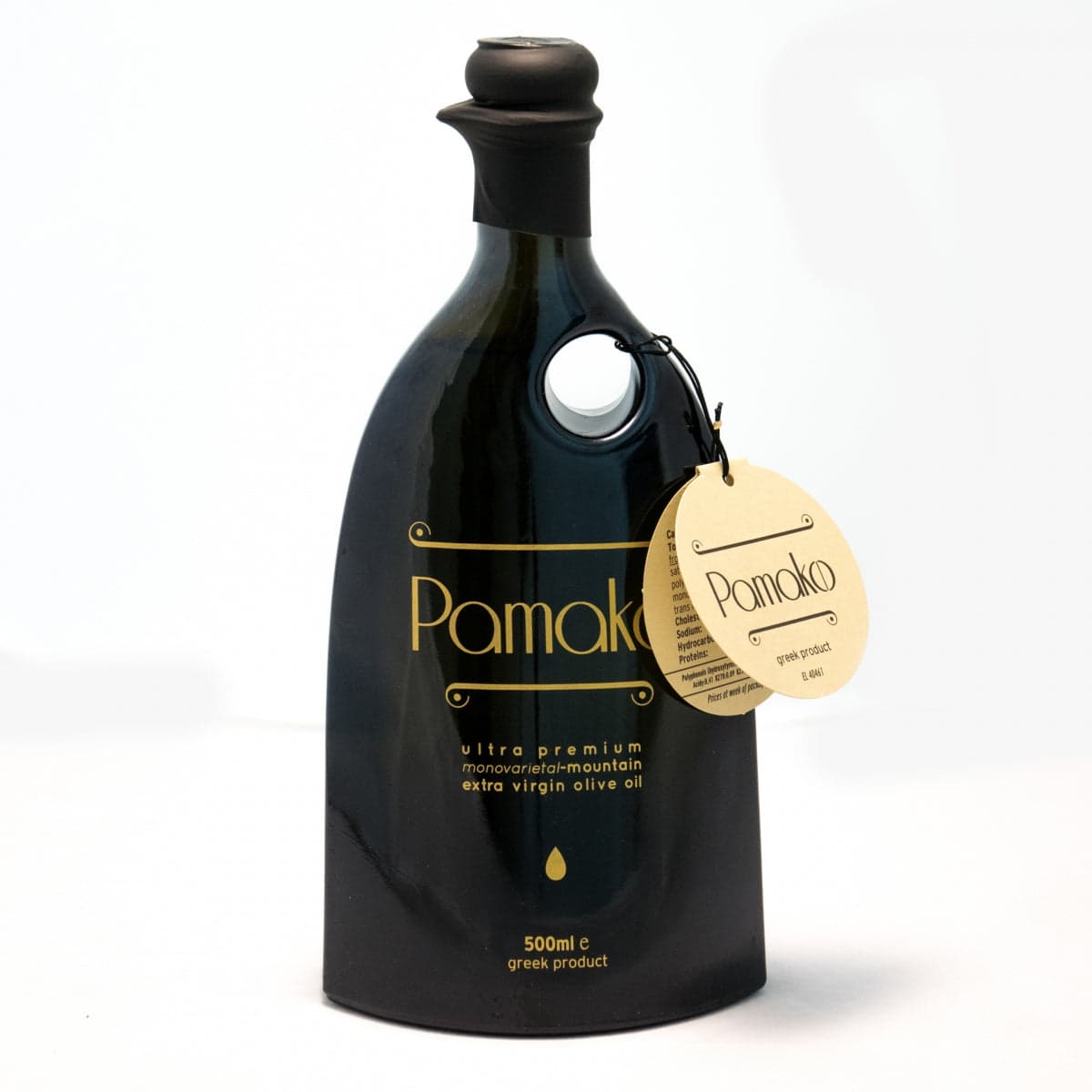
Pamako
€54.95· 500ml
€1.65 per 15ml serving
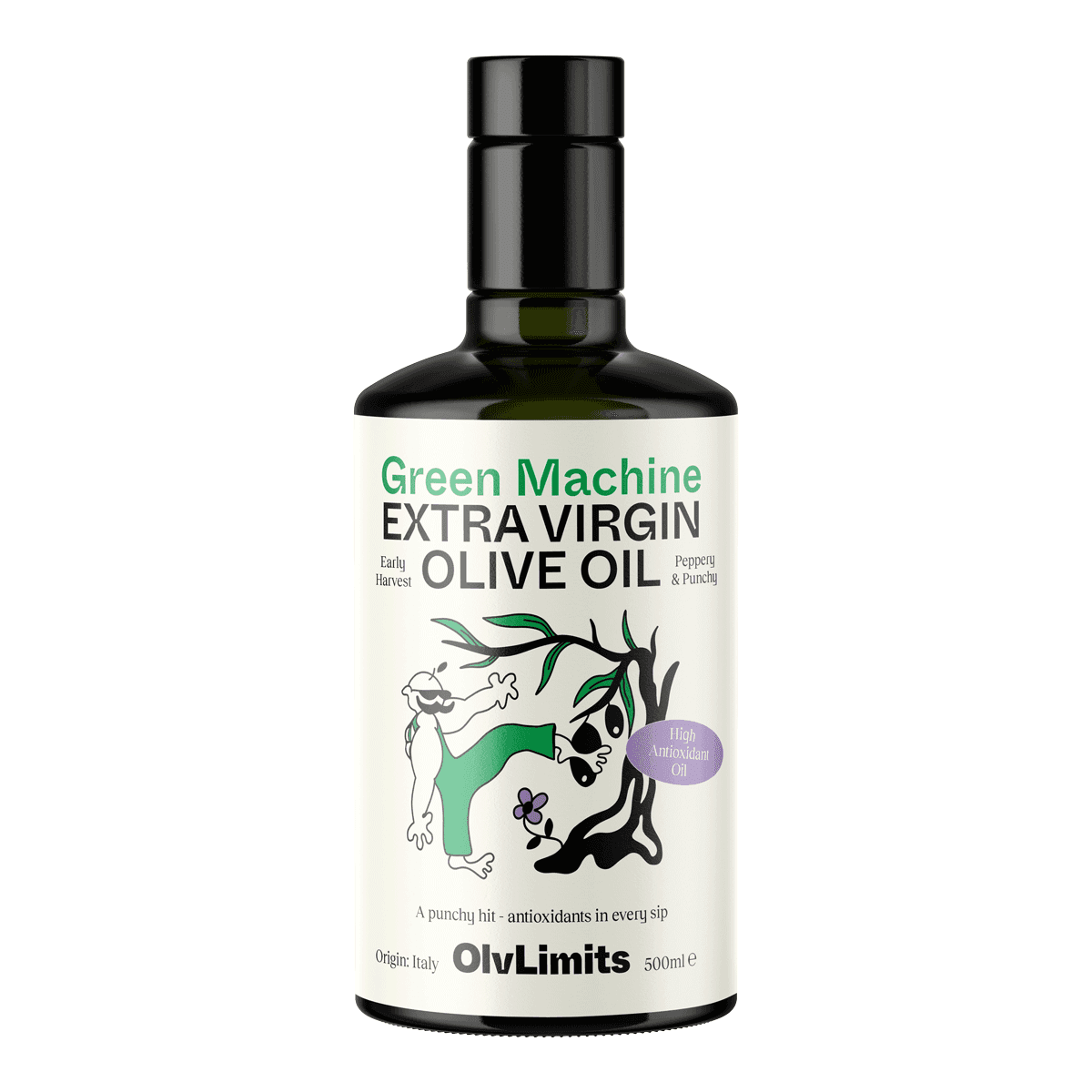
Green Machine
OlvLimits
€23.00· 500ml
€0.69 per 15ml serving
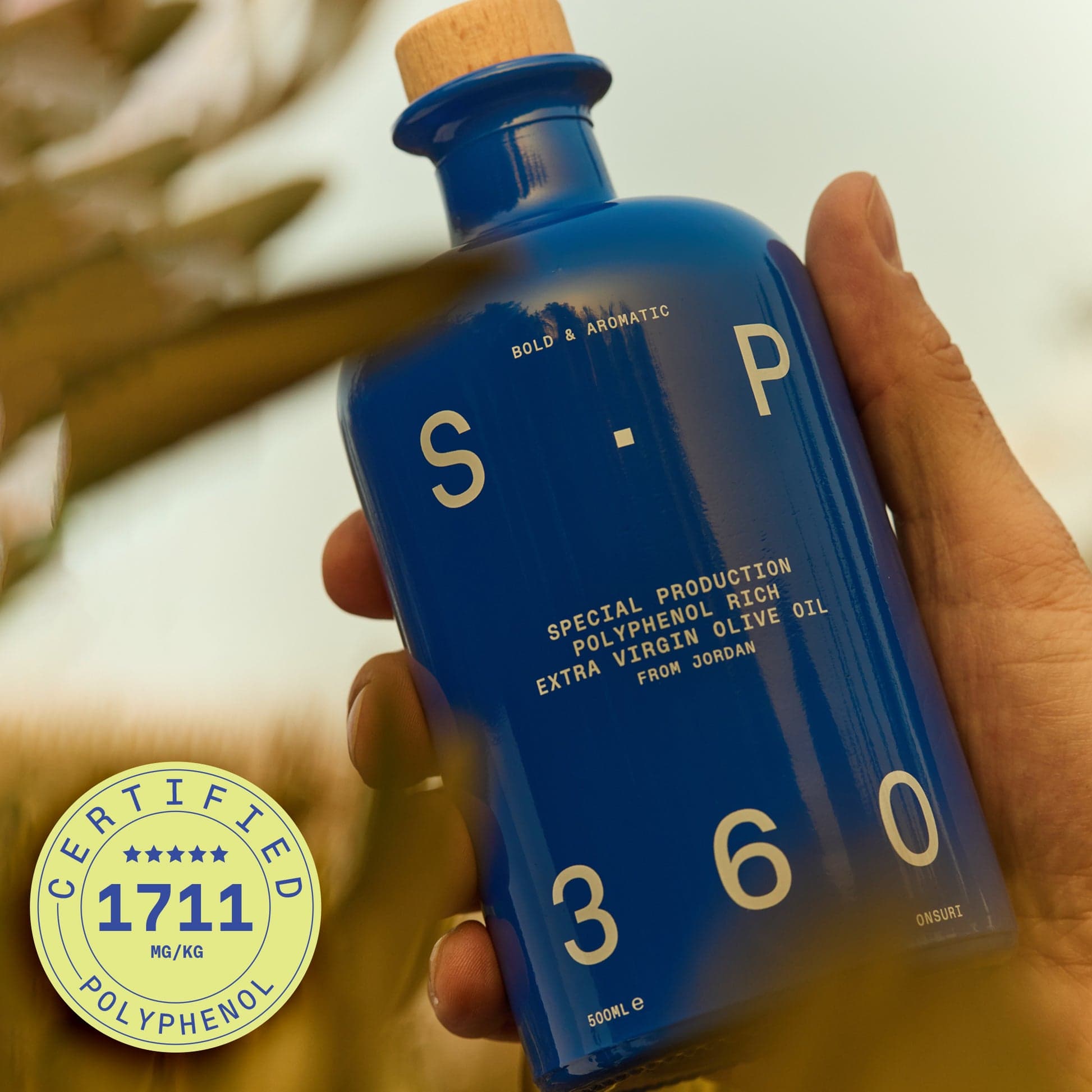
SP360
£42.00· 500ml
£1.26 per 15ml serving
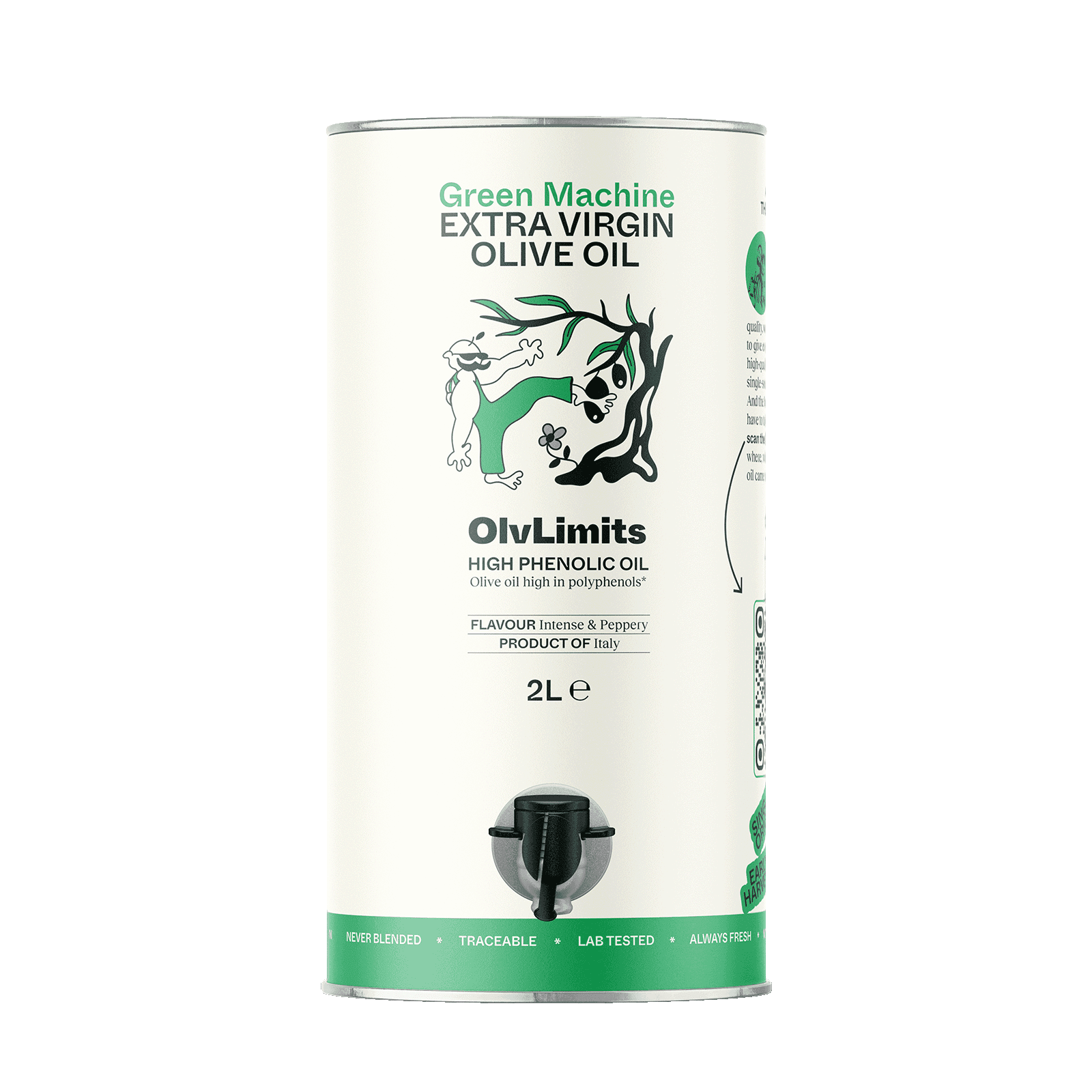
Green Machine 2L bag-in-tube
OlvLimits
€80.00· 2L(≈€20.00/500 ml)
€0.60 per 15ml serving