What Are Polyphenols in Olive Oil? The Complete Guide (2026)
Polyphenols are the antioxidant compounds that separate high-phenolic olive oil from ordinary supermarket oil. Here is what they are, the compounds that matter, and the one health claim European law actually allows.

Polyphenols are the reason a small bottle of fresh, early-harvest olive oil can cost more than a litre of the supermarket equivalent. They are also why it tastes completely different. And they are the antioxidant compounds that turn olive oil from a cooking fat into one of the most-studied foods in the Mediterranean diet.
This guide explains what these compounds are, which ones matter, and how much an oil needs before it counts as "high-phenolic." It also covers what European law does and does not let anyone claim about them. Where we mention a health effect, we link to the primary source and stay inside the boundaries set by the European Food Safety Authority. Many olive oil brands do not.
Polyphenols, biophenols, antioxidants: what's the difference?
Polyphenols are plant compounds built around multiple phenol rings. Plants make them as a defence system against pests, UV light and oxidative damage. That same chemistry lets them act as antioxidants when we eat them. In olive oil, they sit behind almost everything researchers have studied.
In the context of olive oil, scientists often use the more precise term biophenols. That is because not all of the relevant compounds are strictly "poly"-phenols in the textbook sense. In everyday language, and on labels, "polyphenols" is the word everyone uses. So we use it too.
When a lab report says "total polyphenols," it usually means the sum of these phenolic compounds, measured together.
What unites them is one shared behaviour. They donate electrons to neutralise reactive molecules called free radicals. That antioxidant activity sits behind almost everything studied about olive oil's phenolic fraction.
The compounds that actually matter
A typical extra virgin olive oil holds dozens of phenolic compounds, but a handful do most of the work. Learn these five names and you can read almost any lab report or oil description with confidence. Several belong to a family called secoiridoids, the compounds that give fresh oil its bitter, peppery bite.
| Compound | What it is | Why it matters |
|---|---|---|
| Hydroxytyrosol | A simple phenol, one of the most potent dietary antioxidants known | The compound named in the EU health claim; a breakdown product of oleuropein |
| Tyrosol | A simple phenol, chemically close to hydroxytyrosol | Counts toward the "hydroxytyrosol and derivatives" total in the EU claim |
| Oleuropein | A bitter secoiridoid, abundant in olive leaves and unripe olives | The source of much of an oil's bitterness; breaks down into hydroxytyrosol over time |
| Oleocanthal | A secoiridoid (decarboxymethyl ligstroside aglycone) | Responsible for the peppery throat sting; studied for ibuprofen-like activity |
| Oleacein | A secoiridoid closely related to oleocanthal | A strong antioxidant; contributes to bitterness |
Olive oil also contains lignans (such as pinoresinol) and small amounts of flavonoids (luteolin, apigenin). These show up on detailed chromatography reports but sit at much lower quantities.
Hydroxytyrosol and tyrosol: the headline antioxidants
Hydroxytyrosol is a simple phenol and one of the most strongly antioxidant compounds found in any food. It is the molecule the EU health claim is built around, and the one European regulators singled out. Tyrosol is its close chemical relative. Together with their derivatives, the two are what laboratories quantify when checking whether an oil qualifies for that claim. We cover it in depth in our hydroxytyrosol guide.
Oleocanthal and oleacein: the taste of freshness
Oleocanthal is the secoiridoid behind that peppery sting at the back of your throat. If a fresh oil makes you cough, you are tasting it. In a 2005 paper in Nature, researchers reported that oleocanthal produces a throat irritation similar to liquid ibuprofen. They also found it acts on the same COX-1 and COX-2 enzymes in laboratory conditions (Beauchamp et al., 2005). That is a mechanism observed in the lab, not a reason to regard oleocanthal as a medicine. But it is why the peppery kick of a good oil is prized rather than seen as a flaw.
Oleacein differs from oleocanthal by a single functional group. It is a strong antioxidant in its own right, and it contributes more to bitterness than to pungency. Both compounds are concentrated in fresh, early-harvest oils, and both fade as the oil ages. We unpack them, and the evidence around them, in oleocanthal and oleacein explained.
How much is "high-phenolic"?
There is no universal legal definition of "high-phenolic" olive oil, which is exactly why marketing claims around it run so loose. Two numbers give you a footing. The first is the EU health-claim floor of roughly 250 mg/kg of hydroxytyrosol and derivatives. The second is total-polyphenol readings, which run from under 100 mg/kg in tired oil to well over 1,000 mg/kg in fresh oil.
- The EU claim threshold. To carry the authorised health claim, an oil must contain at least 5 mg of hydroxytyrosol and its derivatives per 20 g. That works out to roughly 250 mg/kg of those specific compounds. This figure is the health-claim floor, not our ranking threshold.
- Total polyphenols in practice. Measured as total phenolics, tired or older oils can sit below 100 mg/kg. Fresh, well-made, early-harvest oils commonly run into four figures, and the most concentrated exceed 1,000 mg/kg. Our house reference for fresh oil is roughly 1,000 mg/kg or more from green, early-picked fruit; 400 to 1,000 mg/kg from mid-harvest; and 150 to 400 mg/kg from ripe, late-picked olives.
Here is the point most labels bury. That 250 mg/kg health-claim floor is not a low bar that most oils clear. Studies of retail oil find the opposite. In one analysis, about 90% of Italian retail extra virgin oils fell short of it (Caporaso et al., 2015). Across a seven-country sample, 96% fell below (Pedan et al., 2019). A high number is the exception, which is why a recent lab figure beats an "extra virgin" label every time.
One more thing to understand: this number is not fixed. It is the starting point on the day the oil is pressed, and it falls from there. That is why we publish raw, dated lab values rather than rounded marketing figures. You can compare oils by their measured polyphenol content in our master ranking. And you can read exactly how we collect and present those numbers on our methodology page.
What makes one oil higher in polyphenols than another?
Two bottles of genuine extra virgin olive oil can differ tenfold in polyphenol content. The difference comes down to four things, all decided before the oil ever reaches a shelf: the olive variety, when it was picked, how it was processed, and how fresh it is.
- Cultivar. Some olive varieties are naturally rich in phenolics. Coratina, Picual, Koroneiki and Moraiolo are consistently associated with high polyphenol levels. Others are mild by nature, no matter how carefully they are made. We look at the highest-phenolic varieties in our guide to olive cultivars high in polyphenols.
- Harvest timing. Olives picked early, while still green, are bitter and lower-yielding, but far richer in oleuropein, oleocanthal and oleacein. As olives ripen to black, polyphenol content falls while oil yield rises. That is why high-volume commodity oil tends to be low in phenolics. This trade-off is the subject of our harvest date guide.
- Processing. "Cold extraction" earns its name here. The temperature and duration of malaxation, the slow churning of the olive paste, strongly affect how many phenolics survive into the oil. More heat extracts more oil but destroys more polyphenols. We cover this in malaxation and olive oil polyphenols.
- Freshness. Even a perfectly made oil loses polyphenols on the clock. The number measured at pressing is the ceiling, not a guarantee of what is in a two-year-old bottle.
None of these are visible from the front label, which is exactly why a dated lab measurement is the only reliable signal. It is also why two oils with the same "extra virgin" grade can be worlds apart in the one respect that concerns this site.
Why bitterness and pungency are good signs
Bitterness and pungency are direct sensory signs of a high-phenolic oil. They come from the secoiridoids, oleuropein, oleacein and oleocanthal, the same compounds that make an oil phenolic-rich in the first place. The food industry spent decades training shoppers to expect a "smooth, mild" oil. From a polyphenol standpoint, that is backwards.
A high-phenolic oil tends to taste bitter on the tongue, a clean vegetal bitterness rather than rancidity. It feels pungent in the throat, the peppery catch that can make you cough. And it reads fruity and green on the nose, fresh-cut grass and herbs, sometimes tomato leaf or artichoke.
A buttery, neutral oil that goes down without a trace is almost always low in polyphenols. If you are new to this, the shift in taste is the clearest at-home signal that you have moved up in quality. Our guide on how to taste olive oil walks through the steps a panel uses.
How polyphenols are measured
Because "polyphenols" covers many compounds, there is more than one way to count them. And the method changes what the number means. Three are common: Folin-Ciocalteu, HPLC and qNMR.
- Folin-Ciocalteu is a fast, cheap colour-change (colorimetric) test that reports total phenols, usually expressed as gallic acid equivalents. It is good for a single headline figure.
- HPLC (high-performance liquid chromatography) separates and measures individual compounds one by one. An HPLC-based method is the official basis for verifying the EU health claim.
- qNMR (quantitative nuclear magnetic resonance) is a newer technique that can profile compounds without destroying the sample.
These methods do not always agree. That is one reason two oils can advertise very different "polyphenol counts" that are not directly comparable. We explain the trade-offs in our guide to lab testing methods for polyphenol measurement. It is also the main reason we never silently normalise figures from different labs.
What European law actually lets us say
European law authorises exactly one health claim about olive oil polyphenols: that they help protect blood lipids (the fats in your blood) from oxidative stress. It applies only to oils carrying at least 5 mg of hydroxytyrosol and its derivatives per 20 g, eaten at 20 g a day. Everything beyond it is research, not a promise.
This is where the curator's job matters most. Olive oil sits squarely in "your money or your life" territory. The rules are stricter than most brands behave as if they are.
Under Commission Regulation (EU) No 432/2012, there is one authorised health claim about olive oil polyphenols:
"Olive oil polyphenols contribute to the protection of blood lipids from oxidative stress."
It comes with conditions. The claim may be used only for olive oil containing at least 5 mg of hydroxytyrosol and its derivatives (such as the oleuropein complex and tyrosol) per 20 g of oil. To use it, the consumer must also be told that the beneficial effect is obtained with a daily intake of 20 g of olive oil. The polyphenol dose in those 20 g scales with the oil's concentration. So a stronger oil delivers far more in the same spoonful than one scraping past the floor. That is the subject of our guide on how much polyphenol olive oil to take daily.
Everything past that claim is research, not a promise. The most-studied areas are cardiovascular health, cognitive function and healthy aging, and anti-inflammatory activity. These carry real and promising findings. They are best described as effects that polyphenols are studied for, or associated with, backed by citations. EFSA reviewed several of these and has not authorised them as claims. That means more research is needed, not that the benefit is absent. You can see how strong the evidence is across each outcome in our health evidence overview. We go deeper in polyphenols and your health.
What the research is exploring
Blood-lipid protection from oxidative stress is the one authorised claim, tied to at least 5 mg of hydroxytyrosol and its derivatives per 20 g and a daily intake of 20 g. Beyond it, olive-oil polyphenols are studied for several effects. None is authorised, and the evidence varies sharply in strength.
- Cardiovascular, beyond the LDL claim. A meta-analysis of 26 trials found higher-polyphenol oil improved oxidised LDL over low-polyphenol oil. Some trials also reported lower blood pressure and better endothelial function (how well blood vessels widen), though the blood-pressure signal was not consistent across studies (George et al., 2019). → Human evidence, mixed.
- Anti-inflammatory. Pooling 30 randomised trials in about 3,100 people, olive oil was associated with small reductions in the inflammatory markers CRP and IL-6. But those trials test whole olive oil, not its phenols in isolation. So the effect cannot be pinned on polyphenols alone (Schwingshackl et al., 2015). → Human evidence, modest.
- Metabolic and glucose control. A meta-analysis of 13 trials in 633 people found no significant effect of extra virgin olive oil on fasting blood glucose. The authors called the blood-sugar-lowering (hypoglycaemic) effect promising but unproven (Dehghani et al., 2021). → Human evidence, mixed.
- Cognition. In a French cohort of roughly 6,900 older adults, intensive olive-oil use was associated with less decline in visual memory over four years. But that reflects a whole dietary pattern, not polyphenols on their own (Berr et al., 2009). → Observational, indirect.
None of these is a settled benefit or an authorised claim. Where each sits across outcomes is in our evidence overview.
Why freshness changes everything
Polyphenols are not stable. From the moment the oil is pressed, they begin to decline. Three things speed up the loss: time, heat and light, and air.
- Time. Even perfectly stored oil loses phenolic content month over month.
- Heat and light. A clear bottle on a warm shelf degrades far faster than a dark bottle in a cool cupboard.
- Air. Every time you open the bottle, oxygen drives oxidation.
This is why a harvest date tells you more than a "best before" date. A high lab number on an oil pressed two years ago may no longer reflect what is in the bottle. We cover this in our guides to harvest date and storing high-polyphenol olive oil. It also shapes how we weight freshness in the ranking methodology.
Three myths worth clearing up
A few misconceptions come up again and again, and they steer people toward the wrong bottle.
- "Greener oil means more polyphenols." Colour comes mostly from chlorophyll and the olive variety, not phenolic content. A vivid green oil can be low in polyphenols, and a golden one can be high. Colour is such a weak signal that professional tasters use blue glasses to hide it.
- "Light, mild oil is higher quality." For polyphenols this is the opposite of the truth. Mildness usually signals ripe olives or an aged oil. The bitterness and pungency that some shoppers avoid are the markers of a phenolic-rich oil.
- "A high polyphenol number on the label is enough." Without a harvest date, a number is only a snapshot of the past. An impressive figure on an undated or old bottle tells you little about what you will actually swallow.
We take on more of these in olive oil polyphenol myths, debunked.
The bottom line
Polyphenols are the measurable, tastable difference between commodity olive oil and the oils worth seeking out. Learn five compound names. Expect a good oil to taste bitter and peppery. Read any health framing beyond the single EU claim as promising research, not settled fact. And pay as much attention to harvest date and storage as to the headline number.
The rest of this site is built to help you compare real, dated lab values rather than marketing copy. Start with the master ranking. Or browse the wider guides.
Frequently asked questions
What are the main polyphenols in olive oil?
The compounds that matter most are hydroxytyrosol and tyrosol (simple phenols), oleuropein (a bitter secoiridoid), and oleocanthal and oleacein (the secoiridoids behind an oil's peppery sting and bitterness). Olive oil also contains lignans and small amounts of flavonoids such as luteolin and apigenin.
How many polyphenols should good olive oil have?
There is no single legal minimum for 'high-phenolic' oil. The EU health claim requires at least 5 mg of hydroxytyrosol and its derivatives per 20 g of oil, which is roughly 250 mg/kg. Fresh, early-harvest oils often reach far higher, while tired oil can fall below 100 mg/kg. See our guide on how much to take daily for what those numbers mean in a spoonful.
Is the bitter, peppery taste a sign of polyphenols?
Yes. Bitterness is linked to compounds like oleacein and oleuropein, and the peppery throat sting is caused by oleocanthal. A noticeably bitter, pungent oil is usually a phenolic-rich one; a smooth, buttery oil is usually low in polyphenols.
Do olive oil polyphenols survive cooking?
Heat reduces polyphenols but does not eliminate them. Gentle and moderate cooking preserves a meaningful share, while prolonged high-heat frying degrades more of them. Using the oil raw, drizzled or finished over food, preserves the most.
What is the EU-approved health claim for olive oil polyphenols?
European law authorises one claim about olive oil polyphenols, and it concerns the protection of blood lipids from oxidative stress. It applies only to oils that carry enough hydroxytyrosol and its derivatives, and it comes with a daily-intake condition. The full wording and conditions are set out in the body of this guide and on the health evidence overview.
Does 'extra virgin' guarantee high polyphenols?
No. 'Extra virgin' is a grade based on chemistry and taste defects, not on polyphenol content. An oil can be genuinely extra virgin and still be low in polyphenols if it is made from ripe olives, processed warm, or simply old. The only way to know is a lab number with a recent harvest date.
How we reviewed this article
Written and edited by our editorial team and checked against primary research and EU regulation. We cite peer-reviewed studies and official sources, and prefer human trials and reviews over in-vitro work.
Sources
- Scientific Opinion on the substantiation of health claims related to polyphenols in olive oil (EFSA Journal 2011;9(4):2033) — EFSA Journal
- Commission Regulation (EU) No 432/2012 establishing a list of permitted health claims — EUR-Lex
- The effect of high-polyphenol extra virgin olive oil on cardiovascular risk factors: A systematic review and meta-analysis — Critical Reviews in Food Science and Nutrition
- Effects of Olive Oil on Markers of Inflammation and Endothelial Function: A Systematic Review and Meta-Analysis — PubMed Central
- Effect of extra virgin olive oil consumption on glycemic control: A systematic review and meta-analysis — PubMed
- Olive oil and cognition: results from the three-city study — PubMed Central
Searching for olive oil for your health and longevity
Our top-ranked high-polyphenol olive oils, sorted by lab-verified content.
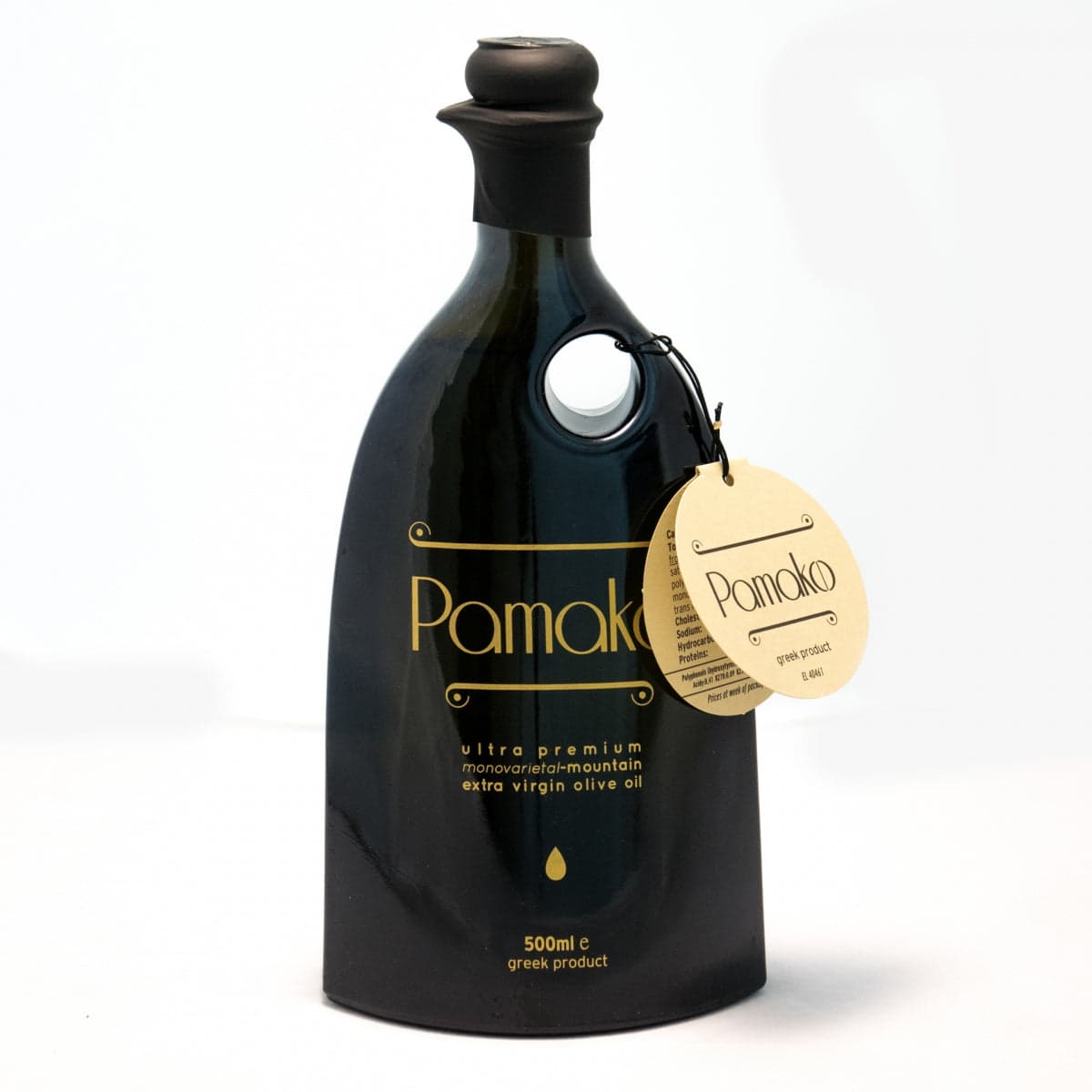
Pamako
€54.95· 500ml
€1.65 per 15ml serving
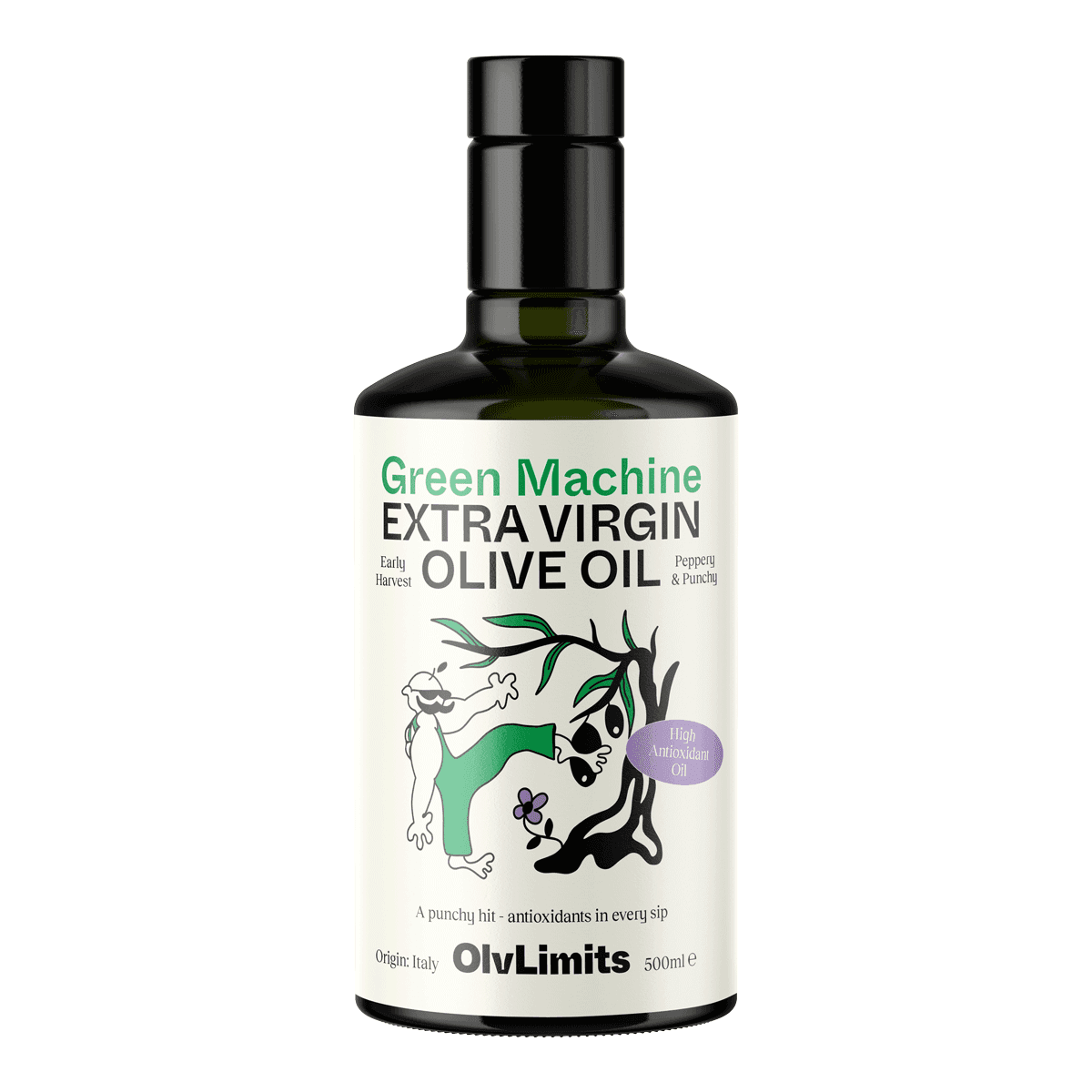
Green Machine
OlvLimits
€23.00· 500ml
€0.69 per 15ml serving
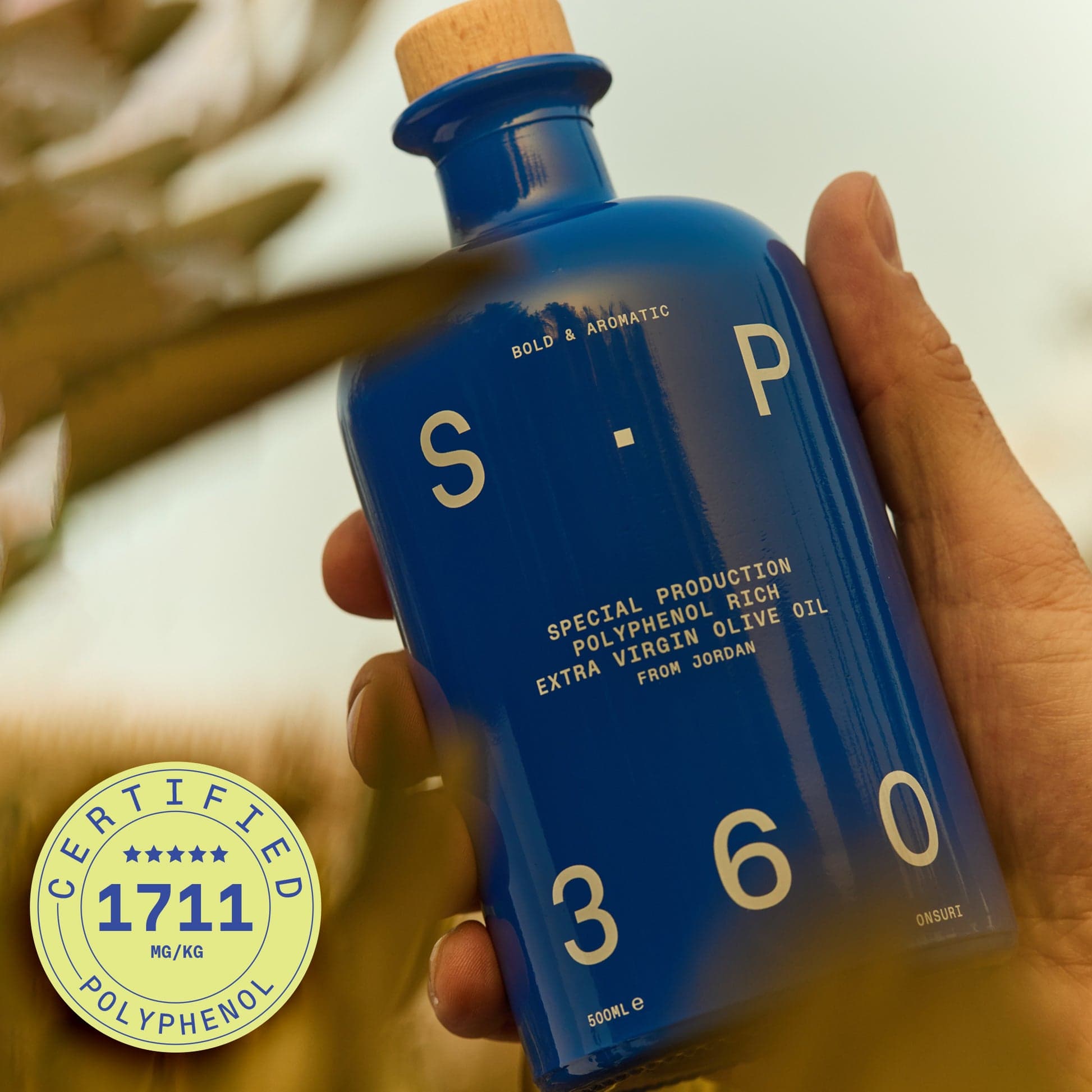
SP360
£42.00· 500ml
£1.26 per 15ml serving
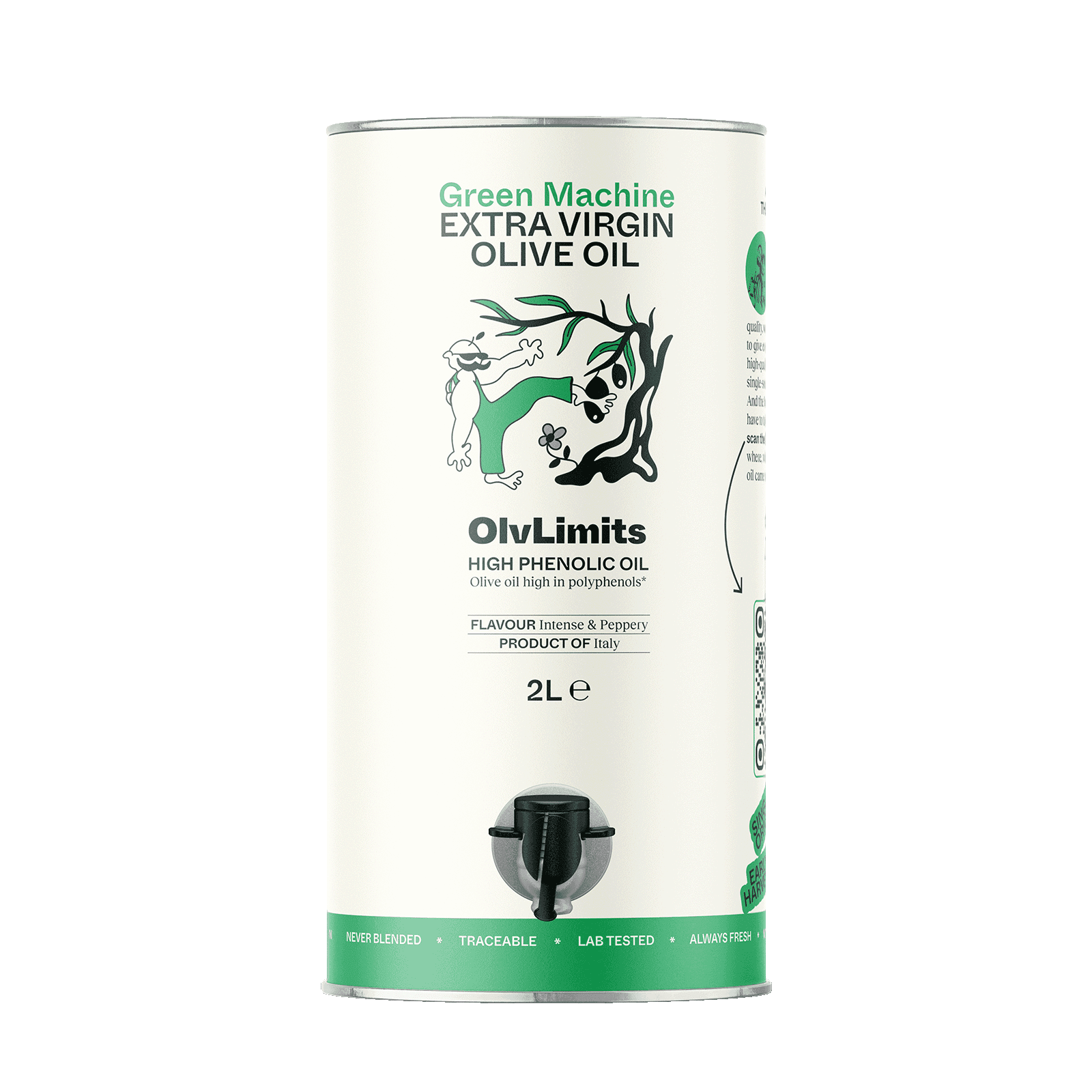
Green Machine 2L bag-in-tube
OlvLimits
€80.00· 2L(≈€20.00/500 ml)
€0.60 per 15ml serving