How to Choose High-Polyphenol Olive Oil: A Buyer's Framework (2026)
A practical, data-led framework for choosing genuinely high-polyphenol extra virgin olive oil, from the numbers to look for to the red flags to avoid.

The market for high-polyphenol extra virgin olive oil has grown quickly, and the marketing has grown with it. Bottles compete on words like "premium", "artisanal" and "cold pressed". Those words sound meaningful. But they tell you almost nothing about the one thing you probably came here to check: how much polyphenol is actually in the oil, measured recently and stated on the label.
Most oils that call themselves extra virgin do not clear a high-polyphenol bar. Across seven countries, one survey found 96% of samples fell below the concentration tied to the EU polyphenol claim (Pedan et al., 2019). In an earlier study, roughly 90% of Italian retail EVOOs sat below it (Caporaso et al., 2015). A recent lab number beats an "extra virgin" grade every time.
So this is a practical framework for finding the exception. It covers the numbers worth reading, why harvest date and lab method matter, what taste markers genuinely tell you, the truth about price, and the red flags that separate a substantiated claim from a hopeful one. For the underlying science, see what polyphenols in olive oil actually are. Our methodology explains how we rank the oils. Those rankings feed our catalogue.
Start with the number: mg/kg
The most useful single piece of information on a high-polyphenol oil is its measured total phenolic content in milligrams per kilogram (mg/kg), sometimes written as ppm. This is a laboratory measurement, not a taste impression or a marketing grade.
Two thresholds get confused here, so keep them apart. The first is a legal one. Under Commission Regulation (EU) No 432/2012, the only authorised health claim for olive oil polyphenols is that "olive oil polyphenols contribute to the protection of blood lipids from oxidative stress." That claim may only be used for oils containing at least 5 mg of hydroxytyrosol and its derivatives per 20 g of olive oil. That works out to roughly 250 mg/kg. The regulation also requires that consumers be told the effect is obtained with a daily intake of 20 g of olive oil.
The second threshold is our buying benchmark, and it sits higher. The 250 mg/kg figure is a regulatory floor for making the claim at all, not a marker of a genuinely phenolic oil. We prioritise oils from 500 mg/kg upwards. That is where the concentration starts to reflect early harvesting and careful milling rather than a bare pass. Fresh early-harvest oils frequently test in the 500 to 1000+ mg/kg range, and some lots go higher still. A bigger number is not automatically better for every use. But it is the figure that lets you compare oils like for like.
| Total phenolic content (mg/kg) | What it typically signals |
|---|---|
| Below ~250 | Below the EU claim floor; can still be a good culinary oil, but not high-polyphenol by any benchmark |
| ~250 to 500 | Clears the EU claim floor, but modest for an oil sold on its polyphenols |
| 500 and above | Our prioritisation range; common for fresh, early-harvest oils marketed specifically on polyphenols |
Read these bands as orientation, not rigid grades. The number only means something when you also know how and when it was measured.
Harvest date: why the number decays
Polyphenols are most concentrated in fresh oil and fade gradually after pressing, sped up by light, heat and oxygen. So a bottle can carry a genuinely impressive lab figure. It was true at the mill, but it may no longer reflect what is inside today.
That is why harvest date matters as much as the headline number. Look for a specific harvest period, a month and year, or at least a crop year, not just a "best before" date. The best-before is a packaging requirement and can sit well over a year after pressing. Two things compound here.
- Late versus early harvest. Olives picked earlier, while still green, generally give oil with more polyphenols, at the cost of lower volume. Our piece on early-harvest olive oil explains the trade-off, and harvest date and olive oil quality goes deeper on why timing moves the number.
- Time in the bottle. Even a great oil loses phenolic content over months, so a recent harvest with good storage beats an older bottle that once tested higher.
A producer who states a clear, recent harvest date is telling you the figure on the label is still relevant. One who omits it is asking you to take the number on trust.
If you are choosing between two oils with similar headline figures, the one pressed more recently is the more dependable buy. Its number has had less time to decay. It is also why buying in quantities you will actually use beats stockpiling. An oil bought for its polyphenols does not improve in the cupboard.
Lab method transparency
A polyphenol figure is only as good as the method behind it, so how the oil was tested is itself a trust signal. Three approaches come up most often.
HPLC (high-performance liquid chromatography)
HPLC separates and quantifies individual phenolic compounds. The International Olive Council publishes a reference method for biophenols in olive oil by HPLC (COI/T.20/Doc. No 29), with results in mg/kg of oil. Because it names specific compounds, it suits a detailed phenolic profile.
qNMR (quantitative nuclear magnetic resonance)
qNMR is another quantitative technique that measures specific phenolics, including the compounds behind the bitter and pungent notes. Producers who want a reproducible, compound-level breakdown increasingly use it.
Folin-Ciocalteu
Folin-Ciocalteu is a faster, cheaper spectrophotometric assay that estimates total phenols rather than naming each compound. It works well as a screening tool and for a headline total, but it is less granular than chromatography.
For a buyer, the exact method matters less than one thing: whether the producer names it. Better still, they pair it with a date and, ideally, an accredited laboratory. A bare number with no method and no date is the weakest form of evidence. Our guide on how to read an olive oil lab analysis walks through a real report line by line. Lab-testing methods for polyphenols compares the techniques in more depth.
There is one practical wrinkle. Folin-Ciocalteu reports a total-phenol estimate. HPLC and qNMR instead split the total into named compounds. So two figures for the same oil can differ depending on how they were produced. That is not proof of dishonesty. But it is a reason to compare like with like, and to lean on the compound-level methods when you want an oil's full profile rather than just its headline total. The best producers say which compounds sit behind the number, such as hydroxytyrosol and its derivatives. That lets you check the oil against the EU claim floor directly.
Cultivar: a useful clue, not a guarantee
The olive variety shapes how much phenolic content an oil can carry. Cultivars such as Coratina, Koroneiki, Picual and Moraiolo are widely regarded for robust, peppery oils that often test high in polyphenols. Knowing the variety helps you anticipate a style. Our guide to the best olive cultivars for polyphenols covers the established high-phenolic varieties.
But cultivar is a predisposition, not a measurement. Growing conditions, harvest timing, milling and storage all move the final figure. A high-potential variety harvested late or stored poorly can still land low. Use cultivar as supporting context alongside the actual number, never as a substitute for it. And read a single oil's lab result as that producer's number, not proof that its whole cultivar runs high.
Taste markers: bitter and pungent
You can sense phenolic content, and trained tasters rely on it. Two of the three positive attributes in formal sensory assessment of extra virgin olive oil trace back to phenolics.
- Bitterness, perceived on the tongue.
- Pungency, the peppery, throat-catching sting that can make you cough. It is associated with oleocanthal, one of the better-studied phenolic compounds, which we cover in our explainer on oleocanthal and oleacein.
A fresh high-polyphenol oil tends to taste assertively bitter and pungent. It can be startlingly so if your palate is used to mild supermarket oils. That intensity is a real signal, and it is why these oils are often described as best appreciated raw. Our notes on the best olive oil for drinking and the best olive oil for cooking cover how the use changes what you should prioritise. Our guide on how to taste olive oil walks through the method tasters use.
The caveat is that taste confirms, it does not quantify. Perceived intensity varies with cultivar, freshness and your own sensitivity. Use the sensory check to cross-examine a lab number rather than replace it.
Packaging: dark glass and why it matters
Since light, heat and oxygen degrade polyphenols, packaging is part of the quality story rather than just decoration. Dark glass, tins and boxed bottles all limit light exposure and help hold phenolic content between the mill and your kitchen. Clear glass on a bright shelf is the opposite of what a polyphenol-focused producer would pick.
Packaging only protects the oil up to the point of purchase, though. After that, storage is on you. Our guide on how to store high-polyphenol olive oil covers keeping it cool, dark and sealed so the number you paid for survives.
The price reality
High-polyphenol oils tend to cost more than commodity olive oil, and for real reasons. Early harvesting yields less oil per tree, careful milling and cold handling cost more, and lab testing and protective packaging add expense. So a very cheap "extra virgin" oil making big polyphenol claims deserves scepticism.
Price is not a polyphenol meter, though. A premium tag can reflect branding, bottle design or single-estate provenance without a matching phenolic figure. And some strong-value oils test well. The disciplined move is the one this whole framework points to: read the stated mg/kg figure, the harvest date and the method, then let the evidence rather than the price decide.
Verifying the oil is genuine
A polyphenol number is meaningless if the oil itself is not what it claims to be. Extra virgin olive oil sits within a legally defined quality framework. Under Commission Regulation (EEC) No 2568/91 and its successors, extra virgin grade requires a free acidity of no more than 0.8 g per 100 g (expressed as oleic acid). It must also stay within peroxide and ultraviolet absorbance limits and show no sensory defects. An oil that fails these is not extra virgin, whatever the polyphenol marketing says.
Adulteration and mislabelling are real risks in this category. Want to pressure-test a bottle before trusting its claims? Our guide on how to spot fake olive oil walks through the warning signs, alongside our wider olive oil fraud guide.
Red flags checklist
The signals that should make you pause:
- No mg/kg figure at all, only adjectives like "rich in antioxidants".
- A number with no method and no date, which cannot be verified or aged.
- No harvest date, or only a distant "best before".
- Clear glass on a bright shelf, which speeds degradation.
- Vague origin, such as an unspecified multi-country blend, when the marketing implies single-estate quality.
- Overreaching health language. A legitimate producer keeps to what the evidence supports. The only authorised EU claim is the blood-lipid wording above, tied to 20 g of oil per day. Anything promising to fix specific medical conditions is a signal to step back. We keep our own health framing measured in our overview of the health properties studied for high-polyphenol EVOO.
A note on the health claims
It is worth being precise about what the evidence supports. Olive oil polyphenols are among the more studied compounds in the diet. Research around cardiovascular health, cognitive function and anti-inflammatory activity looks promising, but it is all framed as "studied for" rather than settled. EFSA has not authorised those as claims. That means more research is needed, not that the benefit is absent.
The one health effect the EU does authorise for olive oil polyphenols is narrow and specific: "olive oil polyphenols contribute to the protection of blood lipids from oxidative stress". The effect is obtained at a daily intake of 20 g of olive oil and a minimum concentration of about 250 mg/kg of hydroxytyrosol and its derivatives, per Regulation (EU) No 432/2012. How much oil delivers a useful phenolic dose depends heavily on its concentration. A 1000 mg/kg oil reaches a given intake in a smaller serving than one scraping past 250 mg/kg. Our guide on how much polyphenol olive oil to take daily works through the serving maths.
High-polyphenol olive oil is best seen as one nutrient-dense part of an overall eating pattern. For the wider picture, see the health evidence overview, which maps how strong the evidence is across each outcome. It sits alongside our summaries of polyphenols and health and the best olive oil for the Mediterranean diet.
Putting it into practice
A workable buying routine has a few steps. Find the measured polyphenol figure in mg/kg, and check it clears our 500 mg/kg prioritisation mark rather than just the 250 mg/kg EU claim floor. Confirm a recent harvest date. See which lab method produced the number. Note the cultivar and packaging. Cross-check with a taste for bitterness and pungency when you can. If a bottle hides the number or the date, let that gap be your answer.
That is the lens we apply across our ranked catalogue of oils. The full criteria live in our methodology. When the evidence is on the label, choosing a genuinely high-polyphenol olive oil comes down to reading carefully rather than guessing.
Frequently asked questions
What polyphenol number counts as high?
There is no single legal definition of high-polyphenol olive oil. The 250 mg/kg figure people quote is the floor for the EU health claim on olive oil polyphenols, not a buying benchmark. We prioritise oils from 500 mg/kg upwards, and many fresh, early-harvest oils test between 500 and 1000+ mg/kg, though the figure declines with age. See the [health evidence overview](/en/research/evidence) for the claim detail.
Does the peppery taste mean an oil is high in polyphenols?
Bitterness and a peppery, throat-catching pungency are sensory signals that phenolic compounds such as oleocanthal are present, and trained tasters use them as indicators. They are a useful cross-check but they do not replace a measured lab number, since intensity varies between cultivars and palates.
Which lab method is most reliable for polyphenol content?
Chromatography-based methods such as HPLC, including the International Olive Council reference method for biophenols, identify and quantify individual compounds. qNMR is another quantitative option, while Folin-Ciocalteu gives a faster total-phenol estimate. What matters most for a buyer is that the producer names the method and the figure is recent.
Why does harvest date matter so much?
Polyphenols are most concentrated in fresh oil and decline gradually after pressing. An oil with an impressive number from two harvests ago may test much lower today, so a clearly stated recent harvest date is one of the strongest signals of current quality.
Is a more expensive olive oil always higher in polyphenols?
No. Price reflects farming, harvest timing, yield and packaging as well as quality, and some expensive oils are not especially high in polyphenols. The reliable approach is to look for a stated mg/kg figure and a recent harvest date rather than assuming price equals phenolic content.
Does dark glass really make a difference?
Light, heat and oxygen all degrade polyphenols over time. Dark glass, tins or boxed packaging slow light-driven degradation, which is why most serious high-polyphenol producers avoid clear bottles. Storage after you buy matters too.
Searching for olive oil for your health and longevity
Our top-ranked high-polyphenol olive oils, sorted by lab-verified content.
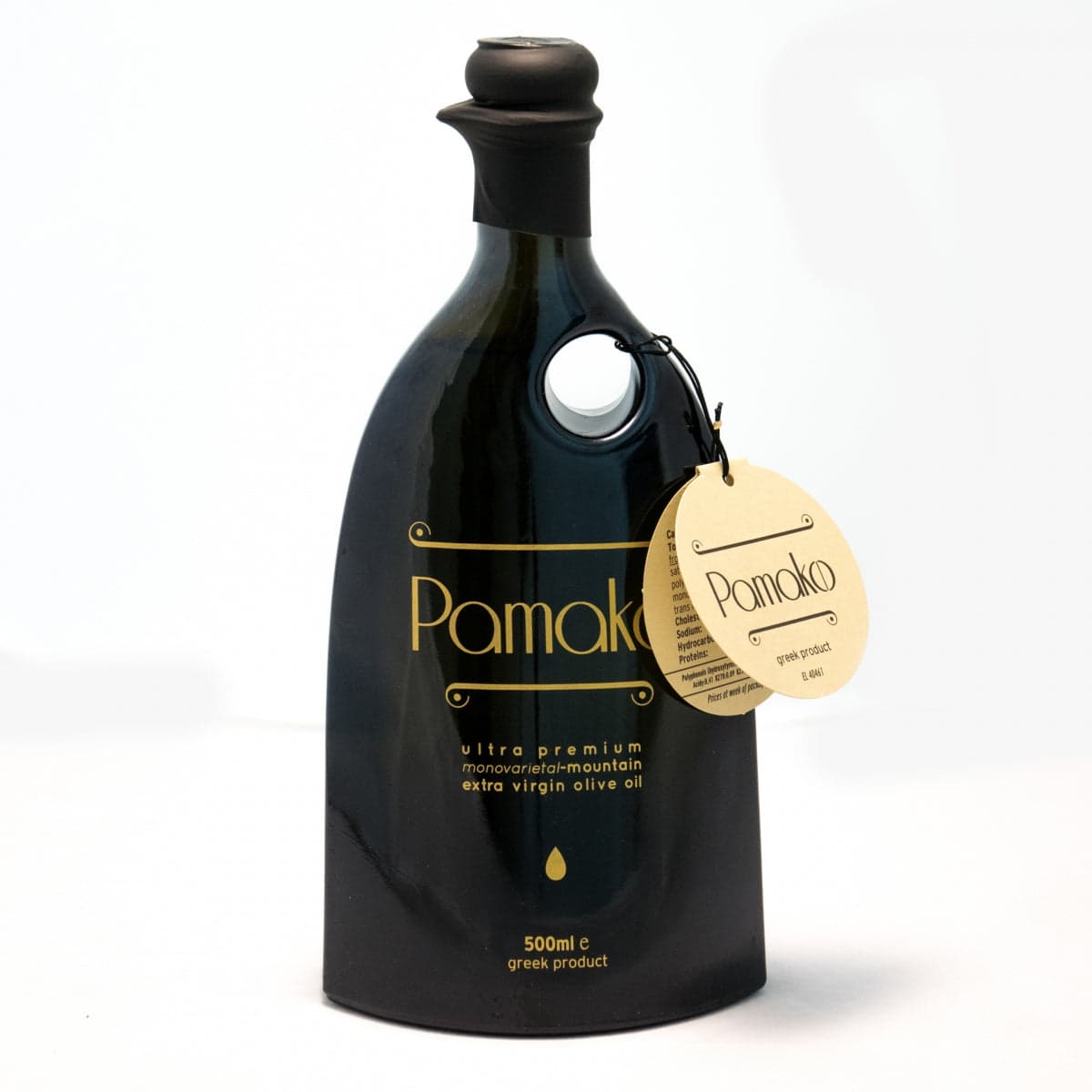
Pamako
€54.95· 500ml
€1.65 per 15ml serving
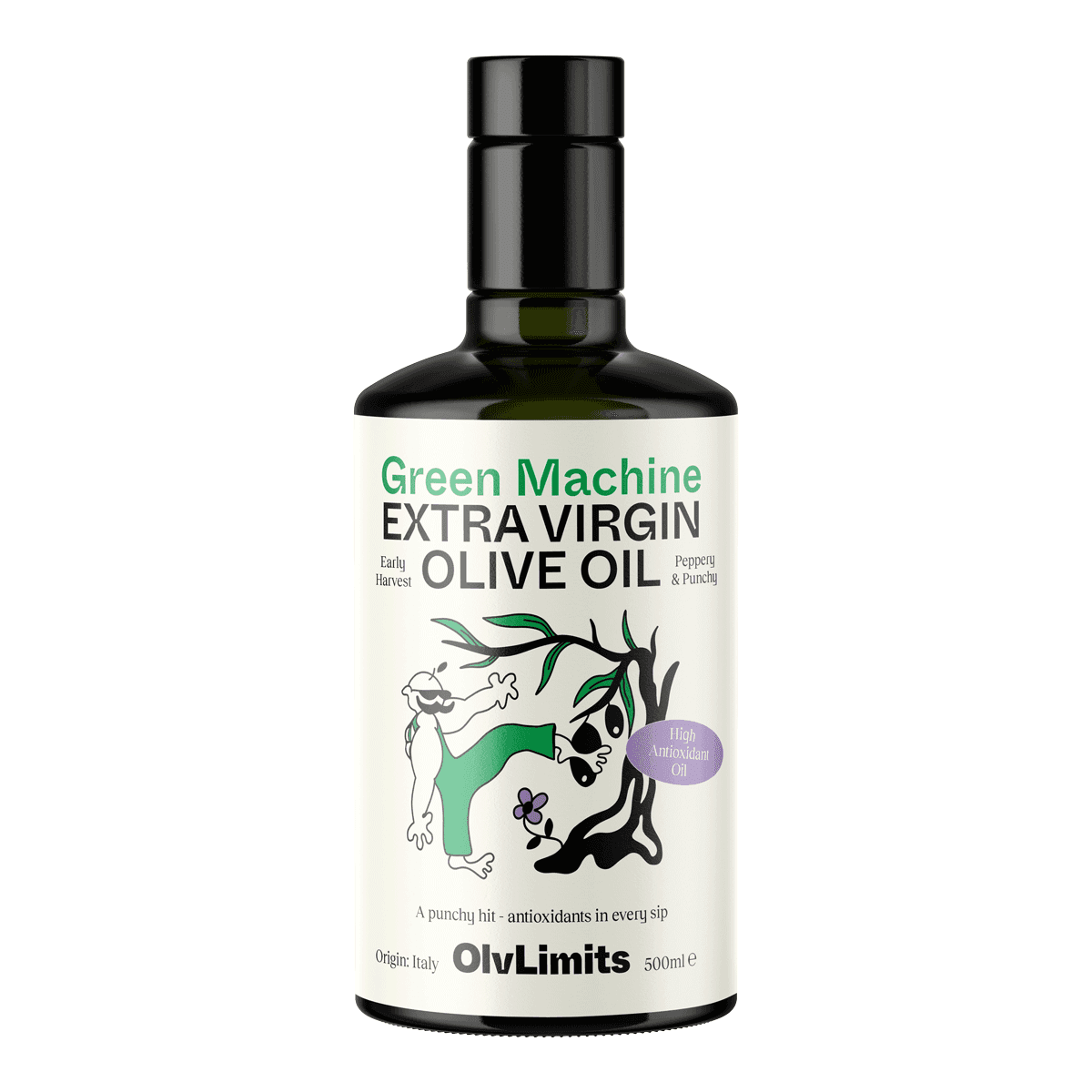
Green Machine
OlvLimits
€23.00· 500ml
€0.69 per 15ml serving
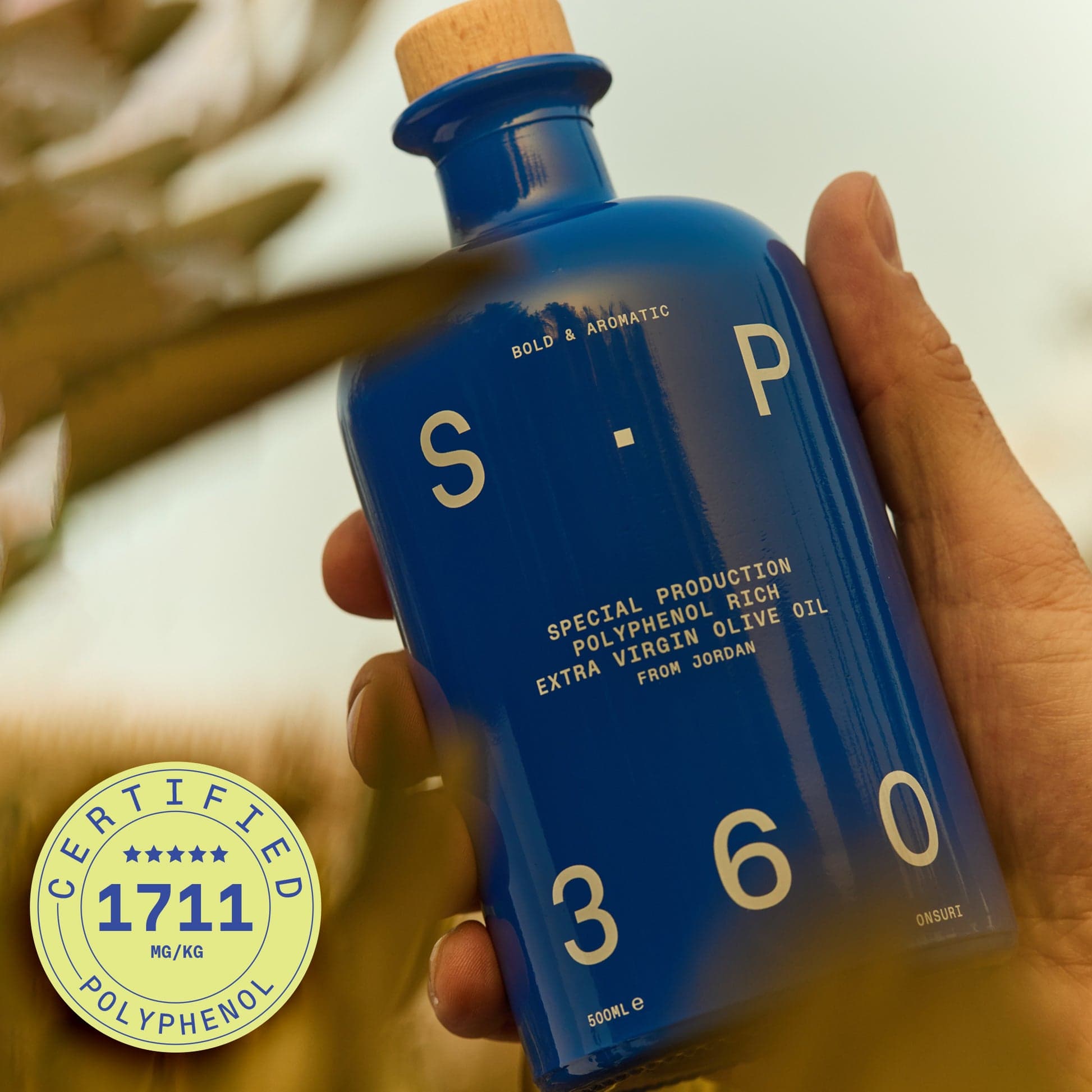
SP360
£42.00· 500ml
£1.26 per 15ml serving
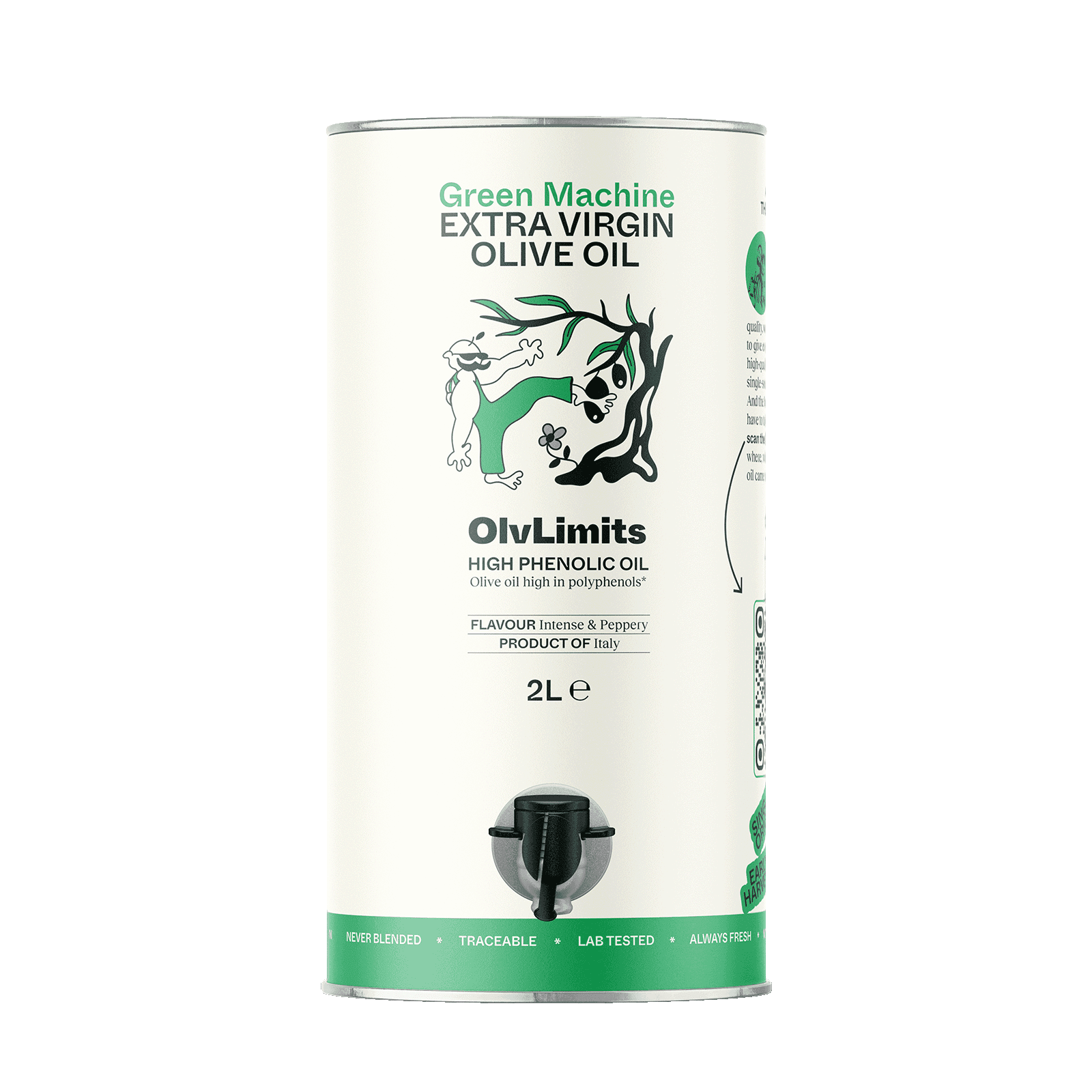
Green Machine 2L bag-in-tube
OlvLimits
€80.00· 2L(≈€20.00/500 ml)
€0.60 per 15ml serving