Oleocanthal and Oleacein Explained: The Two Secoiridoids Behind High-Polyphenol Olive Oil (2026)
A plain-language guide to oleocanthal and oleacein, the two secoiridoid compounds that give early-harvest olive oil its pungency, bitterness and high polyphenol counts.

Swallow a spoonful of fresh, early-harvest olive oil and you often feel a sharp peppery catch at the back of the throat. That is oleocanthal. The lingering green bitterness that spreads across your tongue afterwards is largely oleacein. Both belong to a family of plant compounds called secoiridoids. They sit close to the centre of what people mean by an oil that is "high in polyphenols."
This guide explains what each compound is and how they form. It covers why one gets compared to ibuprofen, why early-harvest oils carry more, and how they fade over time. The aim is a clear mental model, so the numbers on a lab report or a bottle start to make sense. For where specific oils land on measured polyphenol content, see our master ranking of high-polyphenol olive oils. For how we evaluate them, see our methodology.
What secoiridoids are
Secoiridoids are the largest and most distinctive group of polyphenols in extra virgin olive oil. They are plant compounds built around a shared chemical backbone called elenolic acid. Among common food plants, they are found almost only in the olive. They give a good extra virgin oil much of its pungency, bitterness and resistance to going stale (its oxidative stability). Polyphenols in olive oil are not one substance but a broad group, and secoiridoids are the standout part of it.
Two secoiridoids dominate the conversation: oleocanthal and oleacein. They are usually discussed together because they are close structural cousins. But they are distinct molecules, with different building blocks and different tastes. For a broader orientation on the whole polyphenol family, our explainer on what polyphenols in olive oil are is a useful companion to this page.
How oleocanthal and oleacein are formed
Oleocanthal and oleacein barely exist in the whole olive on the tree. Instead the fruit stores two larger parent molecules, oleuropein and ligstroside. When olives are crushed and mixed during milling, the fruit's own enzymes break these parents down. The two secoiridoids appear at that moment.
- Oleuropein breaks down toward oleacein (labelled 3,4-DHPEA-EDA). Oleacein carries a hydroxytyrosol unit.
- Ligstroside breaks down toward oleocanthal (labelled p-HPEA-EDA). Oleocanthal carries a tyrosol unit.
In chemistry terms, each is a stripped-down, reshaped version of its parent compound (its aglycone, the sugar-free form). Both keep the elenolic-acid backbone that defines a secoiridoid (Nature, Scientific Reports, 2019). The main difference between them is one building block: oleacein carries hydroxytyrosol, oleocanthal carries tyrosol. That single extra hydroxyl group (an oxygen-hydrogen pair) is why the two are often said to differ by just one part. Our note on hydroxytyrosol covers why that unit matters for antioxidant behaviour.
The compounds form through enzyme activity at the moment of crushing. So processing choices have an outsized effect on how much survives in the finished oil. Milling temperature, how long the paste is mixed, and how fast the olives reach the press all shift the balance. This is the main reason two oils from the same grove and cultivar, in the same season, can show very different secoiridoid numbers. The difference often lies in the mill, not the field. Our piece on malaxation (the slow mixing of the crushed paste) and olive oil polyphenols goes deeper into how mixing time and temperature move these numbers.
This also explains why the two compounds are mostly a feature of genuine extra virgin oil. Refining, high heat and long contact with air all reduce secoiridoid content. So a heavily processed or oxidised oil tends to be low in both, whatever the olives were. The "cold-pressed" and "extra virgin" labels matter here too. Those terms describe processing; they do not guarantee a particular polyphenol level.
A quick comparison
| Feature | Oleocanthal | Oleacein |
|---|---|---|
| Precursor in the olive | Ligstroside | Oleuropein |
| Phenolic alcohol unit | Tyrosol | Hydroxytyrosol |
| Shorthand label | p-HPEA-EDA | 3,4-DHPEA-EDA |
| Dominant sensory note | Peppery throat sting | Bitterness, green character |
| Most studied for | COX enzyme inhibition in vitro | Antioxidant activity in vitro |
The ibuprofen comparison, accurately stated
The most repeated fact about oleocanthal comes from a short 2005 paper in Nature by Beauchamp and colleagues (doi:10.1038/437045a). The researchers noticed that a peppery olive oil stung the throat much like liquid ibuprofen did. Following that clue, they found oleocanthal blocked the same two enzymes as ibuprofen in lab tests. Those enzymes, called cyclooxygenase-1 (COX-1) and COX-2, help drive inflammation.
That finding is well cited, and it explains the throat sensation neatly. It also needs careful framing.
- It is a test-tube (in vitro) finding about enzyme activity. It is not clinical proof that eating olive oil produces a drug-like effect in the body.
- The quantity of oleocanthal in a normal serving of olive oil is far below a therapeutic dose of ibuprofen.
- Nothing in the finding means olive oil should be used in place of any medication.
So the careful way to put it is this. Oleocanthal has been studied for anti-inflammatory activity, and in the lab it shares a mechanism with a common painkiller. It is not a painkiller, and not a substitute for one. Marketing that jumps from an enzyme finding to claims about specific diseases goes well beyond the evidence. We map the strength of the underlying research on our health evidence overview, and cover this study in more depth in our note on the oleocanthal ibuprofen link.
What the research is exploring
The one authorised EU claim about olive oil polyphenols covers protecting blood lipids from oxidative stress. Oleocanthal and oleacein have no authorised claim of their own. So everything below is research into what these two are studied for, not a settled effect. Much of it is preclinical, meaning it comes from lab and animal work rather than people.
- Anti-inflammatory activity. Beyond the COX finding above, oleocanthal has been reviewed for wider anti-inflammatory action, dampening inflammatory signalling in cell and animal models of joint and inflammatory disease (Parkinson & Keast, review, 2014). → Mostly lab/animal.
- Neuroprotection. Oleocanthal has been studied for its effect on the amyloid-β and tau proteins linked to Alzheimer's. A systematic review found the supporting evidence sits in cell and mouse models, with no human outcome data yet (Zupo et al., systematic review of preclinical studies, 2025). → Mostly lab/animal.
- Cardiovascular. A small randomised crossover in nine healthy men tested an oleocanthal-rich oil. After a single dose it produced an acute anti-platelet effect, a mechanism relevant to vascular health rather than a clinical outcome (Agrawal et al., randomised trial, n=9, 2017). → Early human signals.
- Metabolic. A randomised controlled crossover in people with obesity and prediabetes tested a high-oleocanthal, high-oleacein oil against inflammatory and antioxidant markers. It is one of the few human trials in this area to date (APRIL Study, randomised crossover, 2023). → Early human signals.
None of these is a settled benefit or an authorised claim, and none should be read as disease prevention. Where each area sits across the evidence is in our evidence overview.
The "cough of truth"
Oleocanthal's throat-catching sting doubles as a simple tasting tool. The compound switches on a receptor that senses irritants at the back of the throat. That is why a high-oleocanthal oil can trigger a single involuntary cough as you swallow. Tasters sometimes call this the "cough of truth". As a rough rule, the sharper and longer the sting, the more oleocanthal is present.
This helps when you judge an oil by taste rather than by lab report. A pungent catch plus a clear bitterness usually points to a young, secoiridoid-rich oil. A flat, buttery oil with no sting is more likely lower in these compounds, or further from harvest. Our guide to choosing a high-polyphenol olive oil turns this into a practical checklist, and our tasting guide walks through how to read pungency and bitterness in a glass.
Why early-harvest oils carry more
The same fruit gives very different oils depending on when it is picked. Green, unripe olives harvested early in the season hold the most parent compounds, and the most secoiridoids that form from them. As the fruit ripens to purple and then black, polyphenol content generally falls. The oil turns milder and sweeter, but lower in oleocanthal and oleacein.
Several factors stack up here.
- Ripeness at harvest. Earlier, greener fruit means more precursor available to convert into secoiridoids.
- Speed to the mill. Olives pressed within hours of picking lose less to oxidation and enzymatic breakdown.
- Milling temperature. Lower processing temperatures generally preserve more of the heat-sensitive compounds.
- Cultivar. Some olive varieties are naturally higher in secoiridoids. Coratina, Koroneiki and Picual are commonly cited examples.
This is why a recent harvest date is one of the more reliable signals of a high-polyphenol oil, and why we regard it as a core data point. Our pieces on the importance of harvest date and the best olive cultivars for high polyphenols go further into both, and the underlying figures sit in our data tables.
Reported concentrations vary widely, so handle single headline numbers with caution. Studies suggest oleocanthal in extra virgin olive oil ranges from very low levels in mild, ripe-harvest oils up to several hundred milligrams per kilogram in early-harvest examples. The figures depend heavily on season, region and measurement method. This is why we report measured values per oil rather than leaning on one number.
How the compounds degrade
Oleocanthal and oleacein do not last forever in the bottle. Like other polyphenols, they fade over time, and the main drivers are familiar. Four things speed the loss.
- Oxygen from air contact, especially in a part-empty bottle.
- Light, particularly direct sunlight on a clear bottle.
- Heat, including a warm kitchen shelf near the stove.
- Time simply passing since harvest.
This is the practical reason storage advice for olive oil is so consistent. Buy oil with a recent harvest date. Choose dark glass or tin, keep it cool and away from light, and close it tightly between uses. The decline is gradual, not sudden, so the oil does not become unsafe as the compounds fade. It just becomes milder, less pungent and lower in the very polyphenols you paid a premium for. That is why a high-polyphenol oil rewards being used within a reasonable window, rather than saved for special occasions. Our guide on storing high-polyphenol olive oil covers the specifics, and does olive oil expire addresses shelf life once the bottle is open.
How they are measured
When a lab reports oleocanthal and oleacein, it usually lists them separately from the total polyphenol figure. The standard method is high-performance liquid chromatography (HPLC), a technique that separates a sample into its individual compounds. It is often paired with mass spectrometry, so the lab can name and measure each secoiridoid rather than lump them together (Scientific Reports, 2019). Results are usually given in milligrams per kilogram.
The widely quoted "total polyphenol" number on many oils comes from a different, broader method. It is not the same as a specific oleocanthal or oleacein measurement. The two answer different questions, and a high total does not tell you the split between these compounds. Our explainer on lab testing methods for polyphenol measurement walks through how the methods differ, and why the headline number alone can mislead.
What the EU actually allows you to claim
These compounds attract a lot of enthusiastic marketing, so it is worth being precise about what is officially recognised. Under Commission Regulation (EU) No 432/2012, one authorised health claim covers olive oil polyphenols:
"Olive oil polyphenols contribute to the protection of blood lipids from oxidative stress."
That claim comes with strict conditions. It may only be used for an oil that delivers at least 5 mg of hydroxytyrosol and its derivatives (a group that includes oleacein and oleocanthal) per 20 g of oil. That works out to roughly 250 mg/kg. The label must also tell the buyer that the benefit comes with a daily intake of 20 g of olive oil. How much polyphenol those 20 g deliver depends on the oil's concentration, so a stronger oil reaches a given intake in a smaller serving. Our guide on how much polyphenol olive oil to take daily works through that. Anything beyond the authorised wording is not an approved claim, however widely it circulates online. That includes references to specific diseases, anti-inflammatory promises aimed at the body, and claims about cognition, joints or skin.
The lab and animal research on oleocanthal and oleacein is a fair reason to study these compounds closely. But "studied for" is not the same as "proven to", and neither implies a medical remedy. For a measured look at what the research does and does not establish, see our health evidence overview. Our summary of the health context around high-polyphenol extra virgin olive oil gives the wider picture.
Putting it together
Oleocanthal and oleacein are the two secoiridoids that most define a lively, high-polyphenol extra virgin olive oil. Oleocanthal is built on tyrosol and comes from ligstroside. It drives the peppery throat sting, and it is the compound studied for its COX-blocking activity in the lab. Oleacein is built on hydroxytyrosol and comes from oleuropein. It carries much of the bitter, green character and the antioxidant interest. Both form at the moment of milling, both run richest in green early-harvest oils, and both fade with heat, light, oxygen and time.
Read those signals together and they tell you a lot. A recent harvest date, a pungent catch on swallowing, a clean bitter finish, and a measured polyphenol figure all point at the same underlying chemistry. To see how specific oils compare, start with our ranked list of high-polyphenol olive oils. The supporting guides go further.
Frequently asked questions
What is the difference between oleocanthal and oleacein?
Both are secoiridoid compounds in extra virgin olive oil, but they come from different precursors. Oleocanthal derives from ligstroside and carries a tyrosol unit, while oleacein derives from oleuropein and carries a hydroxytyrosol unit. Oleocanthal is most associated with the peppery throat sting, oleacein with bitterness and antioxidant activity.
Why does high-polyphenol olive oil sting my throat?
The sting is largely attributed to oleocanthal, which activates an irritant-sensing receptor at the back of the throat. A stronger sting generally signals a higher oleocanthal content, which is why tasters sometimes call a single involuntary cough the 'cough of truth.'
Is oleocanthal really like ibuprofen?
In a 2005 laboratory study, oleocanthal inhibited the COX-1 and COX-2 enzymes that ibuprofen also inhibits. That is a finding in a test environment, not evidence that olive oil works as a medicine or replaces any drug. The amounts involved in normal eating are far smaller than a therapeutic ibuprofen dose.
Which olive oils have the most oleocanthal and oleacein?
Oils pressed from green, early-harvested olives, milled quickly at low temperature, tend to contain the most. Certain cultivars such as Coratina, Koroneiki and Picual are frequently associated with high secoiridoid levels, though concentrations vary by season and producer.
Do oleocanthal and oleacein break down over time?
Yes. Like other polyphenols they decline with exposure to heat, light, oxygen and time. Buying oil with a recent harvest date and storing it cool, dark and tightly closed helps preserve the compounds for longer.
How are oleocanthal and oleacein measured?
Laboratories typically quantify them using liquid chromatography (HPLC), often paired with mass spectrometry, and report results in milligrams per kilogram. These specific compounds are reported separately from the total polyphenol figure that summary panels usually show.
Can I taste the difference between the two compounds?
To a degree. Oleocanthal is linked to the pungent, peppery throat sensation, while oleacein is linked to bitterness and a green, grassy character. In practice they occur together, so most people experience them as a combined intensity rather than two separate sensations.
How we reviewed this article
Written and edited by our editorial team and checked against primary research and EU regulation. We cite peer-reviewed studies and official sources, and prefer human trials and reviews over in-vitro work.
Sources
- Ibuprofen-like activity in extra-virgin olive oil (Beauchamp et al., Nature 2005) — Nature
- Commission Regulation (EU) No 432/2012 establishing a list of permitted health claims — EUR-Lex
- Oleocanthal, a phenolic derived from virgin olive oil: a review of the beneficial effects on inflammatory disease — PMC
- Alzheimer's Disease May Benefit from Olive Oil Polyphenols: A Systematic Review on Preclinical Evidence Supporting the Effect of Oleocanthal on Amyloid-beta Load — PMC
- Oleocanthal-rich extra virgin olive oil demonstrates acute anti-platelet effects in healthy men in a randomized trial — PMC
- Rich Oleocanthal and Oleacein Extra Virgin Olive Oil and Inflammatory and Antioxidant Status in people with Obesity and Prediabetes (APRIL Study) — PubMed
Searching for olive oil for your health and longevity
Our top-ranked high-polyphenol olive oils, sorted by lab-verified content.
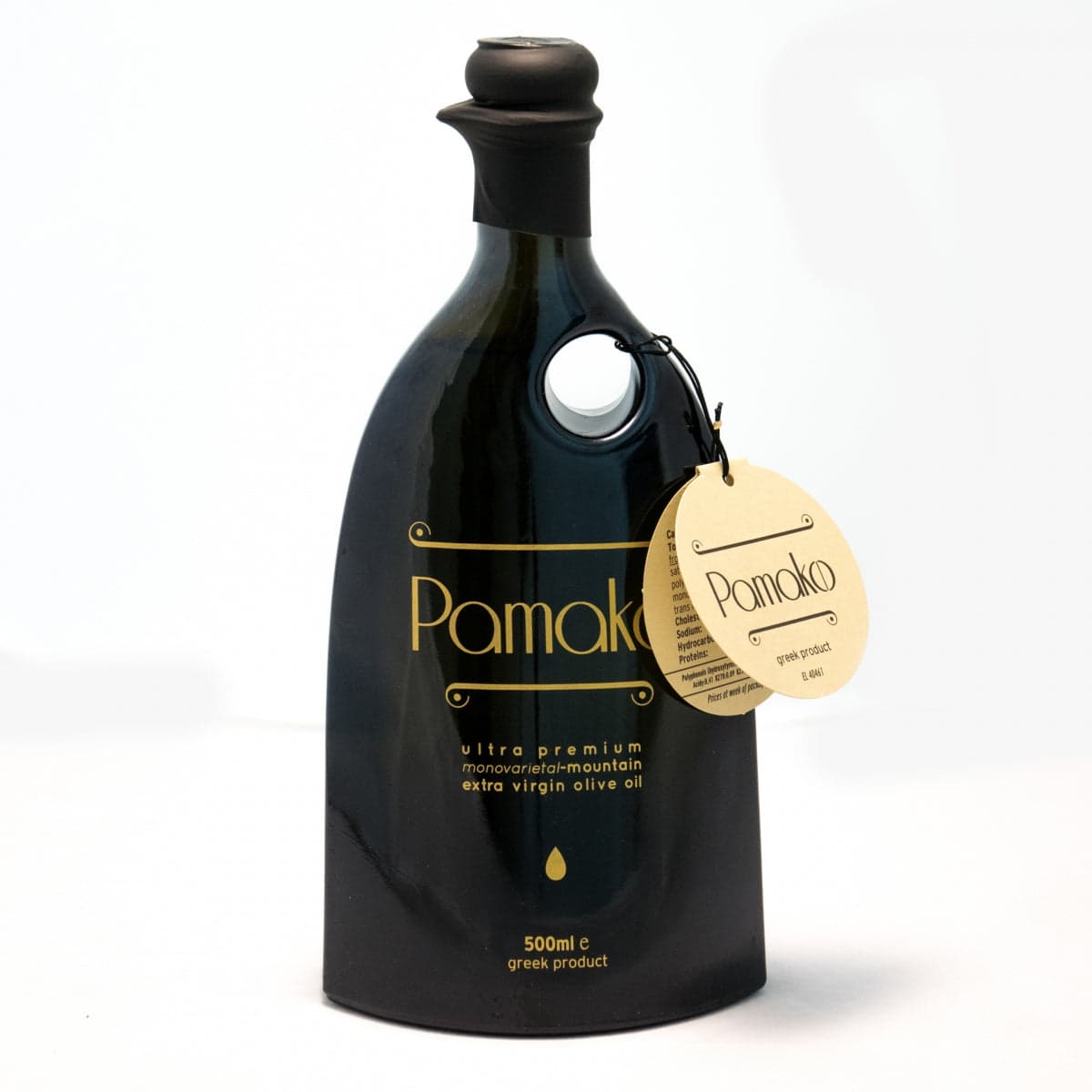
Pamako
€54.95· 500ml
€1.65 per 15ml serving
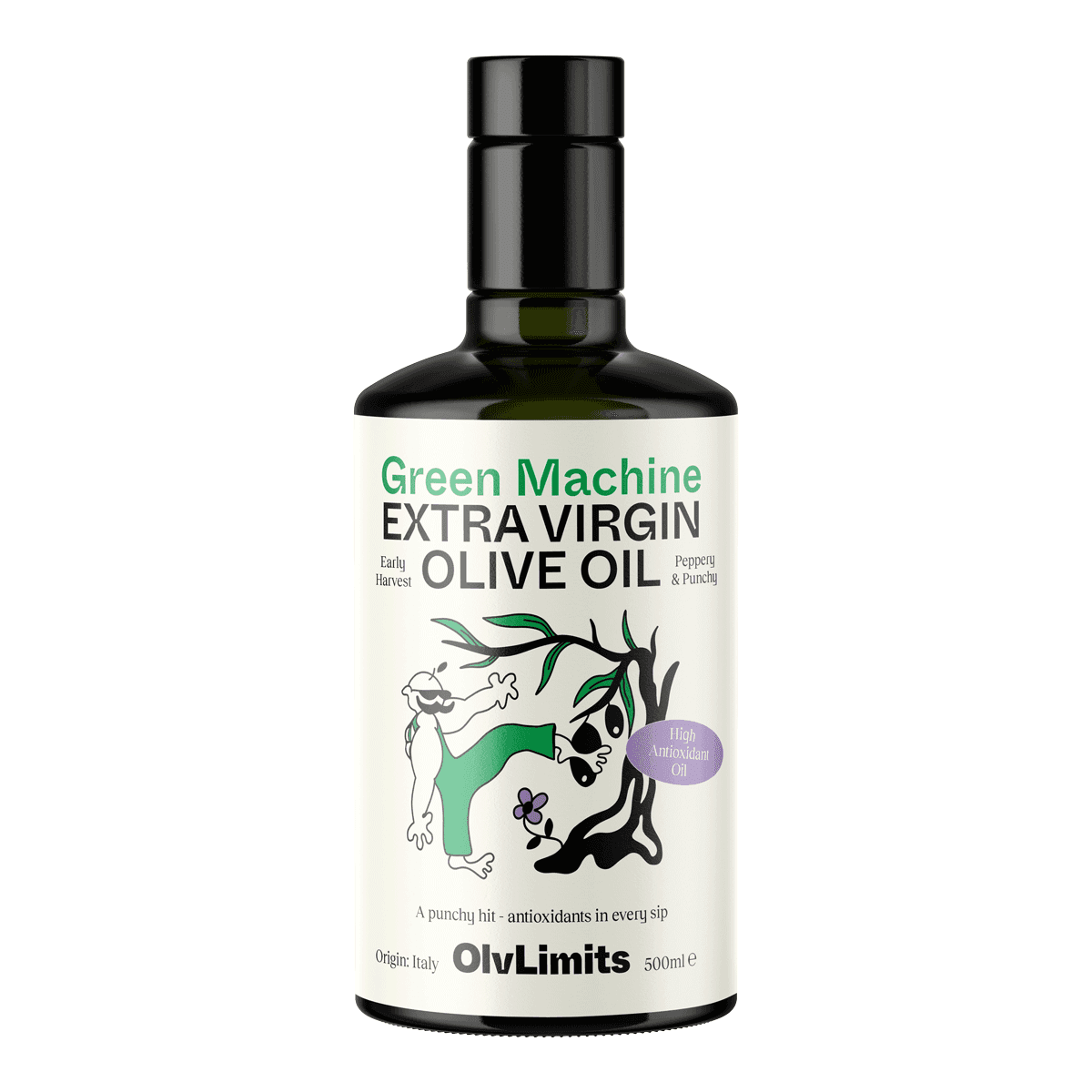
Green Machine
OlvLimits
€23.00· 500ml
€0.69 per 15ml serving
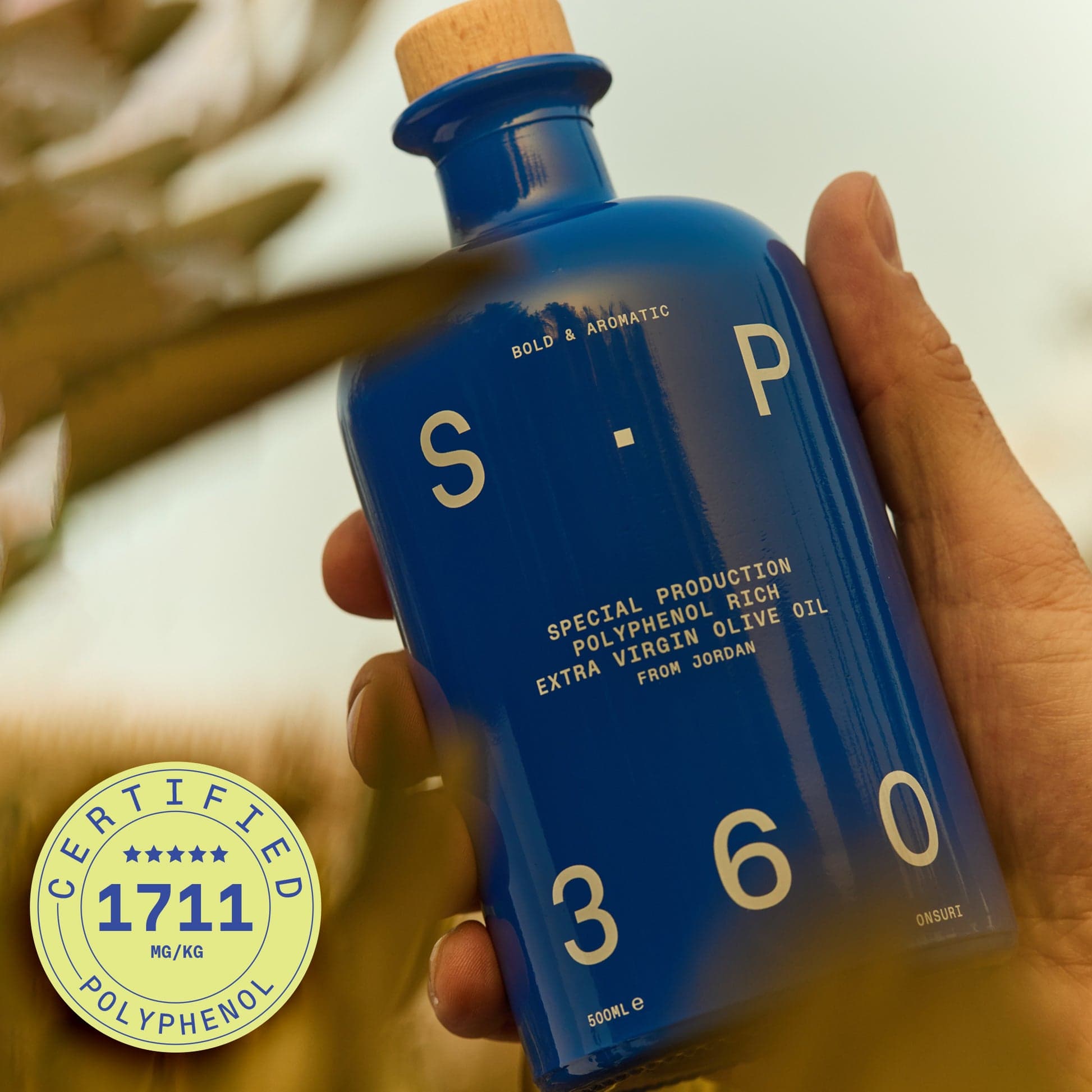
SP360
£42.00· 500ml
£1.26 per 15ml serving
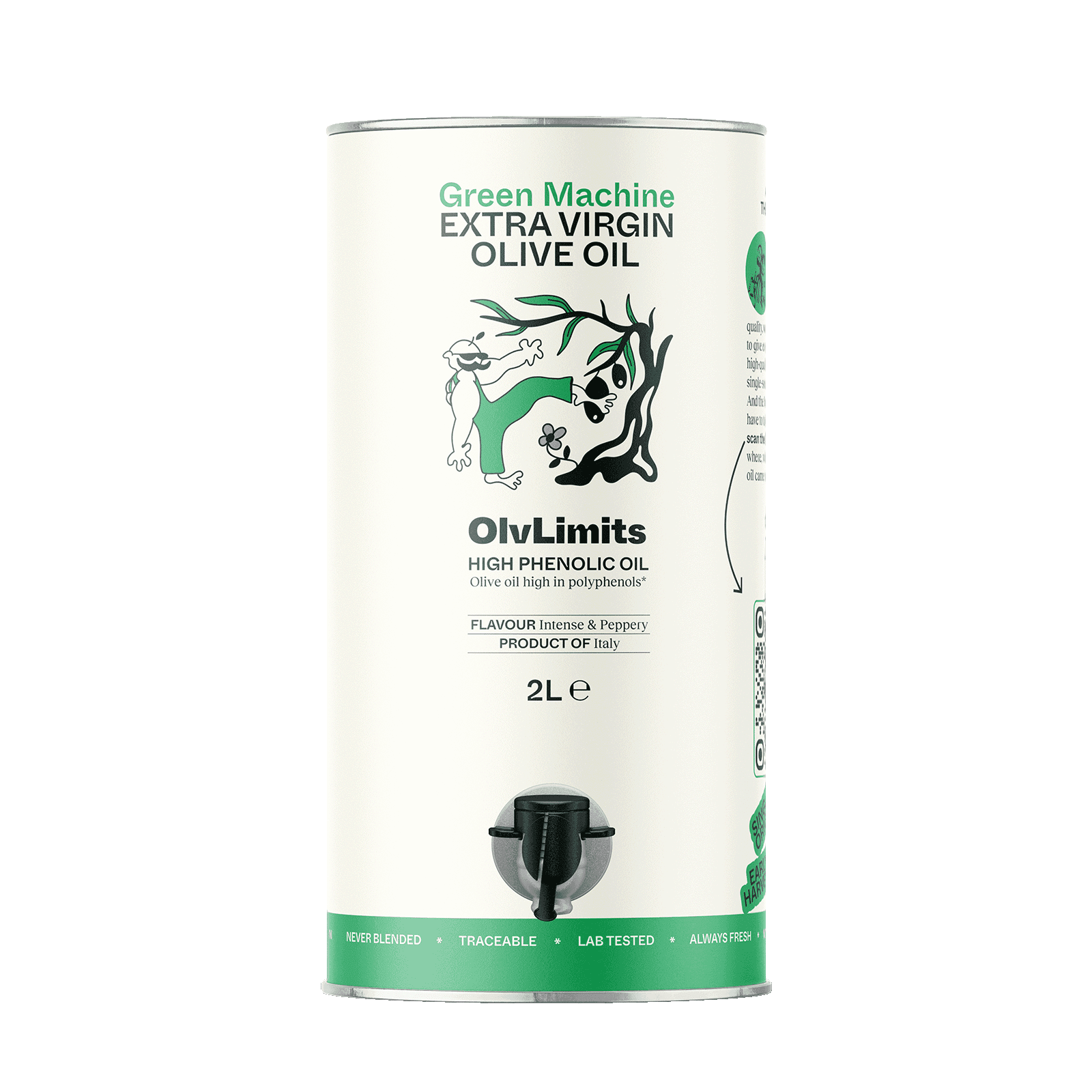
Green Machine 2L bag-in-tube
OlvLimits
€80.00· 2L(≈€20.00/500 ml)
€0.60 per 15ml serving