Early Harvest vs Late Harvest Olive Oil (2026)
How harvest timing shapes polyphenol content, flavour, yield and price, and what the trade-offs mean when you choose an olive oil.
Watch an olive through a season and you watch it change colour. It starts hard and green, turns purple, then softens to a deep black. That slow shift is the whole story here. Pick the fruit while it is still green and you get an oil that is higher in polyphenols, more bitter, more pungent, and more expensive. Leave it to ripen and you get more oil, a gentler taste, and usually lower phenolic numbers. This guide walks through the trade-offs and what the research actually supports.
What early and late harvest mean
Early harvest, sometimes labelled green harvest or early pick, means fruit taken near the start of the season, while the olives are still green and firm. Late harvest means fruit left on the tree to ripen toward purple and black before pressing. Producers often track this with a maturity index that scores skin and flesh colour from green through to fully black.
The change is gradual, not a switch. A mid-season pick sits between the two extremes on flavour, yield and phenolic content. For a closer look at how producers and labels handle this, see our guide to early harvest olive oil and why the harvest date on the label matters.
Why green olives carry more polyphenols
A young, green olive is vulnerable. It loads up on phenolic compounds partly to defend itself while it matures, and those same compounds carry through into the oil. They are the bitter, pungent molecules that give a good extra virgin its character and its studied antioxidant role. The main group in olive oil is the secoiridoids, including the derivatives of oleuropein.
As the fruit ripens, that phenolic load falls. Our house reference range tracks the direction clearly: oil from green, early-picked fruit typically runs above 1,000 mg/kg total biophenols, a mid-season purple pick lands somewhere between 400 and 1,000 mg/kg, and ripe, dark fruit tends to give oil in the 150 to 400 mg/kg range. Cultivar, region, irrigation and season all move the exact figures, so read the bands as a direction of travel rather than a promise. Studies of ripening tend to agree that total phenols and secoiridoids decline as olives darken, which is why an earlier pick raises the phenolic ceiling even though the final value still depends on variety and milling.
The yield and price trade-off
There is a reason ripe-harvest oils are common and often cheaper. Green olives hold less oil and are harder to process, so a producer needs more fruit to fill the same bottle. Letting olives ripen raises the oil yield per kilogram, which lowers the cost per litre. An early pick trades that efficiency for a more concentrated, more phenolic oil. That is the tension behind the price gap.
Flavour is a signal, not a flaw
Bitterness and a peppery catch at the back of the throat are not defects in extra virgin olive oil. They are what phenolic compounds taste like. Early harvest oils lean green and grassy, with real bite. Late harvest oils feel softer, sweeter, rounder. Preference here is personal. But if part of what you want is phenolic content, that assertive profile is a useful clue. Our note on how to taste olive oil explains what those sensations point to.
| Factor | Early (green) harvest | Late (ripe) harvest |
|---|---|---|
| Polyphenol content | Generally higher | Generally lower |
| Flavour | Bitter, pungent, grassy | Mild, sweet, rounder |
| Oil yield per olive | Lower | Higher |
| Typical price per litre | Higher | Lower |
Common misconceptions
"Early harvest guarantees high polyphenols." It raises the average, but cultivar and milling matter too. A high-phenol cultivar such as Koroneiki or Coratina picked early stacks the odds, yet only a lab figure confirms the result. Read harvest date as a signal, not a certificate.
"Late harvest oil is low quality." Not so. A ripe-harvest extra virgin can be excellent and balanced. It simply tends to sit lower on the phenolic scale and higher on yield.
"Bitterness means the oil has gone off." Bitterness from phenols is a feature, not rancidity. Rancid oil smells stale or waxy, a separate problem covered in does olive oil expire.
How to choose between them
If phenolic content is your priority, favour early harvest oils, assertive bitter-pungent profiles, a recent harvest date, and ideally a published lab value. Under EU rules, olive oil polyphenols contribute to the protection of blood lipids from oxidative stress where the oil supplies at least 5 mg of hydroxytyrosol and its derivatives per 20 g and that 20 g daily amount is consumed (Regulation (EU) 432/2012). Most retail oils fall short of that threshold, so the harvest date and the lab number matter more than an "extra virgin" label. For where this and the wider health picture sit, see the health evidence overview. And because a stronger oil delivers more polyphenol in the same spoonful, the concentration shapes how much you need day to day; our guide on how much polyphenol olive oil to take daily walks through that.
If you value a milder taste, or cost per litre matters more, a ripe-harvest oil can be the better fit. Neither pick is wrong. They answer different questions.
Because phenolic numbers vary so much between bottles, the surest approach is to compare measured values directly. Our master ranking lists oils by lab-tested polyphenol content, and the methodology explains how those figures are sourced and compared.
Put this check into practice
Compare the listed harvest and lab context for Green Machine and November Early Harvest in the olive oil dataset. The buyer framework helps decide whether intensity, freshness or price matters most for your use. The live UK ranking and Germany ranking then narrow the comparison to each market.
The harvest-time trade-off
Early or green harvest
- Usually more bitterness, pungency and phenolic potential
- Lower oil yield per kilogram of olives
- Often a more expensive, robust style
Later harvest
- Usually a milder, rounder flavour profile
- Higher oil yield per kilogram of olives
- Often lower phenolic potential, all else equal
Featured oils
Frequently asked questions
Is early harvest olive oil always higher in polyphenols?
On average yes, but not without exception. Cultivar, growing region, irrigation and milling all interact with ripeness. An early pick raises the ceiling; only a lab number confirms the actual content.
Does early harvest olive oil taste better?
That depends on preference. Early harvest oils are more bitter and pungent, which many tasters value. Late harvest oils are milder and rounder. Neither is objectively better.
Why is early harvest olive oil more expensive?
Green olives give less oil per kilogram and are picked earlier in the season, so a producer needs more fruit for the same volume. That lower yield is a large part of the higher price.
How we reviewed this article
Written and edited by our editorial team and checked against primary research and EU regulation. We cite peer-reviewed studies and official sources, and prefer human trials and reviews over in-vitro work.
Searching for olive oil for your health and longevity
Our top-ranked high-polyphenol olive oils, sorted by lab-verified content.
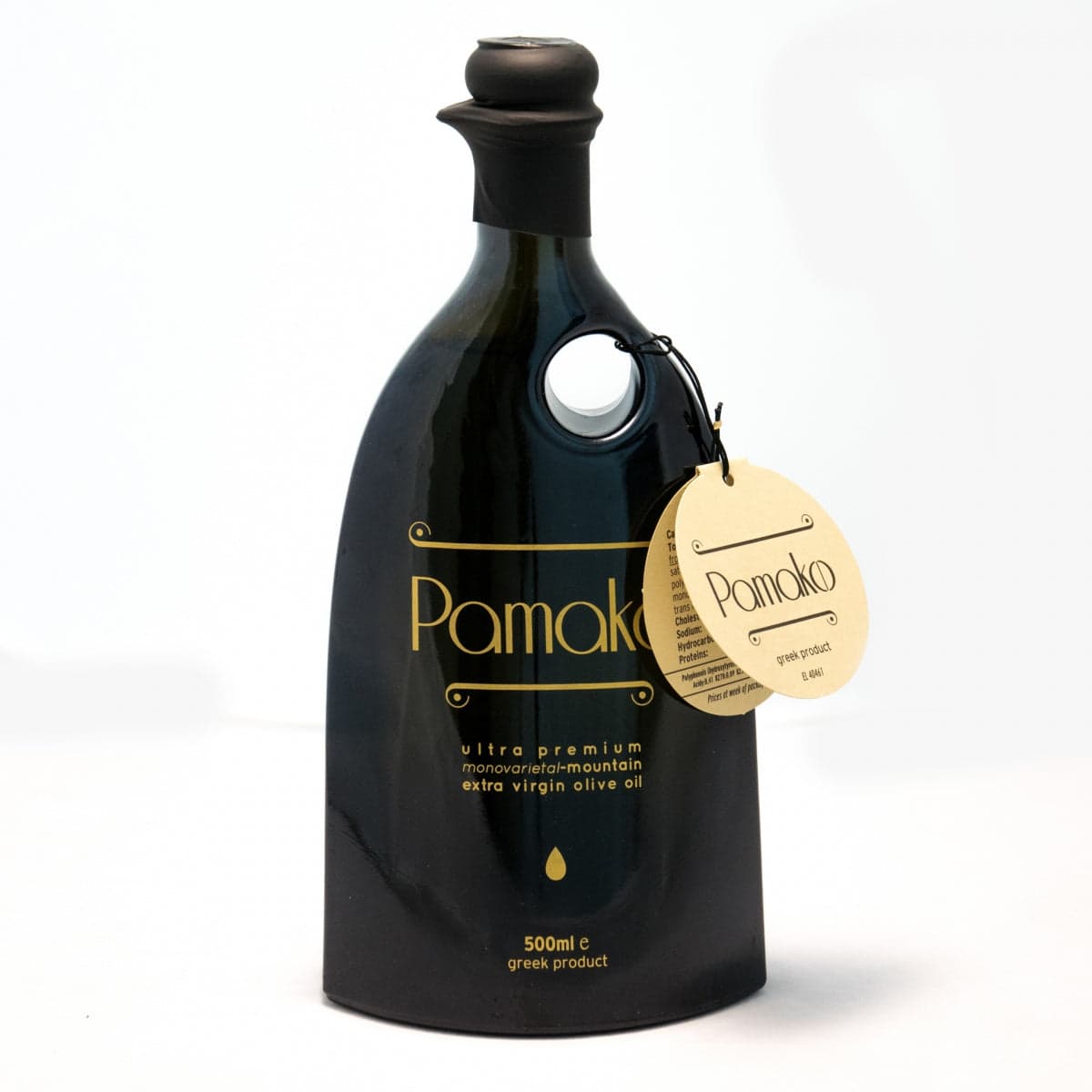
Pamako
€54.95· 500ml
€1.65 per 15ml serving
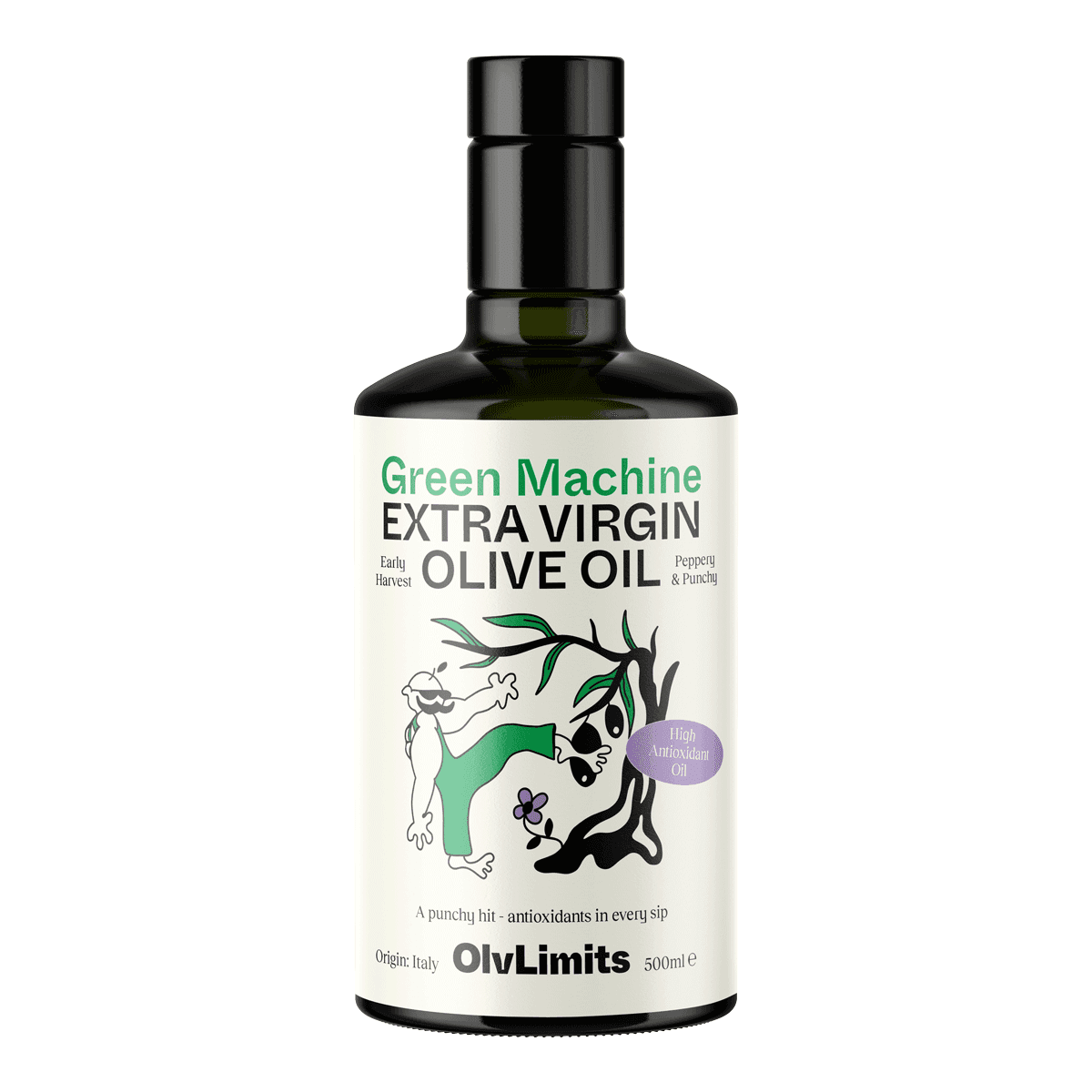
Green Machine
OlvLimits
€23.00· 500ml
€0.69 per 15ml serving
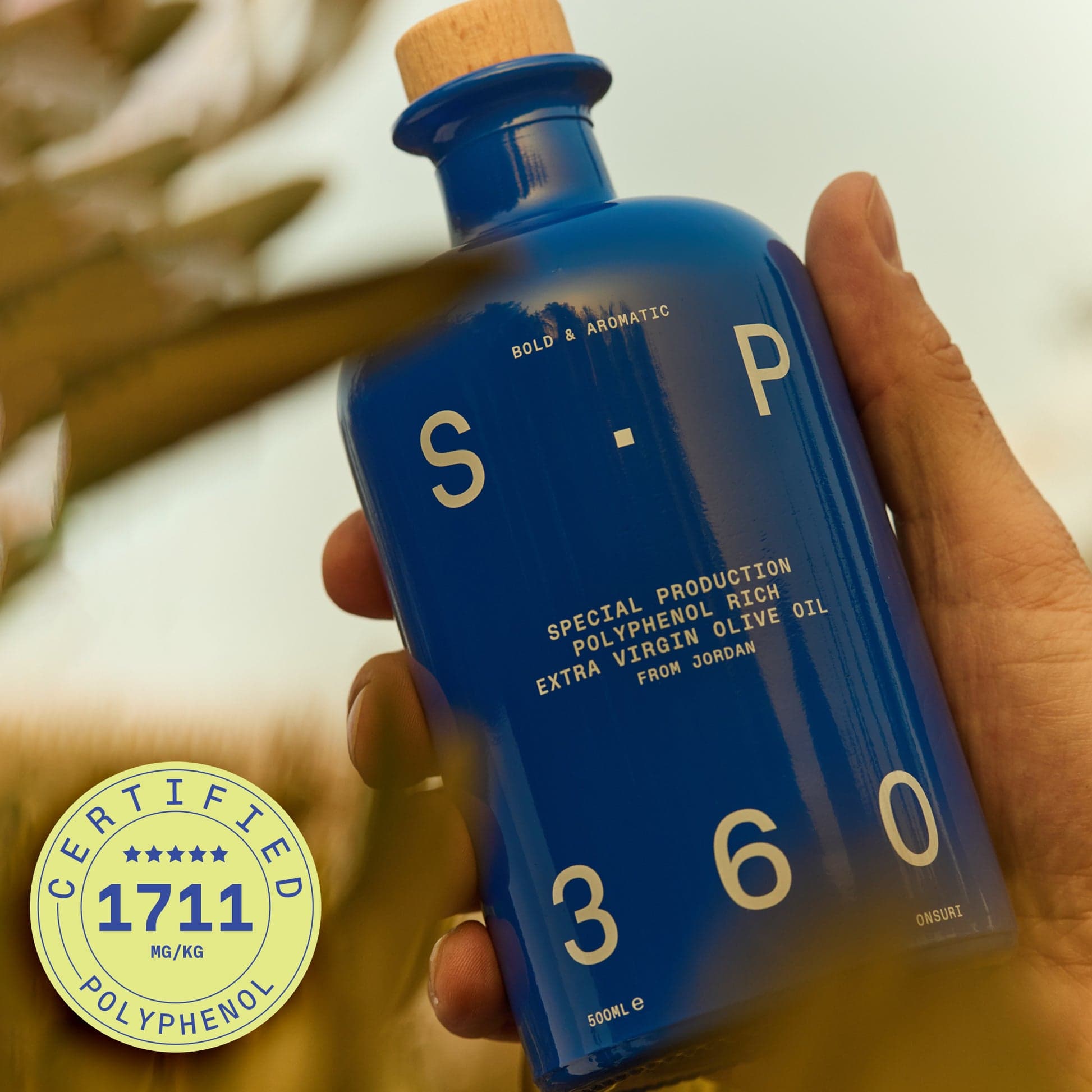
SP360
£42.00· 500ml
£1.26 per 15ml serving
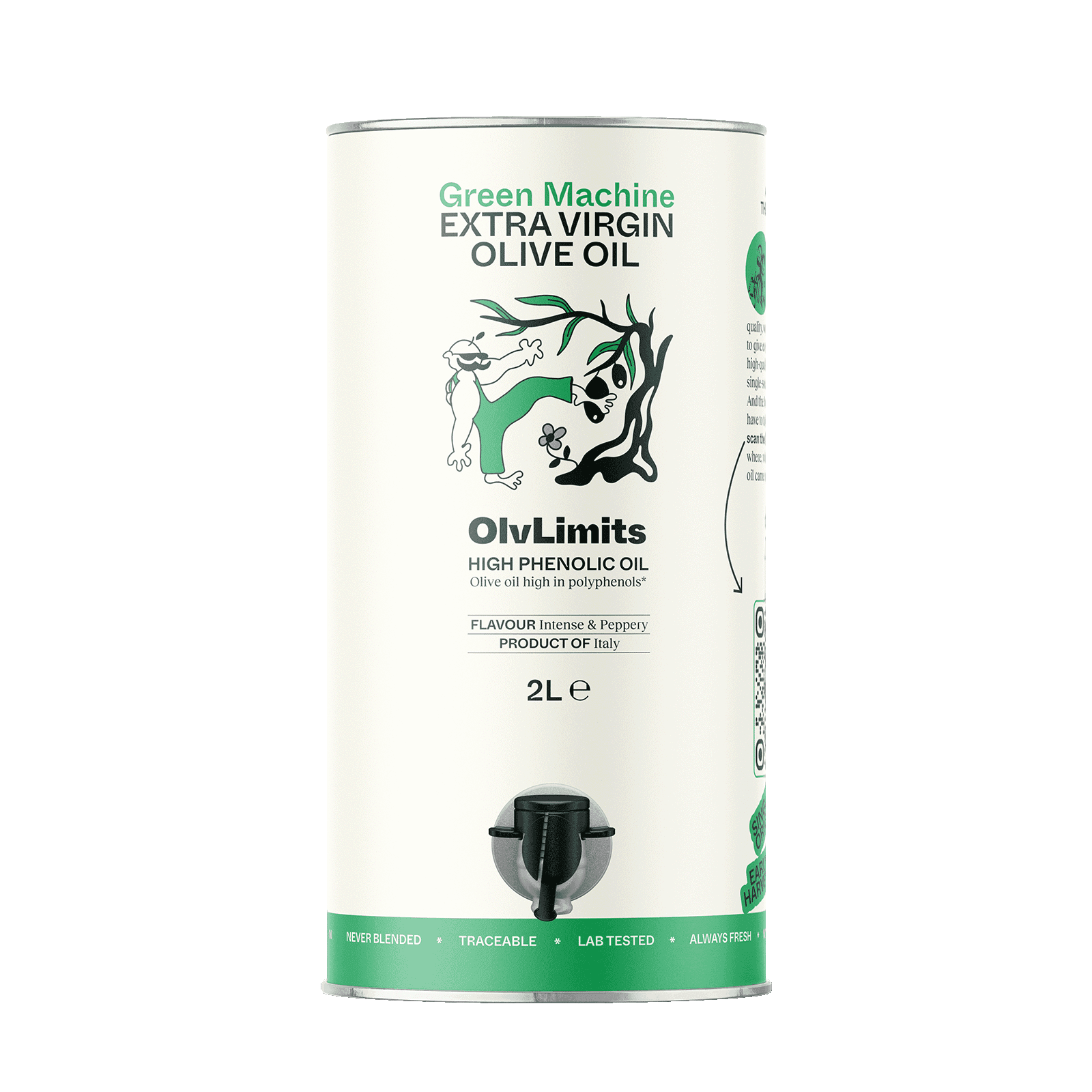
Green Machine 2L bag-in-tube
OlvLimits
€80.00· 2L(≈€20.00/500 ml)
€0.60 per 15ml serving