Hydroxytyrosol in Olive Oil: What It Is and Why It Matters (2026)
A guide to hydroxytyrosol, the simple phenol behind the EU's only authorised olive oil health claim, and how to read it on a lab report.

Extra virgin olive oil carries dozens of phenolic compounds. One of them holds a place none of the others do. Hydroxytyrosol is the molecule European regulators settled on when they decided whether olive oil phenols could carry a health claim at all. Once you know what it is, where it comes from, and how it behaves, a lab report starts to read like evidence rather than marketing.
This guide sticks to what can be verified. For the wider family of compounds, see our explainer on what polyphenols are in olive oil. For the bitter, throat-catching phenols in particular, see oleocanthal and oleacein explained.
What hydroxytyrosol actually is
Hydroxytyrosol is a small, simple phenol found in olives, olive leaves, and good extra virgin olive oil. Its defining feature is two hydroxyl groups sitting side by side on a ring, an arrangement chemists call a catechol. That pair is what mops up free radicals, which is the antioxidant activity measured in laboratory tests.
A phenol and a polyphenol are not quite the same thing. A phenol is a single ring carrying at least one –OH group — the basic unit. A polyphenol joins several of those units together, since poly means many. Hydroxytyrosol is a simple phenol: one ring, two –OH groups. In olive oil, though, "polyphenols" is the loose word for the whole phenolic family, simple compounds like this one included.
Hydroxytyrosol is one of dozens of phenols in olive oil, which fall into about five families. It sits among the simple phenols, next to tyrosol. The largest family by amount is the secoiridoids — the bitter compounds hydroxytyrosol forms from during milling. Our explainer on what polyphenols in olive oil are walks through the whole family.
In the oil, hydroxytyrosol turns up both on its own and bound inside larger molecules. It is one of the most-measured phenols in olive oil, mostly because it sits at the centre of the regulatory framework covered below. It is not a vitamin, not a fatty acid, and not unique to olive oil.
Where it comes from: the oleuropein connection
Most of the hydroxytyrosol in a bottle was not there in the fresh fruit. It forms mainly as oleuropein breaks down. Oleuropein is a larger phenol packed into the olive, and it is responsible for much of the fruit's raw bitterness.
When olives are milled, enzymes and water go to work on the paste. They break oleuropein and related secoiridoids (the bitter parent compounds) down into smaller molecules, among them hydroxytyrosol and tyrosol. The conversion carries on, more slowly, while the oil sits in storage. So the hydroxytyrosol in a finished oil reflects two things: how much oleuropein the fruit started with, and how much has since been transformed.
This is why the EU framework never talks about hydroxytyrosol on its own. It refers to "hydroxytyrosol and its derivatives," naming the oleuropein complex and tyrosol alongside it. These compounds are chemically linked and shift into one another over the life of the oil.
The same link explains why one oil can show different phenol profiles depending on when it is tested. A very fresh oil from late-ripening fruit may still hold much of its phenol content as intact oleuropein-derived complexes. Over months, the free hydroxytyrosol fraction climbs as those complexes break apart in water (hydrolyse).
The number that matches the EU claim measures hydroxytyrosol and its derivatives together, not free hydroxytyrosol on its own. A report that quotes only the free-hydroxytyrosol figure can understate what the oil really delivers.
The one EU health claim, and the 5 mg / 20 g threshold
In 2011 the European Food Safety Authority (EFSA) reviewed the health claims submitted for olive oil polyphenols. It found a cause-and-effect relationship between the phenols and the protection of blood lipids from oxidative damage (EFSA Journal 2011;9(4):2033). It tied that effect to hydroxytyrosol, because hydroxytyrosol and its derivatives were what the supporting human studies measured — trials where higher-phenol oil produced lower oxidised LDL than low-phenol oil — and they measure consistently in oil. That decision made hydroxytyrosol the reference point for the whole category.
The opinion became law through Commission Regulation (EU) No 432/2012. The authorised claim reads:
"Olive oil polyphenols contribute to the protection of blood lipids from oxidative stress."
Two conditions apply, and both are mandatory. The oil must contain at least 5 mg of hydroxytyrosol and its derivatives (such as the oleuropein complex and tyrosol) per 20 g. And the label must tell the reader the effect needs a daily intake of 20 g of olive oil. In the units a lab report uses:
| What the regulation says | What it works out to |
|---|---|
| 5 mg hydroxytyrosol and derivatives per 20 g oil | about 250 mg/kg |
| Daily intake for the effect | 20 g of olive oil per day, roughly 2 tablespoons |
| Compound measured | hydroxytyrosol plus its derivatives, not total polyphenols |
That 250 mg/kg is a floor for one specific claim, not a quality grade, and total-polyphenol figures from other methods do not convert into it. How much you take also depends on concentration: a spoon of a 1,500 mg/kg oil delivers far more than one scraping past 250 mg/kg, so a stronger oil reaches the daily amount in a smaller serving. Our guide on how much polyphenol olive oil to take daily works through that, and the methodology page sets out how we handle the numbers.
The claim is deliberately narrow. It covers that one effect — the resistance of LDL particles to oxidation — and nothing more. It says nothing about cholesterol levels, blood pressure, or heart disease, whatever marketing beyond the regulated wording suggests. Our health benefits overview covers where it sits among the other effects under study.
Beyond the authorised claim: what the research is exploring
Hydroxytyrosol is also studied for several other effects. None is approved, and the evidence ranges from small human trials to lab and animal work.
- Cardiovascular, beyond LDL. A crossover trial in 67 adults pairing hydroxytyrosol with pomegranate punicalagin reported improved endothelial function and lower blood pressure, but only within the already-affected subgroups, and the combined supplement means the effect can't be pinned on hydroxytyrosol alone (Quirós-Fernández et al., 2019). → Human evidence, early.
- Anti-inflammatory. A 16-week trial in 52 adults with overweight and prediabetes (15 mg/day) found lower oxidised LDL and interleukin-6 alongside reduced oxidative-damage markers (Moratilla-Rivera et al., 2025); most of the wider anti-inflammatory work remains lab and cell based. → Human evidence, early.
- Metabolic and glucose control. A meta-analysis of 14 human trials (594 participants) linked olive-oil phenols including hydroxytyrosol to lower fasting insulin and triglycerides, though it found no clear effect on blood glucose itself (Frumuzachi et al., 2025). → Human evidence, mixed.
- Neuroprotection. Cell and animal studies describe hydroxytyrosol dampening oxidative stress and neuroinflammation, but a 2024 review notes human clinical data are still sparse (Gonçalves et al., 2024). → Mostly lab/animal.
For how each of these areas sits across the wider evidence, see our evidence overview.
Where hydroxytyrosol is highest
Hydroxytyrosol runs highest in oils pressed from fruit that started rich in phenols, because it forms from oleuropein. A few practical factors line up.
Harvest timing
Olives picked early, when the fruit is still green and firm, generally carry more oleuropein. They yield oils higher in hydroxytyrosol and related phenols. Those oils taste more bitter and pungent. As the fruit ripens toward black, phenol content usually drops.
Cultivar and region
Some olive varieties are naturally richer in phenols than others, whatever the picking date. It is one reason two oils harvested on the same day can report very different hydroxytyrosol figures.
Processing and freshness
Careful cold extraction and prompt bottling help hold on to phenols. Refining strips most of the phenolic content, which is why refined and "light" olive oils sit well below the threshold. Freshness counts too, so look for a recent harvest.
Extraction temperature is worth singling out. "Cold extracted" or "cold pressed" means the paste was mixed below a set temperature. That mixing step, called malaxation, loses fewer volatile and phenolic compounds when it is kept cool. Hotter, faster processing can lift yield, but it tends to lower the phenol figure that lands in the bottle. It is another reason a measured hydroxytyrosol number tells you more than any descriptive term on a label.
How hydroxytyrosol degrades
Hydroxytyrosol and its derivatives do not last forever. Their levels fall over the life of the oil, and three things drive the decline.
- Oxygen. Contact with air slowly consumes phenols as the oil oxidises.
- Light. Clear bottles on a bright shelf speed the loss; dark glass or tin slows it.
- Heat and time. Warm storage and simple ageing both lower phenol content.
So an oil that met 250 mg/kg at bottling may not still meet it a year later in a warm cupboard. It is also why harvest date and storage conditions belong on any honest label. Storing it cool, dark and sealed slows that loss. And because a printed phenol figure is easy to inflate, the same recent-harvest-date and lab-report checks also help you spot a fake.
Reading hydroxytyrosol on a lab report
A few habits make a hydroxytyrosol lab figure more useful to read.
- Check what was measured. "Total polyphenols" by a colorimetric method is a different number from "hydroxytyrosol and its derivatives" measured to match the EU claim. Only the second speaks directly to Regulation 432/2012.
- Check the units. Figures usually come in mg/kg. The claim floor is about 250 mg/kg.
- Check the date. A figure is a snapshot, so pair it with harvest date and storage.
- Check the method. Reliable reports name the analytical method, often a chromatographic one.
A high hydroxytyrosol figure on a fresh, well-stored, transparently tested oil is the combination to look for. A claim with no number behind it, or a number with no method or date, tells you less than it seems to.
Frequently asked questions
What is hydroxytyrosol?
Hydroxytyrosol is a simple phenolic compound found in olives and extra virgin olive oil. It is one of the most studied phenols in olive oil and is the compound the EU's authorised olive oil health claim is standardised on.
Where does hydroxytyrosol in olive oil come from?
Most of it forms when oleuropein, a larger phenol in the olive fruit, breaks down into smaller molecules during milling and storage. Some is present in free form in the fruit itself.
How much hydroxytyrosol do I need for the EU health claim?
Commission Regulation (EU) No 432/2012 requires at least 5 mg of hydroxytyrosol and its derivatives per 20 g of olive oil, which is about 250 mg/kg, and the consumer must be told the effect needs a daily intake of 20 g of olive oil.
Which olive oils are highest in hydroxytyrosol?
Fresh extra virgin oils from early-harvest, often green and bitter fruit tend to carry the most hydroxytyrosol and related phenols. Refined oils and older stock generally carry far less.
Does hydroxytyrosol degrade over time?
Yes. Phenol content, including hydroxytyrosol and its derivatives, declines with exposure to heat, light, oxygen and time, which is why storage and harvest date matter.
Is hydroxytyrosol the same as total polyphenols?
No. Total polyphenols is a broader measure of many phenolic compounds, while hydroxytyrosol and its derivatives are the specific fraction the EU claim is built around. An oil can report a high total figure yet still need a specific hydroxytyrosol measurement to confirm the claim.
How we reviewed this article
Written and edited by our editorial team and checked against primary research and EU regulation. We cite peer-reviewed studies and official sources, and prefer human trials and reviews over in-vitro work.
Sources
- Scientific Opinion on the substantiation of health claims related to polyphenols in olive oil (EFSA Journal 2011;9(4):2033) — EFSA Journal
- Commission Regulation (EU) No 432/2012 establishing a list of permitted health claims — EUR-Lex
- Bioavailability and antioxidant effects of olive oil phenolic compounds in humans: a review — PubMed
- Antioxidant activity of olive polyphenols in humans: a review — PubMed
- The decrease in the health benefits of extra virgin olive oil during storage is conditioned by the initial phenolic profile — PubMed
- Stability of virgin olive oil phenolic compounds during long-term storage (18 months) at 5-50 °C — PubMed
- Supplementation with hydroxytyrosol and punicalagin improves early atherosclerosis markers in the adult population: a randomized, placebo-controlled, crossover trial — PMC
- Hydroxytyrosol supplementation improves antioxidant and anti-inflammatory status in individuals with overweight and prediabetes: a randomized, double-blind, placebo-controlled parallel trial — PubMed
- The impact of oleuropein, hydroxytyrosol, and tyrosol on cardiometabolic risk factors: a meta-analysis of randomized controlled trials — PubMed
- Neuroprotective effects of olive oil: a comprehensive review of antioxidant properties — PMC
Searching for olive oil for your health and longevity
Our top-ranked high-polyphenol olive oils, sorted by lab-verified content.
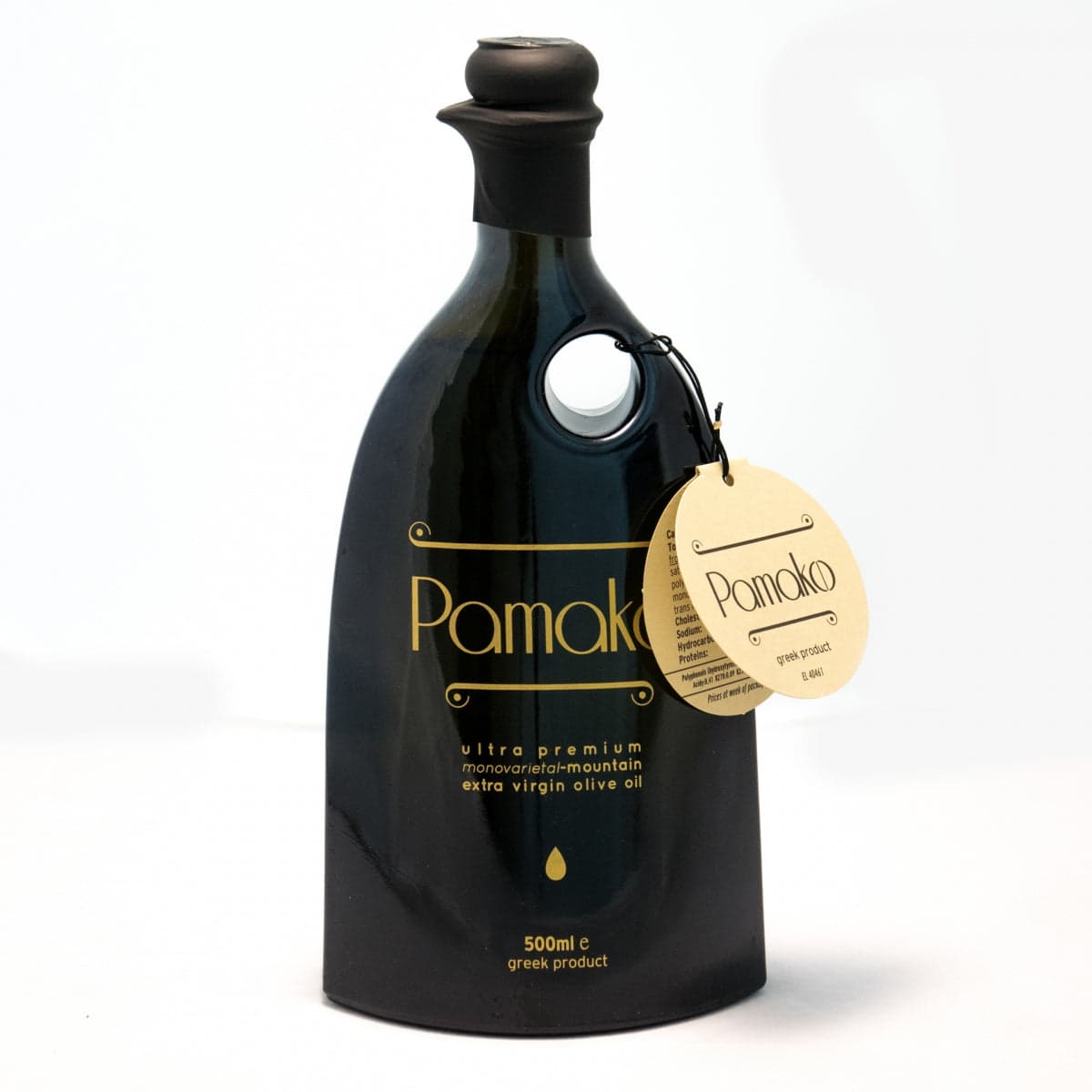
Pamako
€54.95· 500ml
€1.65 per 15ml serving
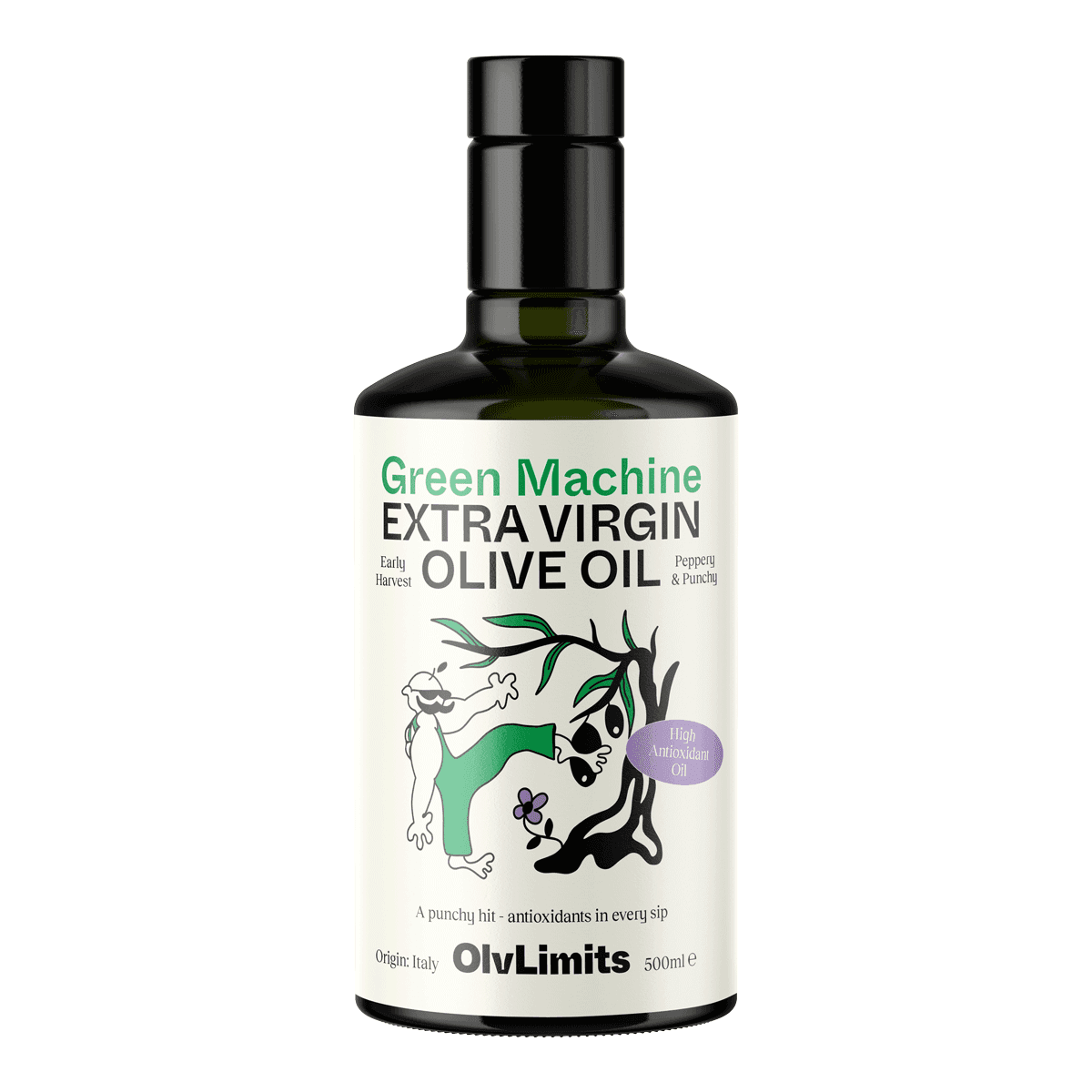
Green Machine
OlvLimits
€23.00· 500ml
€0.69 per 15ml serving
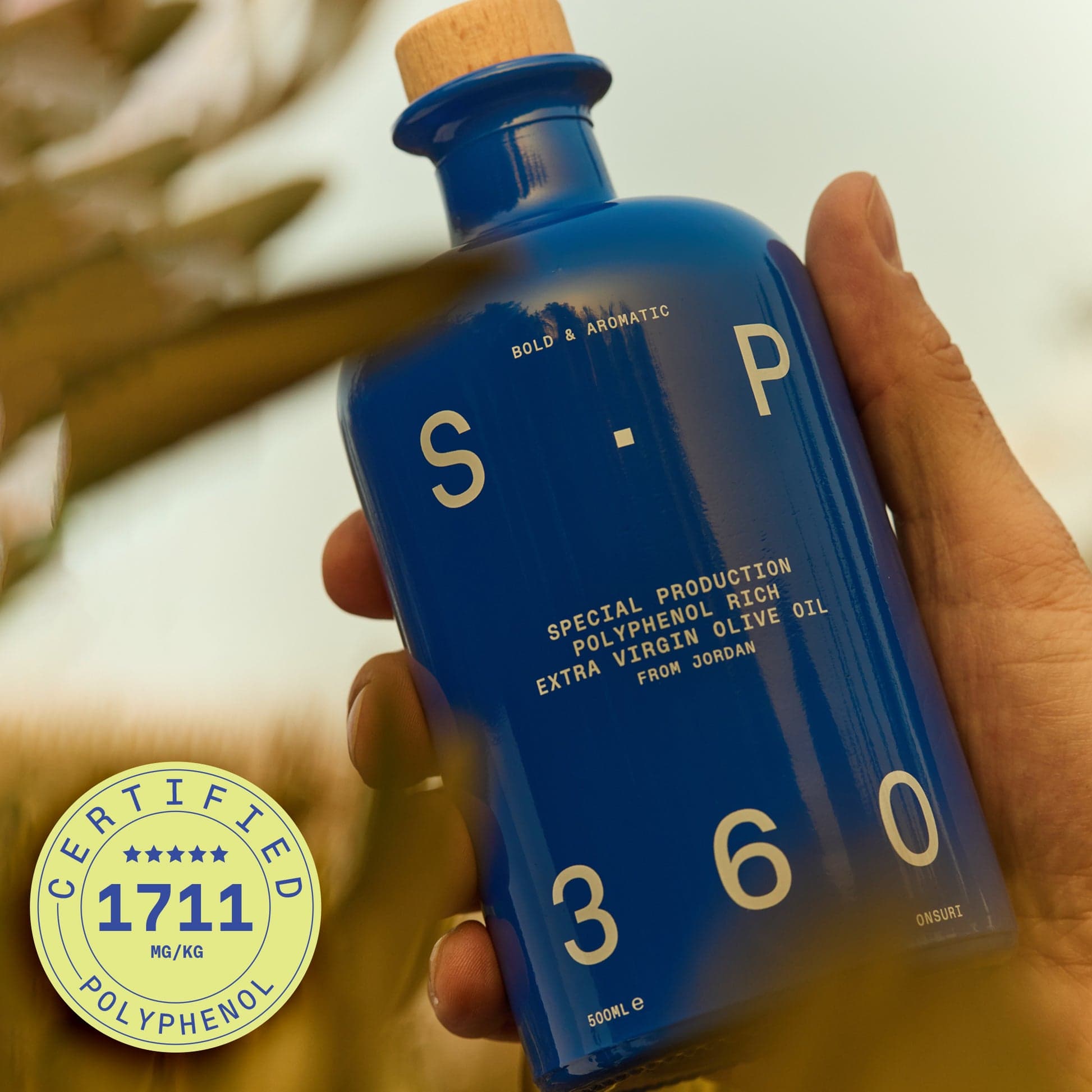
SP360
£42.00· 500ml
£1.26 per 15ml serving
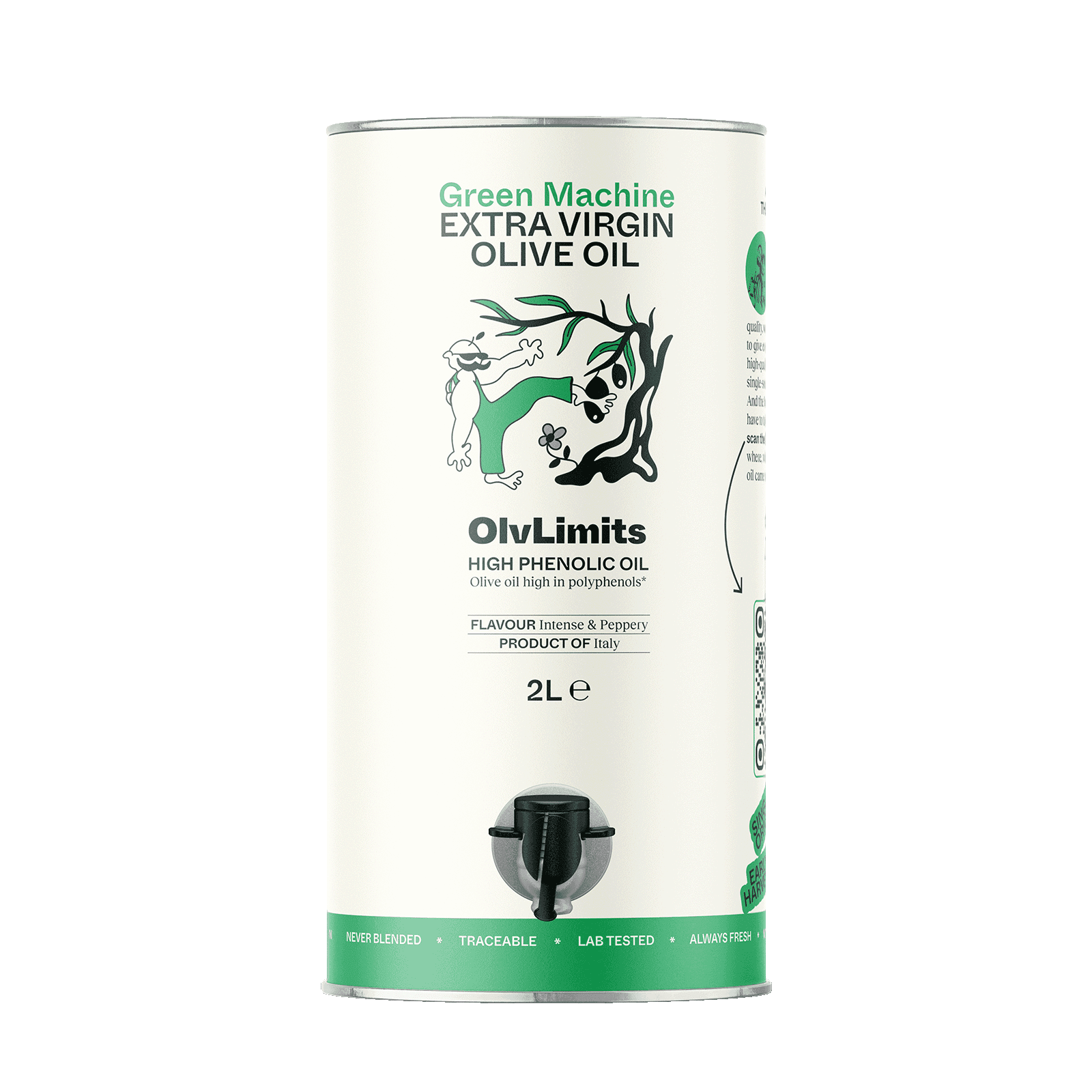
Green Machine 2L bag-in-tube
OlvLimits
€80.00· 2L(≈€20.00/500 ml)
€0.60 per 15ml serving