Olive Oil Acidity: What 0.2% Free Acidity Actually Measures (2026)
The acidity figure on an olive oil label measures free oleic acid, not sourness or taste. It is a freshness and processing indicator, and it is not the same as polyphenol content.
A premium olive oil label often leads with a low acidity figure, something like "0.2% acidity," as if a smaller number were a refinement you could taste on the spoon. The number does mean something, but it gets misread constantly. It says nothing about sourness or sharpness or flavour of any kind. It is a laboratory measurement of free fatty acids, and it tells you about the fruit and the milling, not about how the oil tastes or how many polyphenols it carries.
The short answer: free acidity is free oleic acid
Olive oil is mostly triglycerides, where fatty acids sit bound to a glycerol backbone. When olives arrive bruised, overripe, badly stored, or milled too slowly, enzymes and reactions snap some of those bonds and release free fatty acids. Oleic acid is by far the most abundant fatty acid in olive oil, so the lab convention is to report total free acidity as if all of it were oleic acid.
So a label that reads "0.2% acidity" means the oil holds roughly 0.2 grams of free oleic acid per 100 grams. A figure of 0.8% means four times as much. The number climbs as fruit quality and freshness drop, and that is exactly why it works as a processing signal. A low figure points to healthy olives, milled promptly and handled gently.
This is a different kind of "acidity" from the pH you would measure in vinegar or lemon juice. It has nothing to do with a sour sensation. It is a count of broken fatty-acid bonds.
Why you cannot taste it
This is where most people go wrong. At the levels found in graded olive oil, free fatty acids sit in tiny quantities and carry no flavour you can perceive. The peppery catch at the back of the throat, the bitterness, the green-leaf bite: those come from polyphenols such as oleocanthal and oleuropein derivatives, which we cover in oleocanthal and oleacein explained. None of it is the free acidity.
So you cannot sip two oils and rank their acidity by taste. A sensory panel judging extra virgin status is grading defects and fruitiness, not the acidity number. That number is settled separately in a lab by titration. An oil has to pass both checks, and they answer different questions.
The EU and IOC limits by grade
Free acidity is one of the chemical parameters that sort olive oil into grades. The thresholds come from the International Olive Council trade standard for olive oils and are mirrored in EU law under Commission Implementing Regulation (EU) 2022/2105, which sets out the analysis methods alongside the marketing-standards framework. The headline limits:
| Grade | Maximum free acidity (g oleic acid / 100 g) |
|---|---|
| Extra virgin olive oil | 0.8% |
| Virgin olive oil | 2.0% |
| Ordinary virgin olive oil | 3.3% |
| Lampante virgin olive oil | above 2.0% (not fit for sale as is) |
Extra virgin has to clear the 0.8% bar and pass the sensory panel with zero defects and positive fruitiness. Virgin olive oil may run up to 2.0% and tolerate minor faults. Lampante oil breaks the virgin limits or shows defects, so it needs refining before it can be sold for the table. Acidity gates the grade ladder, but it is one criterion among several. Peroxide value, ultraviolet absorbance and the taste panel all count too. For how grade and process labels interact, see cold pressed vs extra virgin olive oil.
Acidity is not polyphenol content
Here is the part that matters most if you are buying oil for its polyphenols. A low acidity number does not mean a high polyphenol number. The two measure different things.
Free acidity reflects how intact the fruit and the fats were, essentially a damage-and-freshness score. Polyphenol content reflects how many protective phenolic compounds the oil carries, which is driven mostly by olive variety, harvest timing and freshness.
They can move together, because the same careful, early, fast processing that keeps acidity low also helps preserve polyphenols. But the link is loose. A mild, ripe-olive oil can show a beautiful 0.2% acidity and still be modest in polyphenols, while a robust early-harvest oil might read slightly higher on acidity yet carry far more phenolic content. The acidity figure just does not encode that. To compare polyphenol strength you need a measured value in mg/kg, which is why every oil in our directory lists its tested level, and why we set out how we read those numbers in our methodology.
What the authorised health claim actually keys on
The separation shows up clearly in the one health claim EU regulators have authorised for olive oil polyphenols. Under Commission Regulation (EU) No 432/2012: "Olive oil polyphenols contribute to the protection of blood lipids from oxidative stress." The claim may be used only for oils providing at least 5 mg of hydroxytyrosol and its derivatives per 20 g, with a label statement that the effect is obtained at a daily intake of 20 g of olive oil.
The claim keys on a polyphenol concentration, never on the acidity figure. An oil at 0.2% acidity that falls short of the 5 mg threshold cannot carry it, while a higher-acidity oil that meets the threshold can. The two sit on different axes. Most oils miss the polyphenol threshold in any case, which is the point worth internalising when you shop. For where this sits in the wider evidence, see the studied benefits of high-polyphenol oil and the health evidence overview.
Common misconceptions
Low acidity does not mean the oil tastes mild or smooth. Acidity has no taste. Mildness or sharpness comes from polyphenols and fruitiness, which a sensory panel grades separately.
A reading of 0.2% does not prove top quality on its own. It points to sound fruit and careful milling, which is genuinely good, but quality also rests on the taste panel, peroxide value and storage. One low number is not the whole picture.
Lower acidity does not mean more polyphenols. These are unrelated measurements, and low acidity can sit next to either high or low polyphenol content.
Acidity is not the pH of the oil. Free acidity counts free fatty acids by titration. It is not a pH reading and does not describe sourness.
Practical recommendation
Read the acidity figure for what it is: a freshness and processing signal. Anything comfortably below the 0.8% extra virgin limit points to healthy, well-handled fruit, and a very low reading like 0.2% reflects especially careful production. Read it as a green light on soundness, not a verdict on flavour or polyphenols.
If polyphenols are your reason for buying, look past the acidity number. Check for a recent harvest date, a clear varietal, and a tested polyphenol value in mg/kg. The amount you get in a daily spoonful scales with that mg/kg figure, which is why a stronger oil delivers more in a smaller serving; we work through this in how much polyphenol olive oil to take daily. Then store the bottle properly, as we cover in keeping high-polyphenol oil fresh. Acidity tells you the oil is sound. The polyphenol figure tells you whether it is strong.
Put this check into practice
Use Opus Oléa and Erbology Organic as live examples, then inspect acidity alongside the other published fields in the olive oil dataset. The buyer framework shows how that chemistry fits with harvest and lab-method checks. For an availability-led shortlist, compare the UK ranking and Germany ranking.
What an acidity number can and cannot tell you
It can indicate
- Free fatty acids expressed as oleic acid
- How sound the fruit and milling process were likely to be
- Whether one required grade criterion is met
It cannot indicate
- How peppery, bitter or sour the oil tastes
- How much phenolic content the oil has
- The oil's complete quality or freshness story
Featured oils
Frequently asked questions
Can you taste olive oil acidity?
No. Free acidity is a chemical measurement of free fatty acids and has no flavour or sour taste of its own. The sharpness or pepperiness you notice when tasting comes from polyphenols, not from acidity.
What is the acidity limit for extra virgin olive oil?
Under the IOC trade standard and EU law, extra virgin olive oil must have free acidity of no more than 0.8 grams of oleic acid per 100 grams. Virgin olive oil allows up to 2.0%, and above that an oil is not fit for sale as virgin without refining.
Does low acidity mean high polyphenols?
No. Acidity and polyphenol content are separate measurements. Low acidity signals sound fruit and careful processing, but it does not reveal how many polyphenols the oil contains. Only a measured polyphenol figure tells you that.
Is 0.2% acidity better than 0.5%?
A lower figure indicates fresher, more carefully handled fruit, so 0.2% reflects better raw material than 0.5%. But both are well within the extra virgin limit, and neither number tells you about polyphenol strength or how the oil will taste.
How we reviewed this article
Written and edited by our editorial team and checked against primary research and EU regulation. We cite peer-reviewed studies and official sources, and prefer human trials and reviews over in-vitro work.
Sources
Searching for olive oil for your health and longevity
Our top-ranked high-polyphenol olive oils, sorted by lab-verified content.
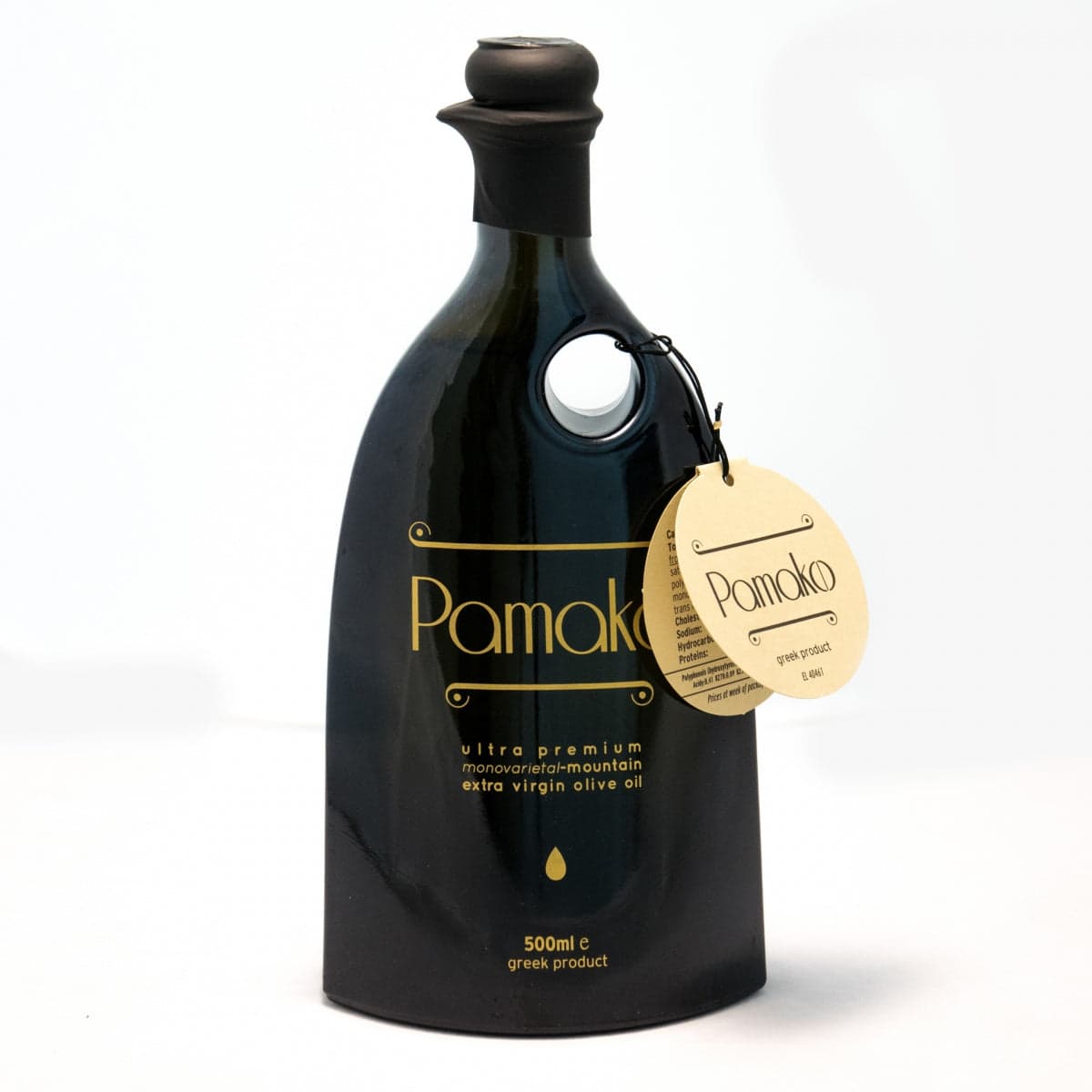
Pamako
€54.95· 500ml
€1.65 per 15ml serving
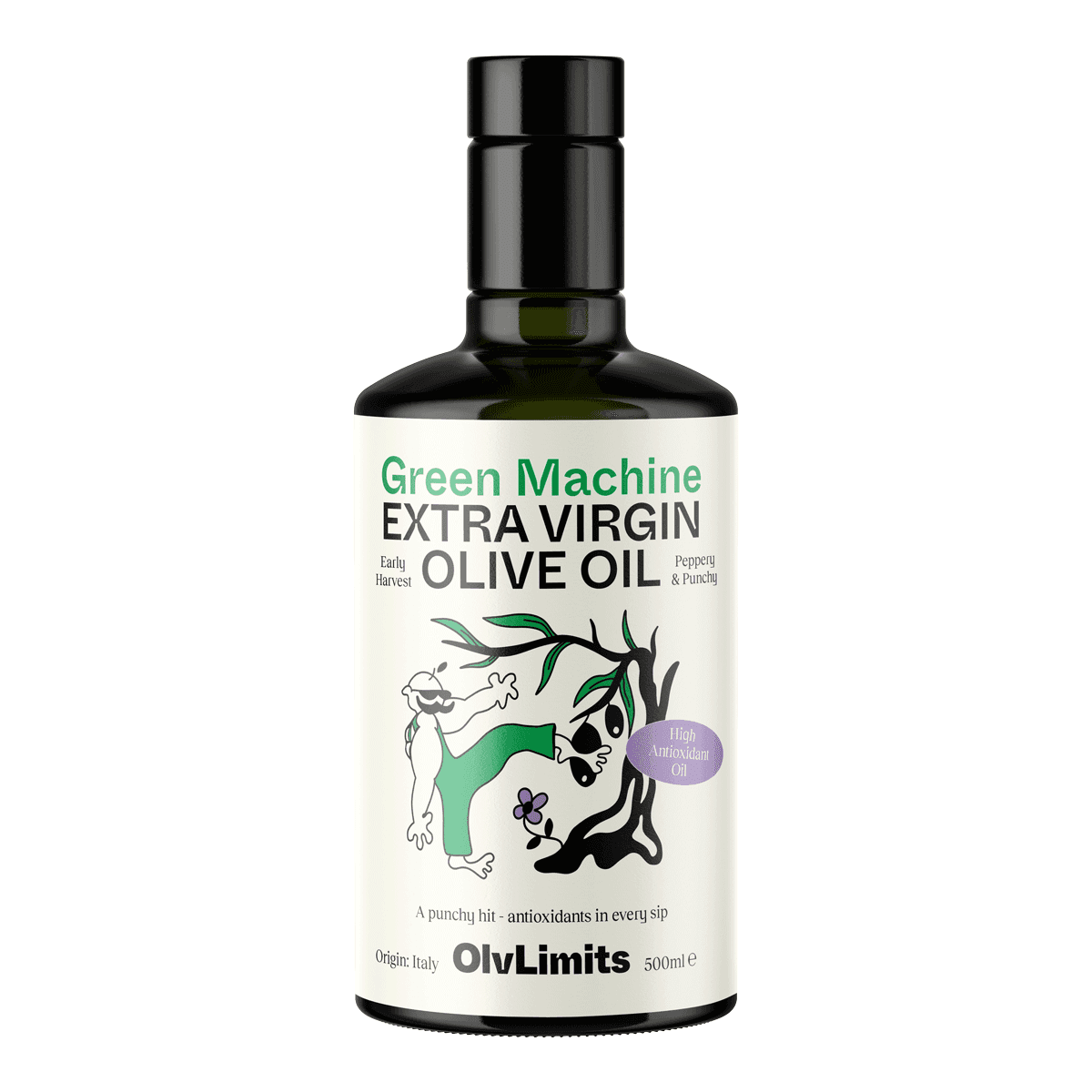
Green Machine
OlvLimits
€23.00· 500ml
€0.69 per 15ml serving
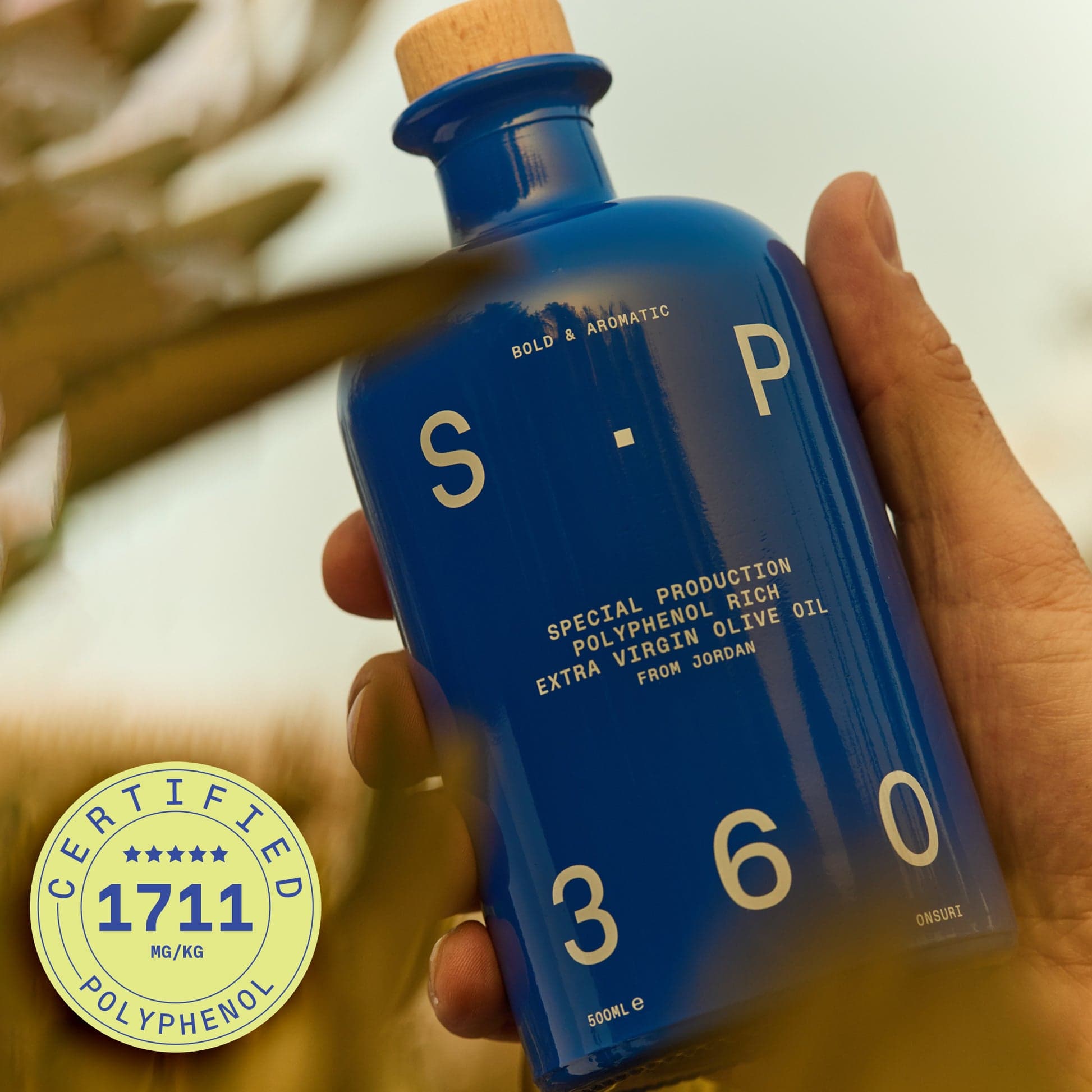
SP360
£42.00· 500ml
£1.26 per 15ml serving
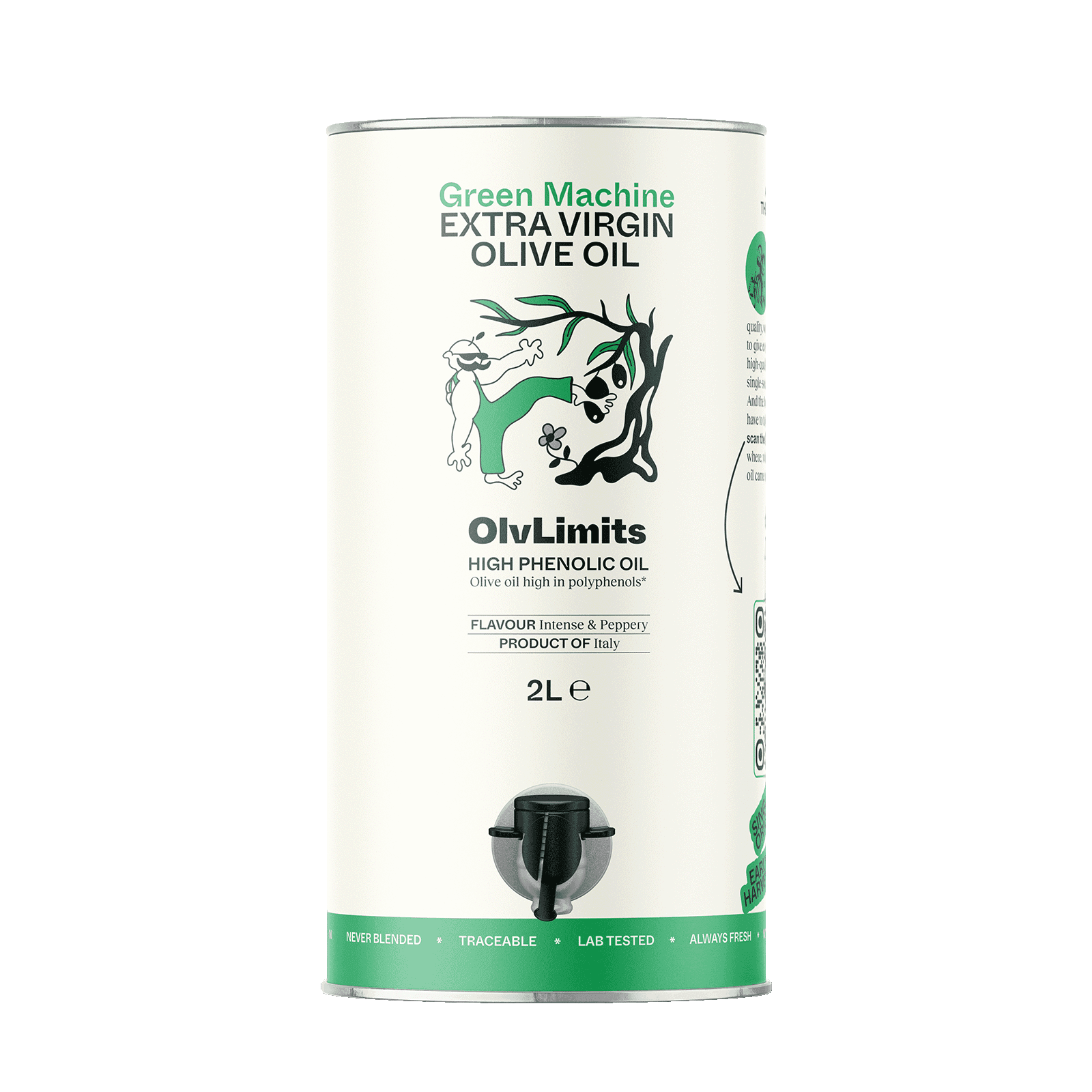
Green Machine 2L bag-in-tube
OlvLimits
€80.00· 2L(≈€20.00/500 ml)
€0.60 per 15ml serving