How Much High-Polyphenol Olive Oil Per Day (2026)
A conservative, regulation-led answer to how much high-polyphenol olive oil to take daily, anchored to the EU blood-lipid claim.

Ask the internet how much high-polyphenol olive oil to take each day, and the answers vary wildly. They range from a single morning shot to several spoonfuls. Most of those figures are personal habit dressed up as guidance. One number rests on law rather than opinion. That is the cleanest place to start.
That number is 20 grams of olive oil per day. It comes from the only health claim about olive oil polyphenols that European regulators have authorised. That claim carries a specific condition about how much polyphenol the oil must contain. What follows: where the figure comes from, what 20 g looks like on a plate, how to reach it easily, the calorie context, and why going well past it buys no defined extra effect.
The one daily figure grounded in regulation
In the European Union, the daily figure for olive oil polyphenols is fixed at 20 grams per day. It rests on the EU's single authorised health claim for these compounds, not on opinion. Food health claims there are assessed by the European Food Safety Authority (EFSA) and, if accepted, written into law.
For olive oil polyphenols there is exactly one authorised claim. It is set out in Commission Regulation (EU) No 432/2012:
"Olive oil polyphenols contribute to the protection of blood lipids from oxidative stress."
The regulation does not stop at the sentence. It attaches conditions that define when the claim can be used and what amount the effect is tied to:
- The oil must contain at least 5 mg of hydroxytyrosol and its derivatives (such as the oleuropein complex and tyrosol) per 20 g of olive oil.
- The label or communication must tell the consumer that the beneficial effect is obtained with a daily intake of 20 g of olive oil.
So the "how much per day" question has a regulated answer baked into the claim: 20 g a day, from an oil that clears the 5 mg threshold. The underpinning EFSA opinion is published in the EFSA Journal (2011) 9(4):2033. It reviewed the evidence on hydroxytyrosol and related polyphenols and protection of blood lipids from oxidative damage.
Two things are worth being precise about. First, this is a narrow claim about blood lipids and oxidation, not a statement about overall wellbeing. We cover what the evidence does and does not support in our overview of high-polyphenol olive oil and health. The health evidence overview maps how strong the evidence is across outcomes. Second, the 20 g figure is the amount the authorised effect is defined at. It is a floor for the claim, not a ceiling on sensible use.
What 5 mg per 20 g means for the oil you buy
To carry the EU claim, an olive oil needs a polyphenol concentration of roughly 250 mg per kilogram or more. That figure comes straight from the condition: at least 5 mg of hydroxytyrosol and derivatives in every 20 g of oil. In short, the oil itself has to be genuinely polyphenol-rich for the daily 20 g to count.
Many supermarket extra virgin oils sit well below that level, especially later in their shelf life. High-polyphenol oils are typically harvested early, milled quickly, and stored carefully. They are usually sold with a measured polyphenol number. To understand the chemistry behind these compounds, see our explainer on what polyphenols are in olive oil. The deeper piece on hydroxytyrosol sets out more detail. The specific bitter-and-peppery compounds many drinkers seek are covered in oleocanthal and oleacein explained.
A quick way to read a label against the regulation:
| Oil polyphenol level | Roughly delivers per 20 g | Clears the 5 mg condition? |
|---|---|---|
| 100 mg/kg | ~2 mg | No |
| 250 mg/kg | ~5 mg | At the threshold |
| 500 mg/kg | ~10 mg | Yes |
| 800 mg/kg | ~16 mg | Yes |
Two cautions on this table. First, total polyphenol figures and the specific "hydroxytyrosol and derivatives" fraction in the regulation are not identical measures. So a borderline total number does not guarantee the claim is met. Second, the headline number depends on how it was measured. Our guide to lab testing methods for polyphenol measurement explains why two labs can report different values for the same oil. Our methodology describes how we handle reported figures. You can see those figures across the oils we track.
What 20 grams actually looks like
Twenty grams of olive oil is about one and a half tablespoons, the daily reference amount. Grams are awkward to picture, so here is the everyday translation. A tablespoon of olive oil weighs about 13 to 14 g. That makes:
- One tablespoon: roughly 13 to 14 g
- One and a half tablespoons: roughly 20 g, the daily reference amount
- Two tablespoons: roughly 27 g
So 20 g is a little more than one tablespoon and a little less than two. If you prefer volume, 20 g of olive oil is close to 22 millilitres. Olive oil is slightly lighter than water.
You do not have to take it in one go. Splitting it across the day is completely reasonable, and for many people more sustainable.
Practical ways to reach 20 g a day
The easiest way to reach 20 g a day is to fold the oil into food you already eat. Think of it as an ingredient, not a separate ritual. A few combinations comfortably reach the daily amount:
- A finishing drizzle over a cooked dish at lunch and again at dinner. A generous drizzle is around a tablespoon, so two finishes get you there.
- A spoonful stirred through warm vegetables, soup, beans, or grains.
- A salad dressing made with one and a half tablespoons of oil, which on its own meets the reference amount.
- A morning spoon taken neat, for those who like the peppery finish, topped up later with a drizzle if needed.
Drinking versus eating: both routes can get you to the daily quantity. The evidence does not single out one format as essential. Pairing oil with food may help your body absorb fat-soluble nutrients. That is a sensible reason to favour meals over a standalone shot, though it is not a requirement of the authorised claim. The claim's condition is the daily amount and the polyphenol level. It does not matter whether the oil arrives on a salad or a spoon.
High-polyphenol oils are assertive. They carry a pepper catch at the back of the throat that some people find strong at first. If that is new to you, our guides on how to taste olive oil and the best olive oil for drinking explain what you are noticing and how to ease in. If you mainly cook with your oil, the best olive oil for cooking covers heat and polyphenols.
Calories: the part most people skip
Olive oil is energy-dense, and a daily habit adds up. One tablespoon is roughly 120 kcal. A 20 g daily serving is in the region of 160 to 180 kcal. Account for that within your total intake rather than adding it on top.
The constructive way to handle this is substitution, not addition. If your daily oil replaces butter, refined oils, or a creamy dressing, you swap in a fat with a more favourable profile. Replacing saturated fats with unsaturated fats in the diet contributes to the maintenance of normal blood cholesterol levels. Olive oil's oleic acid is an unsaturated fat. Our piece on olive oil calories goes into the numbers, and olive oil versus other oils compares the fat composition. For a wider eating pattern, the best olive oil for the Mediterranean diet sets the context.
The simple rule: count the 20 g within your total daily energy, and let it take the place of a less favourable fat where you can.
Is more always better?
No, more is not automatically better. A common assumption is that if 20 g is good, 40 or 60 g must be better. From a regulatory standpoint that has no footing. The authorised effect on blood lipids is defined at 20 g per day with the stated polyphenol threshold. There is no higher regulated target, and EFSA did not authorise a dose that scales upward.
So any daily figure beyond 20 g is personal preference, not a documented effect. It also comes with a calorie cost: every extra spoon adds roughly 120 kcal. Studies in this area have used a range of daily amounts, often between 20 and 50 mL. But those are research protocols measuring particular markers, not a case for taking ever-larger amounts at home.
Regard 20 g as the meaningful daily reference. Allow yourself a bit more if you enjoy it and your energy budget has room, without expecting a proportional payoff. To see how researchers have studied these compounds, our evidence map gathers the primary sources without overstating them.
Why the polyphenol level can fall below the line
The daily 20 g figure assumes your oil still contains the polyphenols you paid for. Polyphenols are not stable forever. They decline over time as the oil meets oxygen, light, and heat. An oil that tested at 400 mg/kg at bottling can drift lower over many months of storage, especially once opened.
This is why the harvest and bottling date matter as much as the headline number. An oil pressed from early-harvest olives tends to start high, and our piece on early-harvest olive oil explains why. But a high starting figure does little good if the bottle has sat in a warm, bright kitchen for a year. The practical steps are simple: buy oil with a recent harvest date, check the harvest date guidance, and store it well. That way your 20 g still delivers what the label promised. If you are unsure how long a bottle lasts, does olive oil expire covers the timeline.
The takeaway is that the daily-amount question and the freshness question are linked. Hitting 20 g of a depleted oil does not reproduce the conditions behind the authorised claim. The 5 mg threshold has to be met by the oil as you actually consume it, not as it was at the mill.
Building a daily routine you will keep
The best daily amount is the one you can sustain without it becoming a chore. A few habits turn the 20 g reference into an unremarkable one.
Keep the bottle within reach at the table or the stove, because oil you can see is oil you use. Pick one or two anchor moments in the day, such as a dressed lunch and a finished dinner. That beats trying to remember a separate supplement-style dose. If you prefer a neat morning spoon, measure it once with an actual tablespoon. You will learn what one and a half tablespoons feels like, then trust your eye after that.
For households, it can help to think in terms of the whole bottle. A 500 ml bottle holds roughly 23 servings of 20 g. A single person using it daily moves through the bottle in about three weeks. That pace is useful, because the oil is used while still fresh rather than lingering past its best. Buying smaller bottles more often usually beats a large tin that you open and leave half-finished for months.
If you cook as well as finish with oil, you may go through it faster, and that is fine. Polyphenols are reduced by high heat, but a meaningful fraction survives normal cooking. Using a good oil for both jobs is a reasonable choice. The relationship between heat and polyphenols is covered in the best olive oil for cooking.
Common questions about the daily amount
A few recurring points are worth addressing directly, because they shape how people interpret the 20 g figure.
Does the format change the amount you need? No. Whether you drink it, dress a salad, or stir it into food, the reference quantity is the same 20 g, and the polyphenol condition is unchanged. The choice between formats is about preference and nutrient absorption, not about needing more or less oil.
Should you take it on an empty stomach? There is no regulatory basis for an empty-stomach instruction. Some people find a neat spoon easier on an empty stomach, others find it harsher. The authorised claim says nothing about timing, so this is purely a comfort question.
Is filtered or unfiltered oil better for hitting the target? Both can be high in polyphenols. The cloudiness of an unfiltered oil is not a polyphenol indicator, and unfiltered oils can actually lose stability faster. Our comparison of filtered versus unfiltered olive oil goes into this. The broader myths are tackled in olive oil polyphenol myths debunked.
Putting it together
If you want a single, defensible answer, here it is. Aim for about 20 g of olive oil a day, roughly one and a half tablespoons. Make sure the oil is polyphenol-rich enough to clear the regulation's threshold of 5 mg of hydroxytyrosol and derivatives per 20 g, meaning roughly 250 mg/kg or higher. Spread it across meals if that suits you, count the calories within your day, and resist the idea that doubling the dose doubles the benefit.
To choose an oil that actually meets the threshold, start with how to choose a high-polyphenol olive oil. Then check the measured figures on the oils we track. To make sure what you buy is the real thing and stays potent, see how to spot fake olive oil and how to store high-polyphenol olive oil. And to understand exactly how we read and report the numbers, our methodology lays out the rules.
Frequently asked questions
How much high-polyphenol olive oil should I have per day?
The most defensible reference point is the EU-authorised blood-lipid claim, which is obtained with a daily intake of 20 g of olive oil, about 1.5 tablespoons. That oil must deliver at least 5 mg of hydroxytyrosol and its derivatives per 20 g.
How much is 20 grams of olive oil in tablespoons?
About 1.5 tablespoons. A level tablespoon of olive oil is roughly 13 to 14 g, so two tablespoons is closer to 27 g. Around one and a half tablespoons lands near 20 g.
Is it better to drink olive oil or have it with food?
Both can work for reaching a daily amount. Pairing oil with food can help absorption of fat-soluble nutrients. The condition attached to the EU claim is the daily quantity and polyphenol level, not the format.
Does more high-polyphenol olive oil give more benefit?
Not in any regulated sense. The authorised effect is defined at 20 g per day with a set polyphenol threshold. There is no official higher target, and extra oil adds calories without a defined added effect.
How many calories are in a daily serving of olive oil?
One tablespoon is roughly 120 kcal. A 20 g serving is about 160 to 180 kcal. It should be counted within your total daily energy, ideally in place of less favourable fats.
How do I know my oil has enough polyphenols to count?
Look for a measured polyphenol figure on the label or a lab report. To deliver 5 mg of hydroxytyrosol and derivatives in 20 g, an oil needs to be around 250 mg/kg or higher.
Searching for olive oil for your health and longevity
Our top-ranked high-polyphenol olive oils, sorted by lab-verified content.
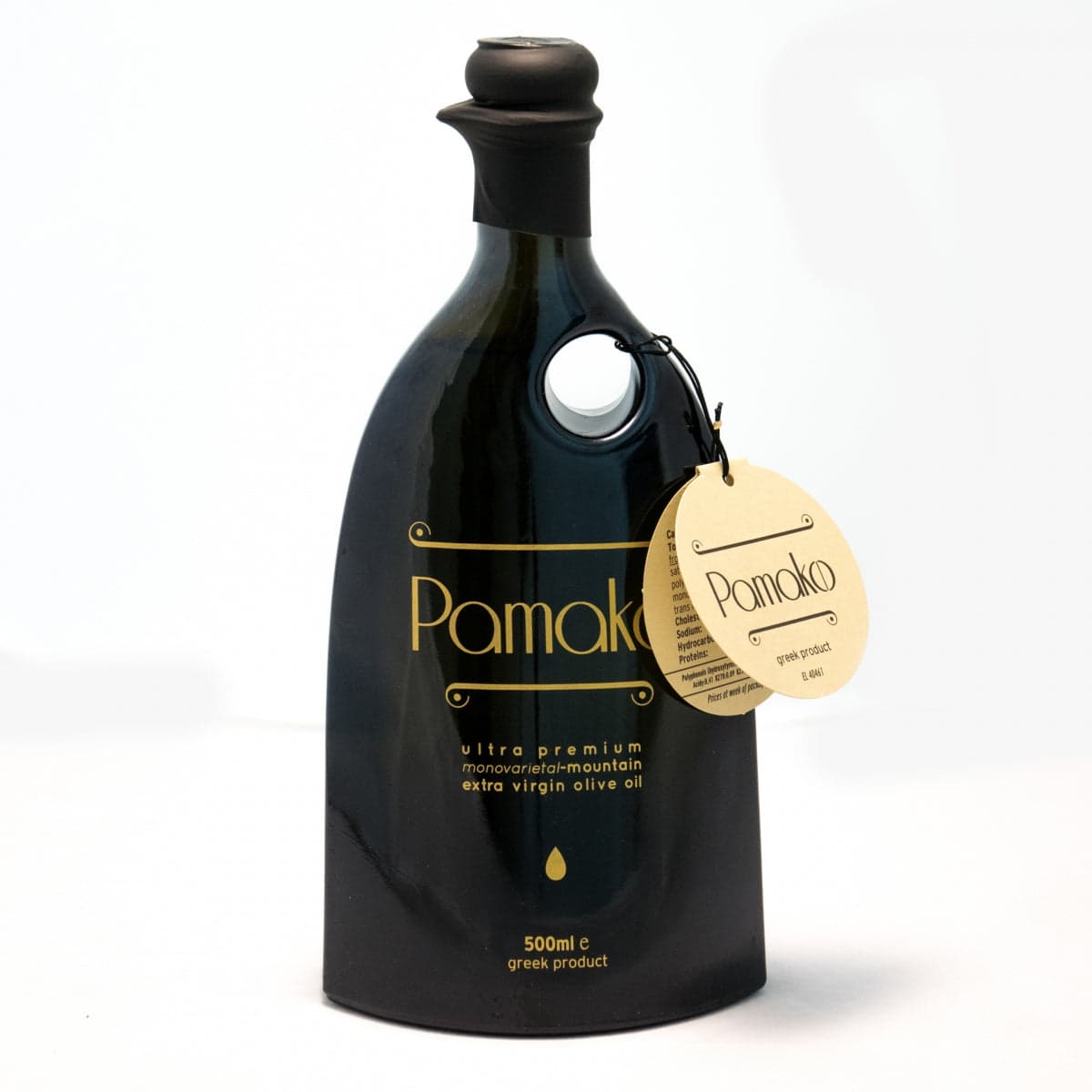
Pamako
€54.95· 500ml
€1.65 per 15ml serving
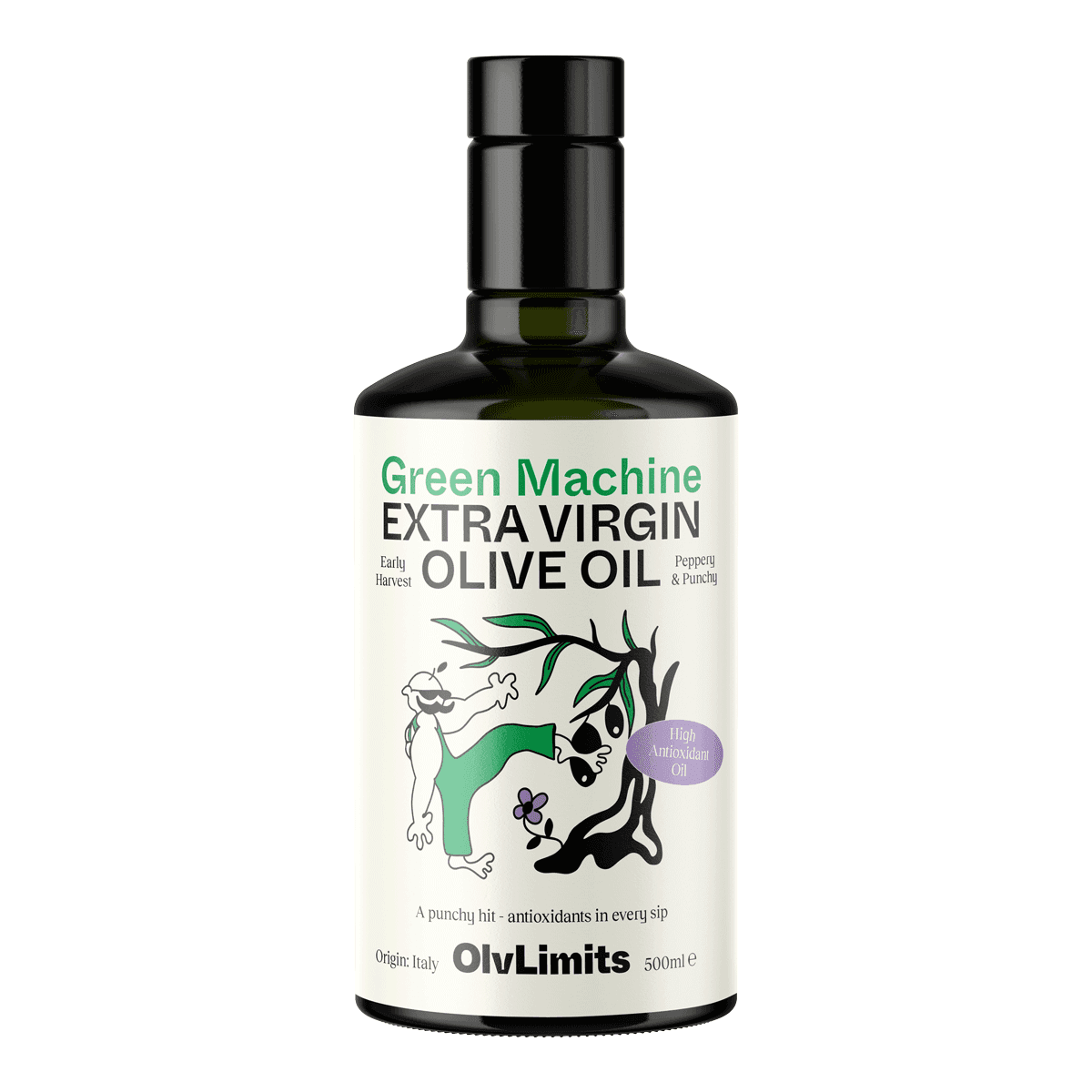
Green Machine
OlvLimits
€23.00· 500ml
€0.69 per 15ml serving
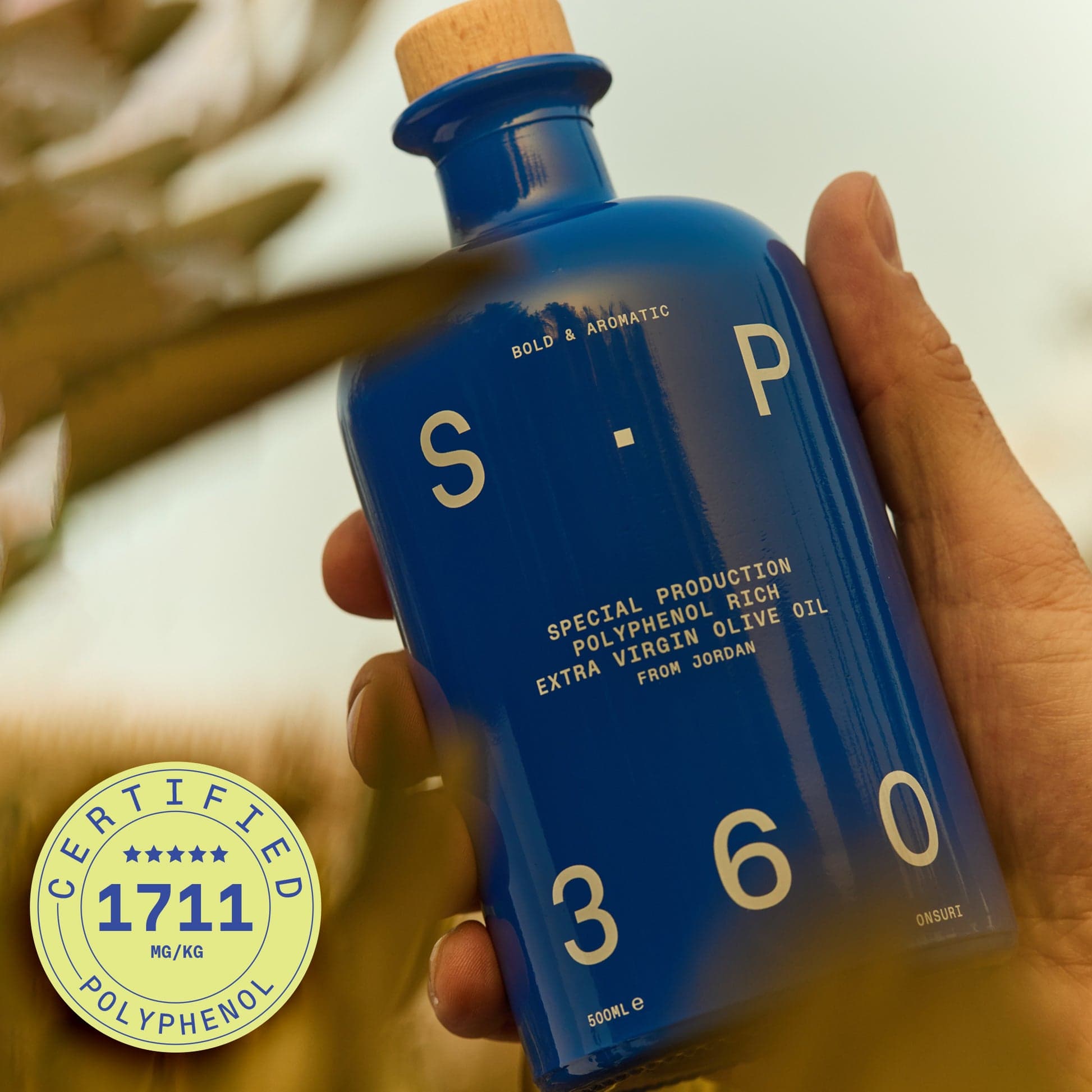
SP360
£42.00· 500ml
£1.26 per 15ml serving
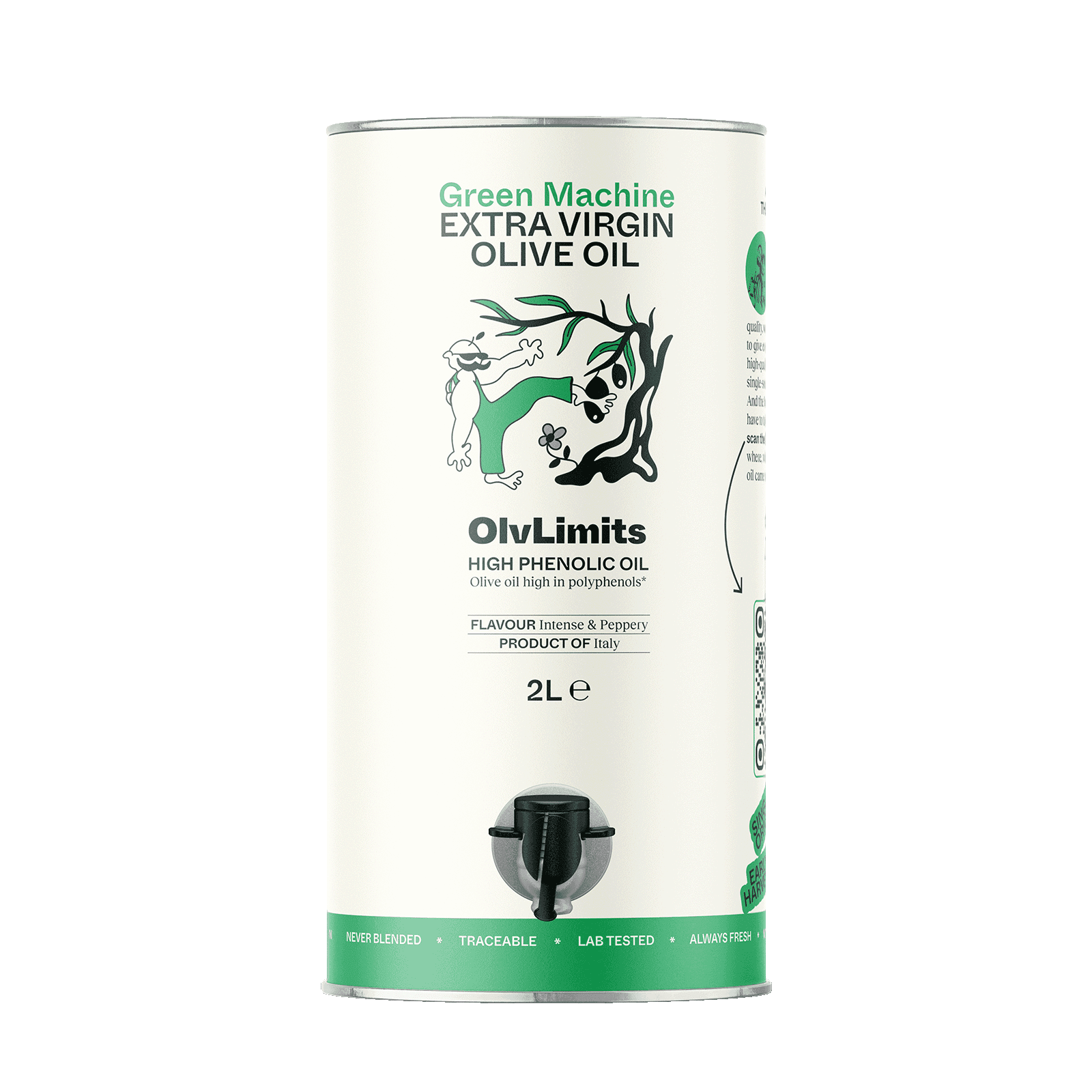
Green Machine 2L bag-in-tube
OlvLimits
€80.00· 2L(≈€20.00/500 ml)
€0.60 per 15ml serving