Filtered vs Unfiltered Olive Oil: What the Difference Means (2026)
Filtered and unfiltered extra virgin olive oil differ in clarity, moisture and shelf life, but the polyphenol gap is smaller and more mixed than many assume.
Walk through any specialist olive oil shop and you see two looks on the shelf. Some oils are clear and bright. Others are cloudy, almost opaque, usually labelled "unfiltered" or sold as a seasonal release and marketed as more natural or fresher. The clear ones have been filtered. Here is what filtration actually removes, the trade-offs each style carries, and what the evidence says about whether filtration touches polyphenols.
The short answer
After milling, freshly extracted extra virgin olive oil holds tiny suspended droplets of vegetation water and fine fruit particles. Filtration passes the oil through a medium, commonly cellulose or a food-grade filter aid, to remove most of that moisture and sediment. The result is a clear oil.
Unfiltered oil skips or only lightly performs this step, so those micro-particles and water droplets stay suspended in it. That is what makes it cloudy. Many people enjoy the slightly more intense, just-pressed character of a fresh unfiltered oil.
The trade-off is stability. The water and solids that make unfiltered oil cloudy are the same components that can shorten its shelf life. So the choice is less about better or worse and more about how soon you plan to use the bottle.
Filtered vs unfiltered at a glance
| Filtered | Unfiltered (cloudy) | |
|---|---|---|
| Appearance | Clear, bright | Cloudy, sediment over time |
| Moisture | Reduced quickly below the trade limit | Can sit high until water settles |
| Shelf life | Longer, more predictable | Shorter usable window |
| Taste at bottling | Clean, still fresh | Often more intense, just-milled |
| Best regarded as | A pantry oil you can store | A fresh, seasonal oil to finish soon |
| Polyphenols | May be slightly lower, evidence mixed | Not reliably higher |
What filtration removes, and why it matters
Two things separate filtered from unfiltered oil.
The first is moisture, the vegetation water carried over from the fruit. The International Olive Council trade standard sets a maximum of 0.2% for moisture and volatile matter in extra virgin olive oil. Fresh unfiltered oils can sit at or above this level until the water settles out. Filtration brings it down quickly.
The second is suspended solids. Fine olive pulp particles remain in unfiltered oil. They carry enzymes and trace nutrients, but they also settle as sediment at the bottom of the bottle over weeks and months.
Water and suspended solids are not inert. Moisture drives hydrolysis of the oil's triglycerides into free fatty acids, and the damp, particle-rich layer at the bottom of an unfiltered bottle can host microbial activity and slow fermentation. Given time, that is what produces the muddy, sometimes winey off-notes an over-aged unfiltered oil can develop. Removing the water and particles is the main reason filtered oils tend to keep more predictably.
Where each one wins
A fresh unfiltered oil, used within a few months of bottling, can be excellent. Vivid, green, full of just-milled aroma. The catch is time. Because the destabilising components are still there, an unfiltered oil usually has a shorter usable window than a comparable filtered oil. If you buy a cloudy oil, regard it as a fresh product and use it promptly rather than cellaring it.
Filtered oil trades a little of that immediate freshness for consistency. With the water and sediment gone, it is more stable and easier to store and ship, which is why most commercial extra virgin oil is filtered.
What the science says about polyphenols
This is where the popular claim gets oversimplified. The argument for unfiltered oil is that filtering strips out polyphenols along with the particles. There is some signal here, but it is modest and mixed.
Studies have measured phenolic compounds retained in the filter media, which suggests some loss can occur during filtration. At the same time, comparisons of filtered versus naturally sedimented oil during storage suggest any initial difference is small and that filtered oils can hold quality well over time. The residual water in unfiltered oil can also drive hydrolysis of phenolic compounds during storage, so an unfiltered oil does not necessarily stay higher in polyphenols.
What matters far more is how the oil is handled after bottling. Work assessing virgin olive oil against the EU polyphenol health-claim threshold (DOI: 10.3390/antiox12081563) found that phenolic compounds degrade following predictable kinetics, with temperature the dominant factor. Oils with high initial phenolic content held their levels well at moderate temperatures, while heat sped up the decline sharply. A warm cupboard does more damage to your polyphenols than the filtration step ever did. For more, see our guide to storing high-polyphenol olive oil and the background on what polyphenols are.
What the health claim actually requires
It helps to separate polyphenol content from polyphenol claims. Under Commission Regulation (EU) No 432/2012, olive oil polyphenols contribute to the protection of blood lipids from oxidative stress. That claim applies only to oils providing at least 5 mg of hydroxytyrosol and its derivatives per 20 g of oil, roughly 250 mg/kg, and the label must state that the beneficial effect is obtained with a daily intake of 20 g of olive oil.
Filtration does not, by itself, decide eligibility. The measured phenolic concentration in the finished oil does. A well-made filtered oil from an early harvest can clear the threshold, while a low-phenol unfiltered oil may fall short. How much you get from a spoonful also depends on that concentration: a stronger oil delivers more polyphenol in the same serving, which is worth keeping in mind when you read how much polyphenol olive oil to take daily. For how filtration sits alongside other quality signals, the health evidence overview shows how strong the evidence is across outcomes.
Which should you buy?
- Buying a cloudy, unfiltered oil? Regard it as a fresh, seasonal product. Buy a size you will finish within a few months, keep it cool and dark, and do not stockpile it.
- Want predictable shelf life? Choose a filtered oil. It is no less extra virgin and is easier to store over a longer period.
- Optimising for polyphenols? Look at the reported phenolic content, harvest date and cultivar rather than clarity. See how to choose a high-polyphenol oil and why harvest date matters. The same clarity-versus-substance point runs through cold-pressed vs extra virgin.
- Either way, storage is the lever you control. Heat, light and air degrade phenolics regardless of filtration.
Filtration is a clarification choice, not a quality verdict. To see how we evaluate the oils we feature, read our methodology, and browse the curated oils for verified phenolic data.
Put this check into practice
Compare November Early Harvest and Pamako in the olive oil dataset, keeping the published filtration, harvest and lab fields separate rather than assuming clarity decides quality. The buyer framework adds storage and use-case trade-offs. For a purchasable shortlist, use the UK ranking or Germany ranking.
Choose based on when and how you will use it
Filtered oil
- Clearer, with less retained water and sediment
- More predictable shelf life and easier storage
- Still extra virgin when it meets the required grade
Unfiltered oil
- Cloudy from retained water and fine olive particles
- Often best treated as a fresh, use-soon product
- Not reliably higher in polyphenols
Featured oils
Frequently asked questions
Is unfiltered olive oil higher in polyphenols?
Not reliably. Some studies suggest modest phenolic losses during filtration, but the effect is small and inconsistent. Cultivar, harvest timing and storage influence polyphenol levels far more than filtration alone.
Does cloudy olive oil go bad faster?
It can. Residual water and suspended solids in unfiltered oil give hydrolysis and microbial activity something to work on, which can shorten shelf life and cause off-flavours. Filtered oil tends to keep more predictably.
Is filtered olive oil lower quality?
No. Filtration is a clarification step, not refining. A filtered extra virgin oil is still extra virgin. Quality depends on the fruit, milling and storage, not on whether the oil was filtered.
How we reviewed this article
Written and edited by our editorial team and checked against primary research and EU regulation. We cite peer-reviewed studies and official sources, and prefer human trials and reviews over in-vitro work.
Sources
- EFSA health claims-based virgin olive oil shelf-life — Antioxidants
- IOC trade standards and analytical methods — International Olive Council
Searching for olive oil for your health and longevity
Our top-ranked high-polyphenol olive oils, sorted by lab-verified content.
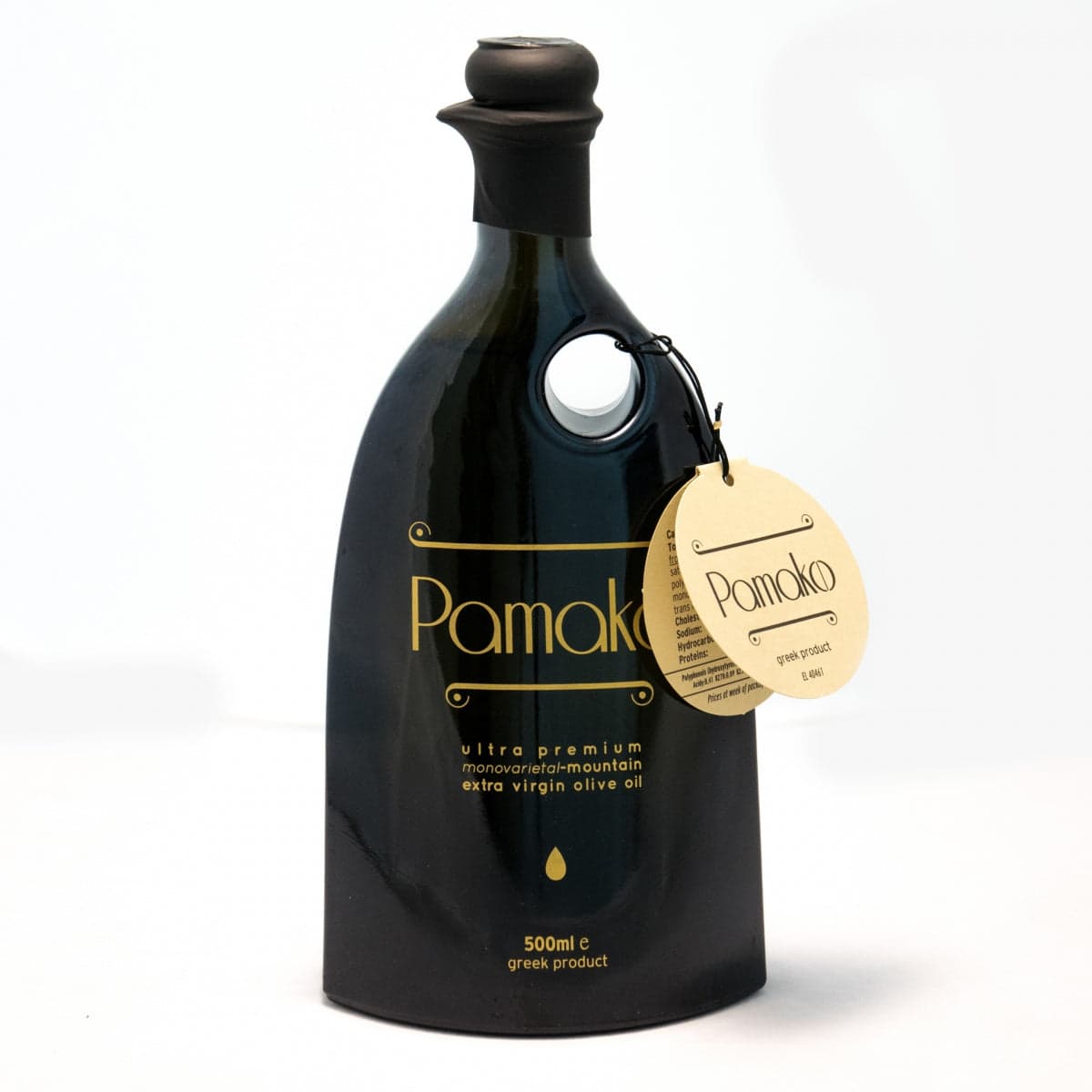
Pamako
€54.95· 500ml
€1.65 per 15ml serving
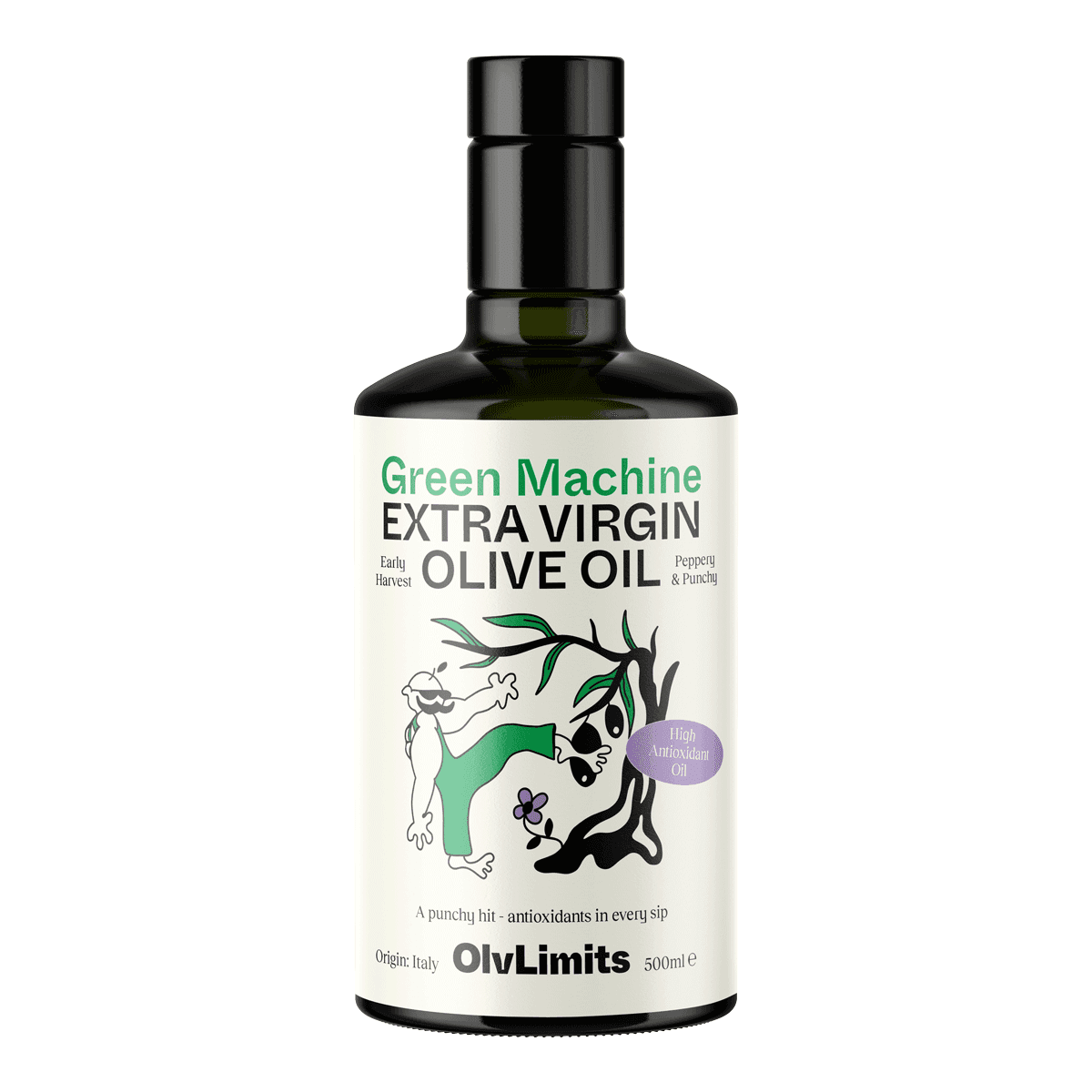
Green Machine
OlvLimits
€23.00· 500ml
€0.69 per 15ml serving
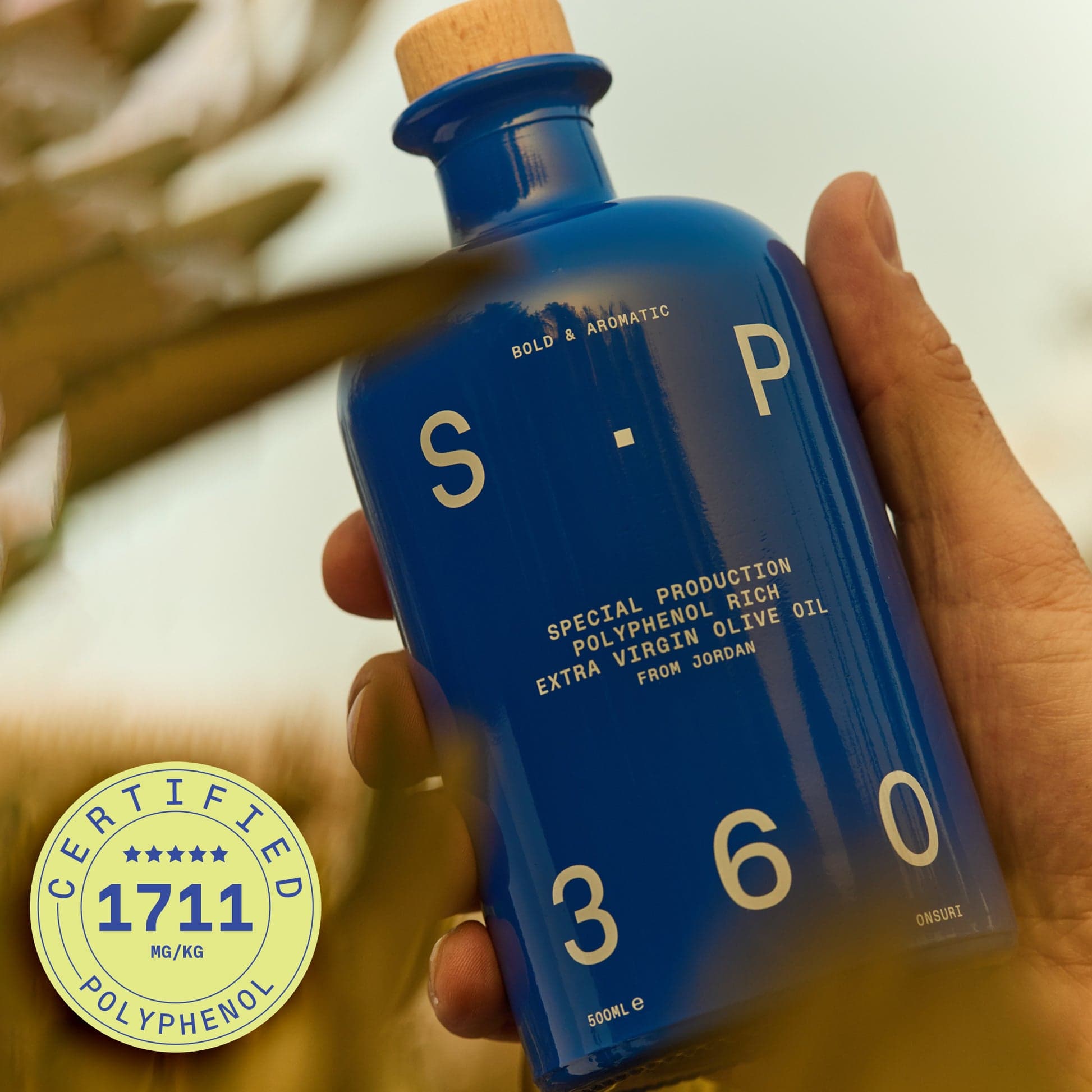
SP360
£42.00· 500ml
£1.26 per 15ml serving
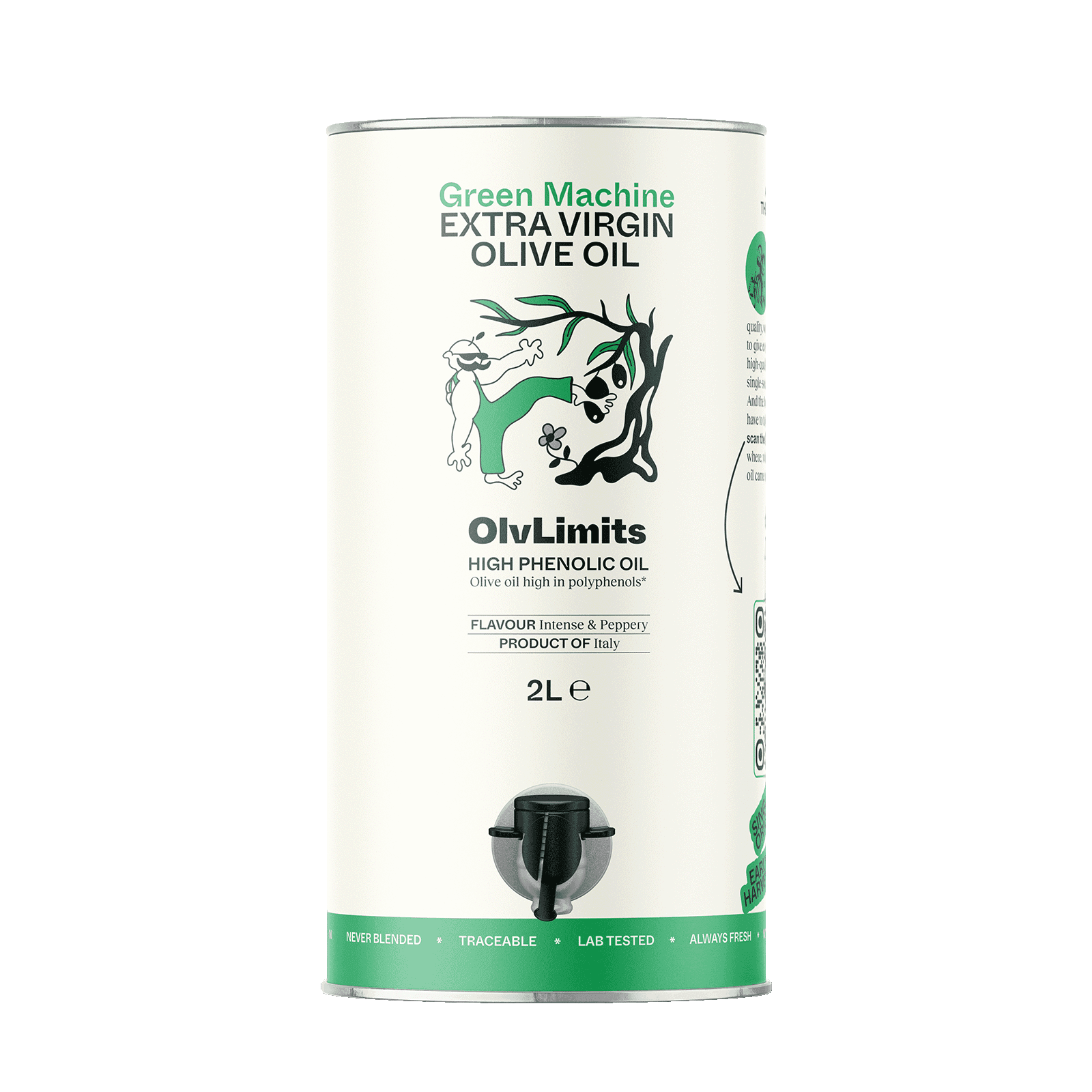
Green Machine 2L bag-in-tube
OlvLimits
€80.00· 2L(≈€20.00/500 ml)
€0.60 per 15ml serving